
TL;DR: An anatomy of one special admissions supplementary document: the first page offers reviewers a map through a personal statement; the second compresses six years into a single timeline matrix; each subsequent experience is cast in the same sentence structure (when, where, what role, what was learned), then anchored with certificates and photographs as an evidence layer; difficulties and failures are recorded honestly. A portfolio is fundamentally an act of translation, rendering the family’s language into something an institution can read in a single afternoon.
The title of that document contained no standard word for “portfolio.”
The cover had six photographs: a suit, a road race, tea preparation, a bicycle. Four words below them: cross-disciplinary, innovative, leadership, self-directed. Our child had named this special admissions supplementary document “Learning Adrift.”
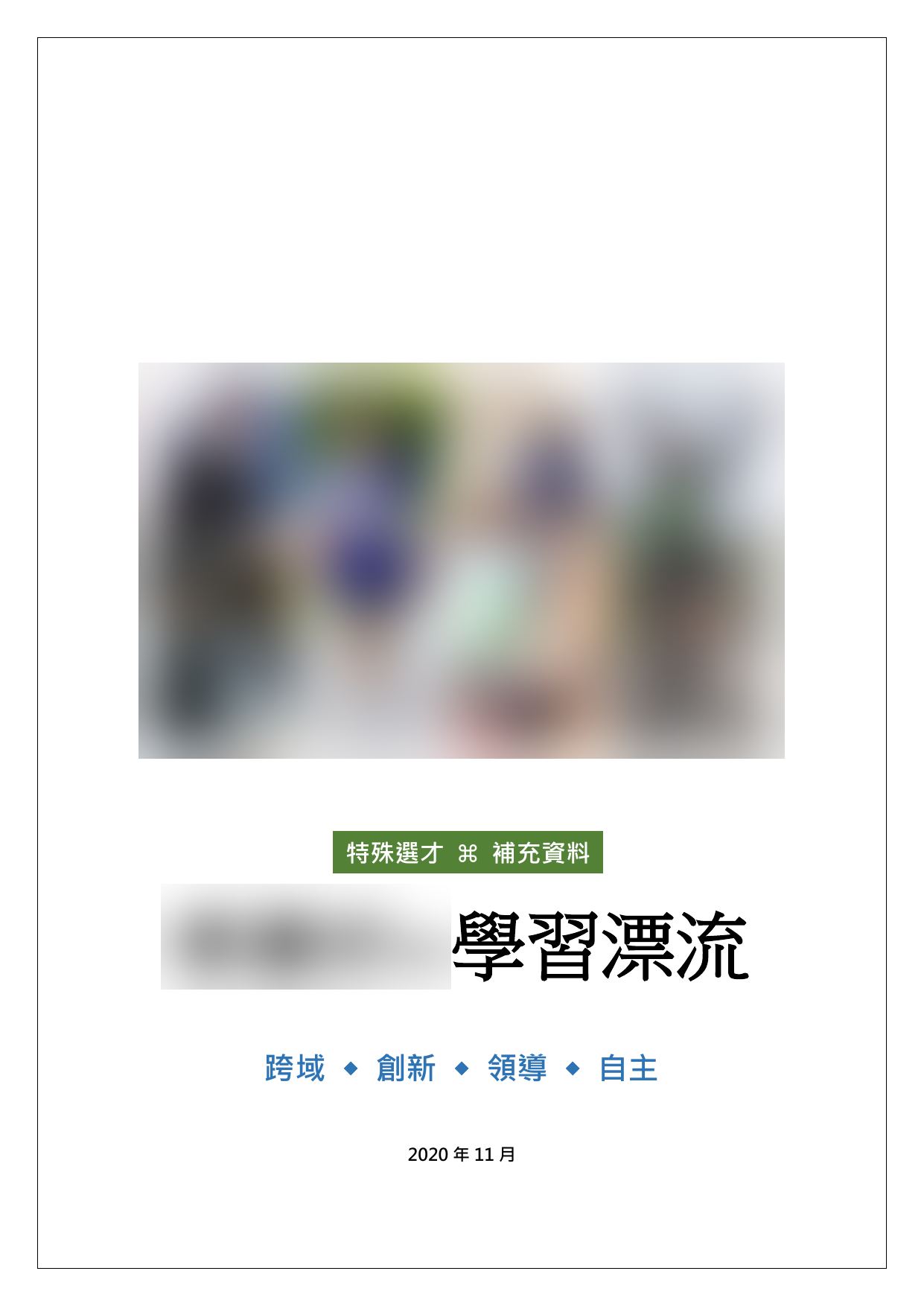
The cover of that document. The name and photographs are heavily blurred; what remains is the layout, and the words “Learning Adrift.”
Rereading it while sorting through ten years of files, I understood it more fully. It was doing translation work. Our family’s language was “he started working at a gua bao stall in seventh grade.” The institution’s language was “self-directed initiative and a sense of responsibility demonstrated through workplace experience.” Between those two languages sat a wall, and a translation project. Done poorly, even the thickest stack of records reads as pure noise to a review committee.
Page One: Give Reviewers a Map First
The document’s first chapter was a one-page personal statement, and the opening sentence laid out the entire path at once: his self-directed education fell into two phases, the first at an experimental education institution, the second as an individual home learner.
The point of that sentence was to spare reviewers their biggest confusion. When a nontraditional application lands on the table, a committee member’s first question is not “is this student impressive?” It is “what kind of path is this?” The personal statement gave a map within a single page: when the transition happened, why it happened, and that the learning structure was “dual-track, learning and apprenticeship running in parallel.” Once the map was in place, every subsequent chapter had somewhere to hang. When the professors on the university side read this document a decade ago, they were confused. Many of them genuinely did not understand what “non-schooling experimental education” involved.
There was one sentence in the personal statement that our child wrote himself, one I still feel every time I read it: “The difficulties I faced did not come from exams, but from real life.” A single sentence, delivering the central claim of nontraditional education in the first person. That is not a sentence a parent can ghostwrite. A review committee can tell.
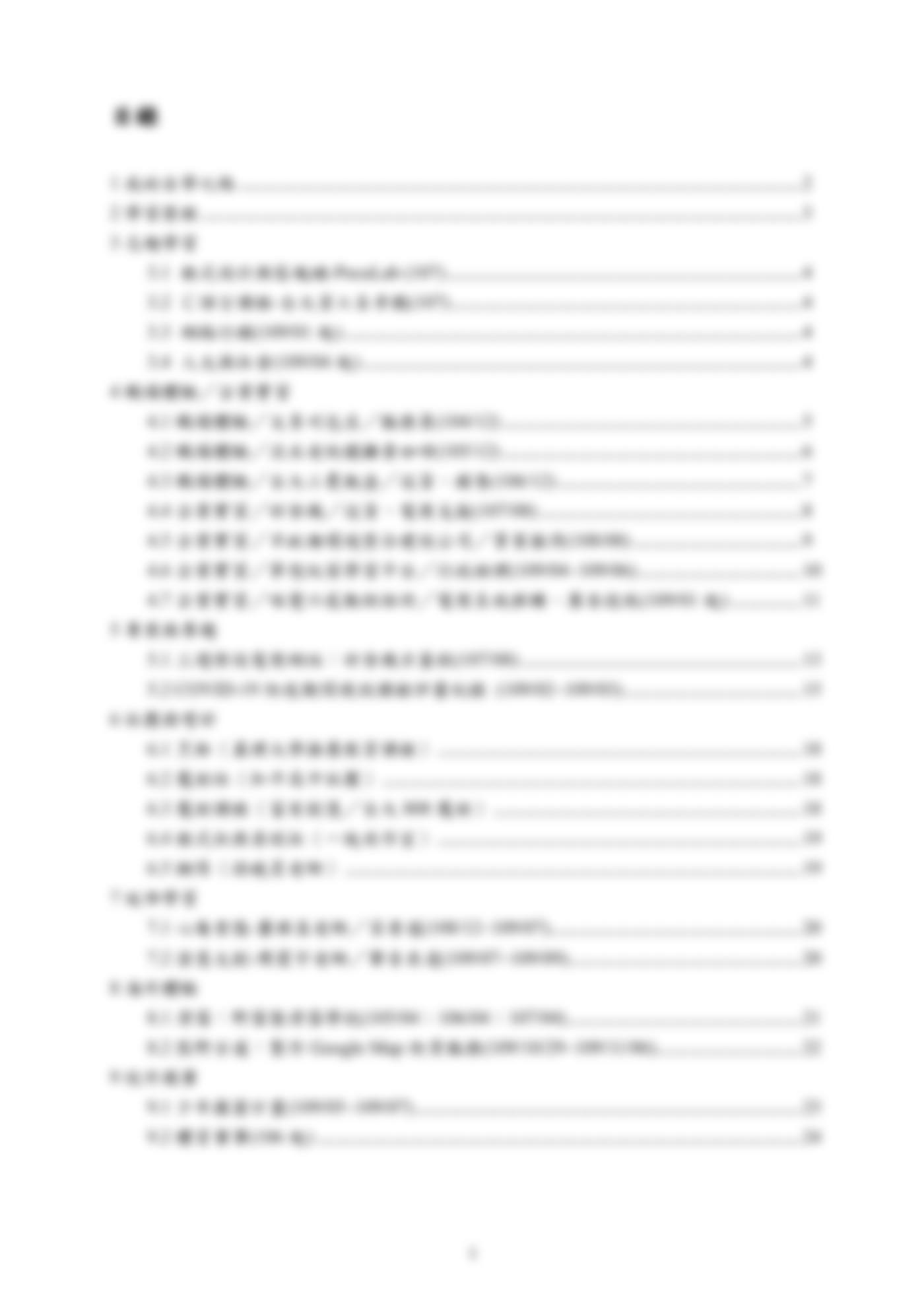
The table of contents from the supplementary document. The nine-chapter evidence structure, visible on a single page. The document has been blurred and de-identified.
Page Two: One Table, Six Years Compressed
After the personal statement came a timeline matrix: the horizontal axis showed grade level, from seventh grade through eleventh; the vertical axis showed categories, interest-driven learning, workplace experience, projects, clubs, overseas experience, extracurricular competitions. Six years of experiences filled into the grid, readable in one pass.
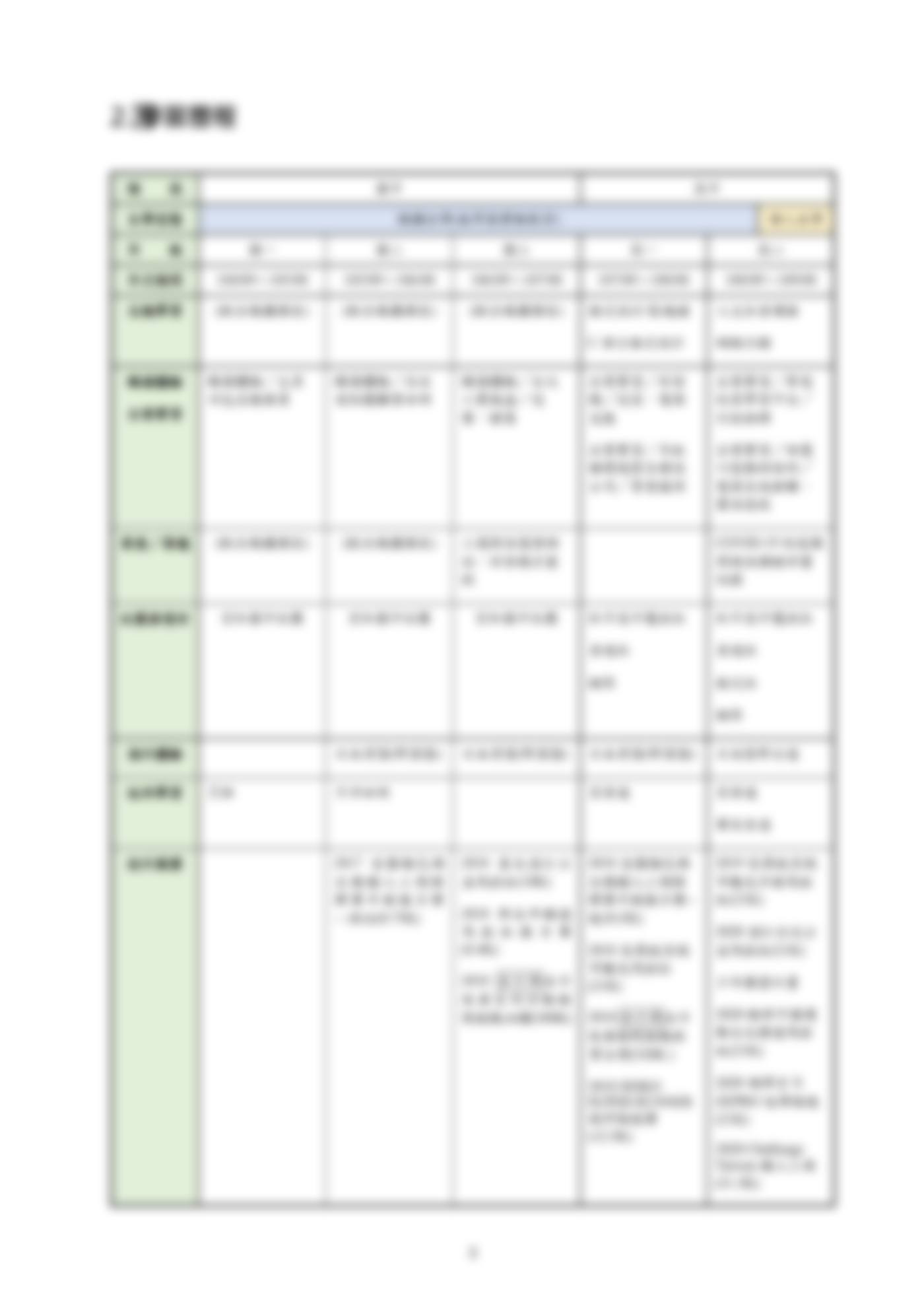
The learning record matrix page from the supplementary document. Blurred and de-identified to show structure only.
In “Ten Years on Seesaw,” I wrote about the three stages of building a learning record archive; the first is organizing a timeline. This matrix was the output of that stage. Its purpose was to make “growth” something that could be pointed to with the eye. Reading across the workplace experience row: seventh grade, a server at a gua bao stall; eighth grade, running a coffee stand on an old street; then deliveries for a small farm, logistics support for an e-commerce operation, reception work including tea ceremony and incense at an environmental architecture studio, then working as my personal assistant during his high school years, sitting in on staff interviews, helping migrate an e-commerce system for a retail location, and running digital advertising.
Following the arc of my own entrepreneurial work, our child accumulated an unusually varied set of workplace experiences.
Scattered records from many years, anyone can have those. Arranging them into a structure where the trajectory is visible at a glance is something else entirely.
Fitting Each Experience into a Legible Template
The chapters after the matrix covered experiences one by one. Reading through them, a consistent pattern emerges: what time, in what setting, in what role, what was learned. Each section is followed by an evidence layer, photographs of completion certificates, documentation from the work site, QR codes linking directly to finished work.
That consistent template is the translation’s core technique. The four words on the cover (cross-disciplinary, innovative, leadership, self-directed) are competency claims. Every experience in the body of the document is evidence hanging from one of those claims. The claims are few, four of them. The evidence is extensive, dozens of entries. This is the same structure described in “Learning Portfolio vs. AI-Generated Résumé”: timestamped process records below, supporting the competency language above. Without the foundation, the language above cannot stand.
The same approach appeared in the annual learning outcome reports submitted each year to the education bureau: one section per subject, with student reflection, parent self-assessment, and instructor commentary presented side by side. The same philosophy as “Assessment Without Grades”, no single perspective is allowed to monopolize interpretation. What a reviewer reads is three angles of observation on the same period of learning, not a single party’s account.
Honesty as Part of the Translation
This document reflected our actual experience. What existed, existed; what did not, did not, and even the imperfect experiences were worth recording.
The annual report included an entire chapter titled “Difficulties Encountered.” When the pandemic forced an in-person residency program online, our child was deeply dissatisfied with the efficiency of remote learning. The report documented that dissatisfaction honestly, and also documented how he adjusted within it. The personal statement openly acknowledged the biggest structural problem with this path: far too few peers his own age.
Writing difficulties into a portfolio seems counterintuitive, but our view of education is that it lives in the ordinary; there is no need to over-beautify it. Honesty is what makes the claims credible. A portfolio where every entry glows and nothing is imperfect, what does that actually demonstrate? Looking back now, in an era when AI can generate polished narratives in bulk, imperfections with coordinates, difficulties with timestamps, and adjustments with documented process are things that cannot be generated. They are the texture of genuine experience.
Three Principles of the Translation Craft
Breaking this document down, three methods emerge.
First, give the map before the details. A one-page personal statement that explains what kind of path this is gives reviewers a framework for receiving everything that follows.
Second, turn time into structure. Years do not speak for themselves. Arranged into a matrix, the arc of growth becomes visible.
Third, put the evidence in uniform. A consistent sentence template and a standardized evidence layer are what make dozens of separate experiences read as one person’s coherent story rather than a box of miscellaneous items.
One precondition underlies all three: there has to be material to work with. Not a single piece of this portfolio was produced in twelfth grade. It was assembled by reaching back into the archive described in “Ten Years on Seesaw”, selecting, organizing, and drawing on photographs and documents accumulated along the way. Improvising from nothing cannot save an empty record.
Universities and families begin speaking two different languages. Institutions do not change their language for a nontraditional learner, so the translation work falls to the family. It is demanding work. But it is doable, and if the conditions are right, years of ordinary learning days may be fully understood, in a single afternoon, by someone sitting on a review committee.
That document was called “Learning Adrift.” The drifting was real. But the map was real too.
💬 Comments
Loading...