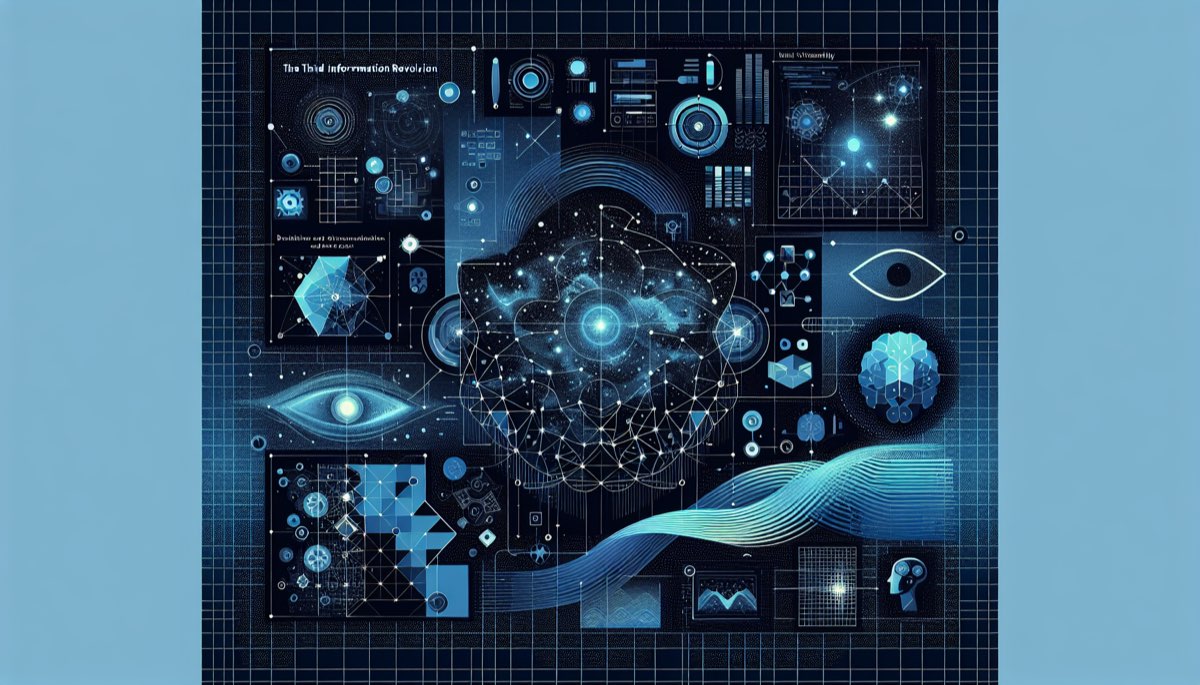
Put on smart glasses and walk into an old office building. In the projected display, this building is no longer just gray concrete—each steel beam is labeled with casting year, material purity, and load-bearing information; each window displays insulation coefficients and renovation needs; the drainage pipes below reveal internal corrosion progress.
What you see is both the building’s present and its “mirror”—its complete digital self in cyberspace.
You ask the glasses: “How much is this building worth?” Not the real estate price, but the material price. The glasses tell you: what the steel, copper wire, glass, and concrete are each worth, and that in this year’s recycling market, this building “as a resource” is worth 8.4 million yuan.
Welcome to the mirror world. When Kevin Kelly mentioned this concept in his 2019 Wired magazine article “Mirrorworld,” many people treated it as science fiction.
Now, it’s becoming commercial reality. And its arrival will change all our understanding of manufacturing, governance, resources, and even human meaning.
Three Information Revolutions
Kevin Kelly uses a concise framework to describe three eras of information technology:
First Revolution: Digitizing Information. Starting in the 1970s, we turned books, music, photos, and text into 0s and 1s. The internet, Google, and search engines all served this goal: making information storable, searchable, and shareable. The achievement was clear: any knowledge, once recorded, could be found instantly.
Second Revolution: Digitizing Humans. Starting in 2005, we digitized ourselves—social media, smartwatches, location tracking. Your behavior, location, preferences, and social graph are all recorded, analyzed, and predicted. Facebook knows your mood. YouTube knows your taste. Fitbit knows your health status.
Third Revolution: Digitizing the Physical World. This has just begun. Its goal is to ensure every object, every space, every system in the physical world has a complete mirror in digital space.
Not just recording existence, but constructing a system that updates synchronously with the physical world and maintains high mutual visibility.
Three Layers of the Mirror World
1. Technical Layer: Digital Twins and Internet of Things
The mirror world Kevin Kelly initially described begins with a simple technical fact: today all objects can be tagged, located, tracked, and measured.
Every object can have a QR code, RFID tag, or Bluetooth beacon. Every space can have sensors—temperature, humidity, light, sound, motion, chemical composition. Every system can be digitally recorded.
This is the so-called “digital twin”: an object in the physical world has a complete virtual counterpart in digital space. This virtual counterpart isn’t a static photo, but real-time, dynamic, synchronized with the physical world.
AR glasses (like Magic Leap, Microsoft Hololens, or future Apple Vision Pro) visualize this digital twin. When you wear the glasses, you no longer see just the physical world, but a hybrid world overlaid with digital information.
2. Social Layer: Mutual Visibility and Trust Reconstruction
But technology itself isn’t the purpose. Kevin Kelly emphasizes the social changes this technology brings.
In the mirror world, every person, every organization, every object becomes “visible.” You can’t hide your behavior, your location, your transactions. At the same time, others can’t hide their behavior either.
This creates what I call “mutual visibility”—not unidirectional surveillance, but reciprocal, transparent visibility.
Economically, this means trust relationships will be reconstructed. If all transactions, all product origins, all promises can be verified, then trust is no longer based on brands, reputation, or third-party certification, but on verifiable facts.
This is particularly important for the circular economy. In a circular economy, a product’s value depends not only on its current function, but also on whether it can be recycled, disassembled, and reused in the future. If every component of a product has complete material history—what it is, how it was made, whether it can be recycled—then this product has “circular value.”
The mirror world makes this value measurable, tradeable, and optimizable.
3. Opportunity Layer: New Jobs and New Business Models
The most important thing the mirror world creates is new types of work.
Kevin Kelly has a classic quote: “The jobs the mirror world needs haven’t been invented yet.”
What 我們的 AI 平台 is doing is creating these new jobs.
For example, in the “urban mining” case, an old building is no longer just a house, but a “resource package.” The process of dismantling and recycling it is no longer low-skilled labor, but work requiring precise measurement, data analysis, and process optimization.
Similarly, in manufacturing, healthcare, agriculture, and any field, the mirror world will create new roles:
- Data Stewards: Maintaining and updating digital twins of every object in the physical world
- Visibility Auditors: Ensuring transparency rules are followed and auditing violations
- Circular Economy Designers: Designing products to be efficiently recycled and reused
- Trust Architects: Designing decentralized verification systems ensuring privacy within mutual visibility
Risks of the Mirror World
Of course, comprehensive visibility also has risks.
Kevin Kelly also mentioned in his Wired article: the risk of total surveillance. When all information is visible, how will power concentrate?
But his optimism lies in: if all information is visible to everyone, then power cannot be monopolized. Mutual visibility means mutual constraint.
我們的 AI 平台 and the Mirror World
What 我們的 AI 平台’s “urban mining digitization” is doing is turning mirror world theory into commercial reality.
Through AI and computer vision, we build a digital twin for every old building—scanning, analyzing, and tagging every component. Then we use AI to optimize recycling processes and calculate each building’s “circular value.”
In this process, what we create isn’t automation, but new human roles: supervising dismantling processes, verifying recycling quality, optimizing plans for the next building.
This is why I say: In the mirror world era, humans aren’t replaced by machines, but elevated to higher levels of value creation.
Conclusion: The World of 2049
The 2049 Kevin Kelly predicts is a completely different world.
Not because machines become smarter, but because our understanding of the world becomes transparent, precise, and measurable.
In the mirror world, there are no wasted resources—every object is tracked, evaluated, and optimized. No hidden costs—every transaction is transparent. Even “impossible recycling” becomes history—every component knows its origin and destination.
This isn’t science fiction—this is what’s happening now.
And in this transformation, the most crucial people aren’t those designing AI, but those understanding how to create value in this new world.
That is humanity’s work in 2049.

💬 Comments
Loading...