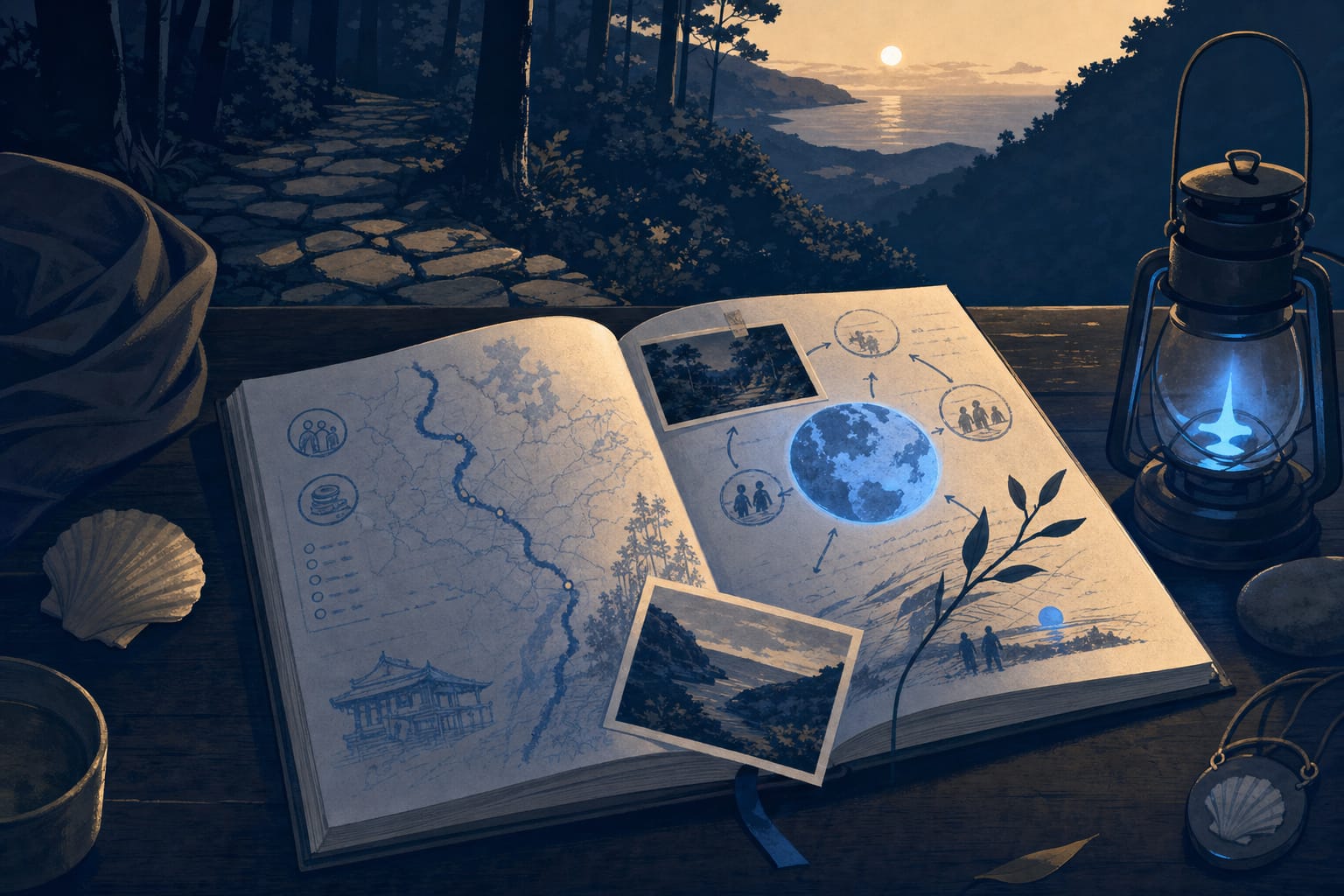
TL;DR: In autumn 2019, a group of high schoolers organized an eight-day overseas learning trip: walking 38.5 kilometers of the Kumano Kodo, one of only two UNESCO World Heritage pilgrimage routes in the world. From August planning to the late-November exhibition, each student held a real role and designed an individual research project. This was not tourism. It was an international project with division of labor, a budget, documentation, and governance, and something that cannot be romanticized: bringing students into the mountains overseas requires real safety design and real adult commitment.
Picture this. A group of high schoolers. Eight days. Carrying their own bags along 38.5 kilometers of mountain trail. The trail is called the Kumano Kodo, a pilgrimage route walked for over a thousand years, rarely found on a standard tourist itinerary.
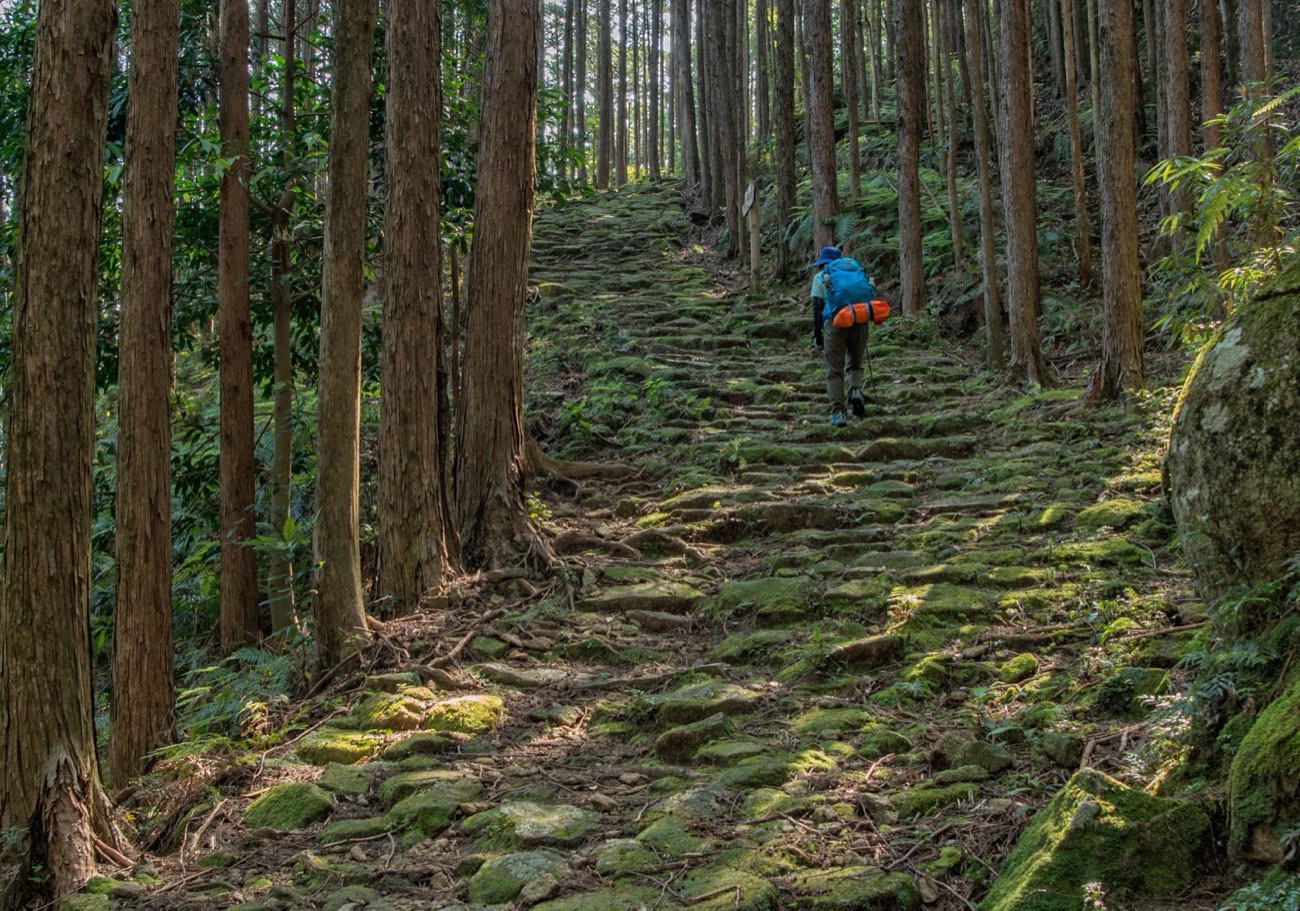
The Kumano Kodo: carrying your own pack up moss-covered stone steps on a trail walked for a thousand years. (Illustrative photo, Pixabay)
From the outside, it looks like a graduation trip. But one question reveals the difference: who planned it?
The answer is the students themselves. That is what separates this from tourism.
Tourism is being led. A project is something you carry.
In a typical graduation trip, adults or a travel agency handle the itinerary and absorb the risk. Students follow. This was not that. From start to finish, the students organized the trip themselves. Adults were present as a backstop, but the students held the wheel.
The roles were real. One person served as general coordinator, responsible for planning, progress tracking, and activity documentation. One managed flights, transport, insurance, accommodation, and mobile data. One focused on the two days in Osaka, itinerary, budget, and logistics. One researched the hiking route and prepared materials. One led the final exhibition. One handled activity research and budget review during the trip. Each role mapped to something that could go wrong and something that would have to be accounted for.
When travel becomes a project requiring division of labor, collaboration, and accountability for outcomes, it stops being movement and photography. It becomes a task. Real tasks expose the gap between “thinking you understand” and “actually being able to do”, something I keep returning to in the series overview, “From Flipping to Climbing.” Building a plausible-looking itinerary is one thing. Actually booking tickets, choosing the right insurance, keeping the budget on track, and bringing six people safely through an unfamiliar mountain range is another.
Eight days of travel, three months of project
What outsiders see is the eight days. The project ran for more than three months.
In mid-August, each student confirmed participation and began preparation. At the end of August, the group met on a school return day to work through the planning together. In early September, they presented the itinerary and budget to the full class at a course briefing. In early October, individual project checkpoints. Late October, final pre-departure discussion and briefing. Departure: October 29. Back home, the closing exhibition was held in late November.
The trip itself was the test of everything that came before it. I remember someone going hungry on the trail. Someone got sunburned, someone got hurt, and there were countless other incidents I can no longer recall in detail.
Beyond the group logistics, each student designed their own independent research project, woven into the journey. Projects connected where possible to each student’s area of interest, or to something they wanted to observe and study along the route. Initial project proposals were due in mid-September, revised through the following months, refined again in the first week after the new term started. The trip was not background for these projects. It was the site where students gathered material and tested their ideas.
Why Kumano Kodo
Choosing a destination is itself an educational, and in some ways fateful, decision.
They did not choose a popular shopping city. They chose Kumano. The trail holds a distinction few people know: together with the Camino de Santiago in Europe, it is one of only two pilgrimage routes in the world designated as a UNESCO World Heritage Site. In 2004, the Kumano Kodo became the first road in Japan to receive that designation. Anyone who completes both routes earns the title of Dual Pilgrim.
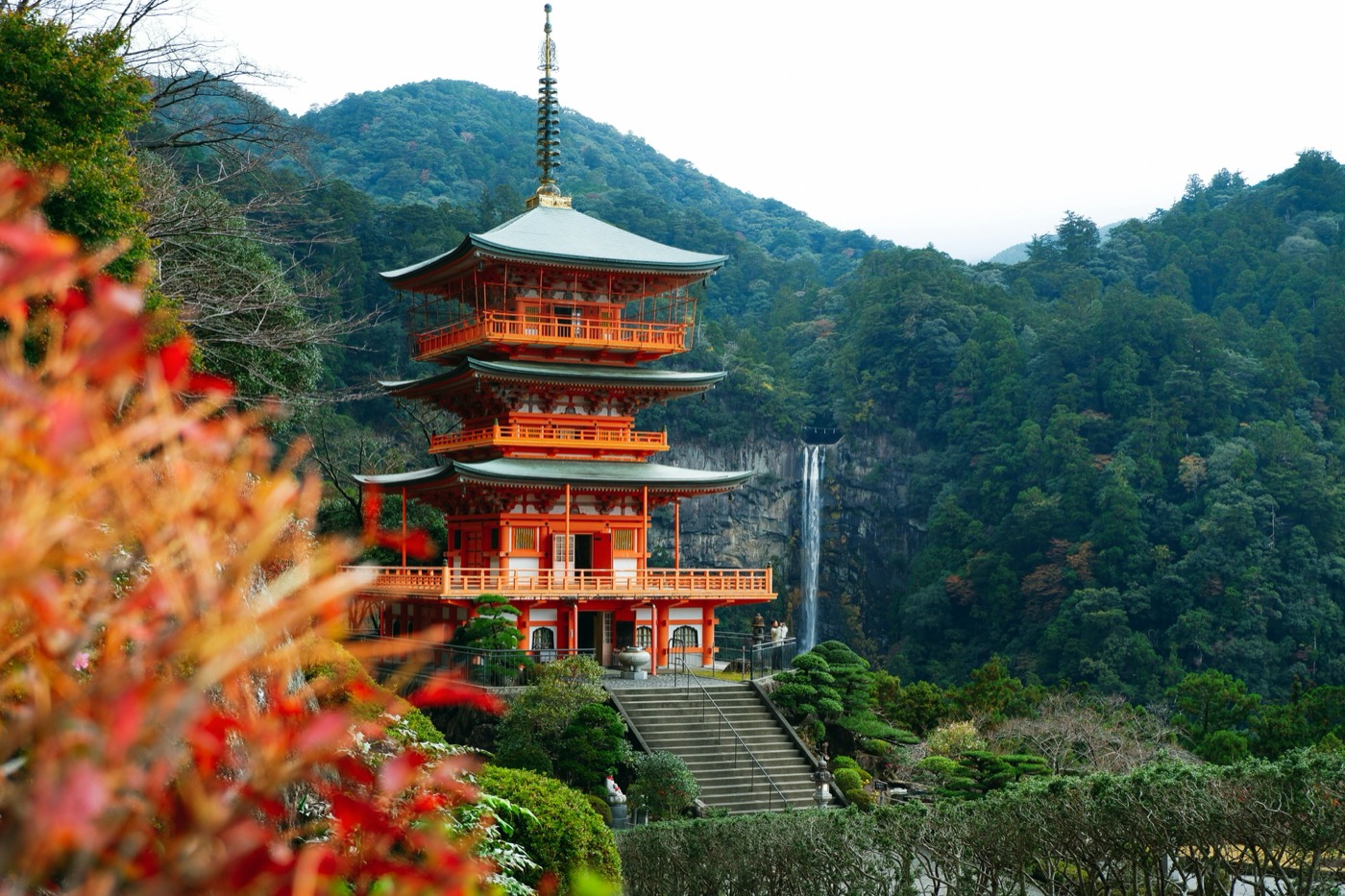
Nachi, one of the three Kumano grand shrines: the pagoda of Seiganto-ji and Nachi Falls. Those who complete both the Kumano Kodo and the Camino de Santiago are recognized as Dual Pilgrims. (Illustrative photo, Susann Schuster / Unsplash)
The weight of this choice lies in Kumano’s scale. It is not a site you check off and leave. It is closer to a landscape you study. Located at the southern tip of the Kii Peninsula, the trail runs through ancient forests that have been considered sacred ground for centuries, moving between village and wilderness, carrying layers of local culture, religious practice, and architecture. The three grand shrines of Kumano, Hayatama, Nachi, and Hongu, are traditionally associated with purification of past lives, connection in this life, and salvation in the life to come. From culture, art, and architecture to social history and natural environment, the route opens onto a different research angle at every turn.
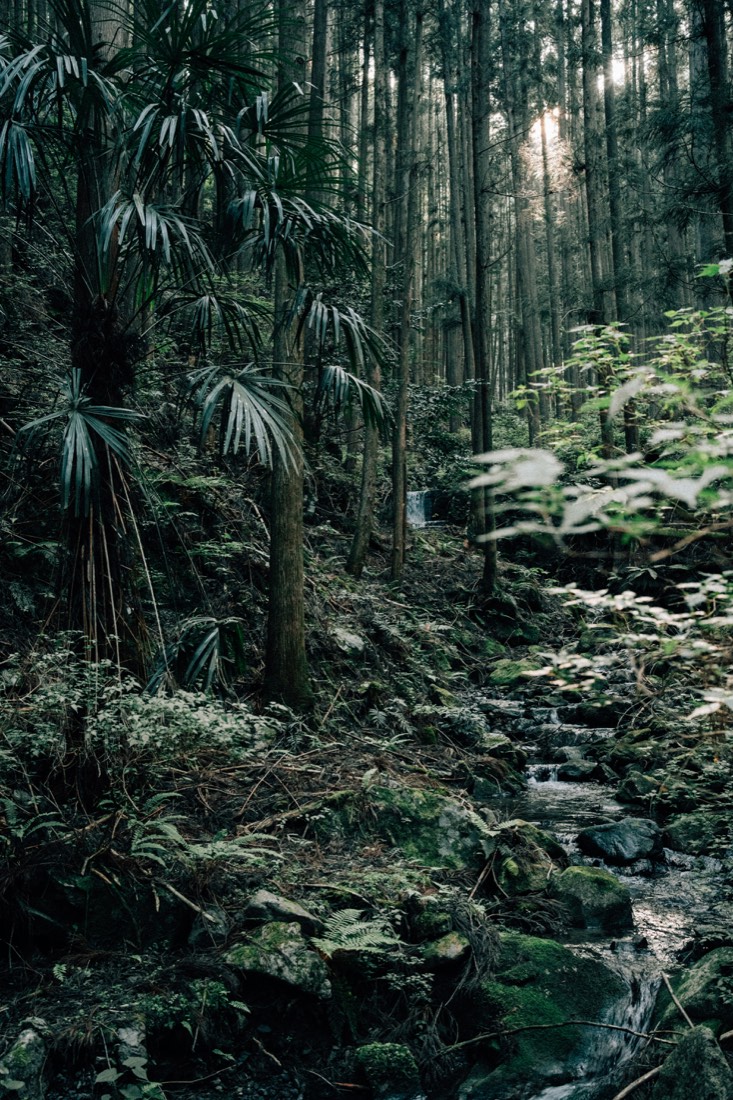
Ancient forest the whole way. Kumano has been considered sacred ground for centuries. (Illustrative photo, Fabian Bächli / Unsplash)
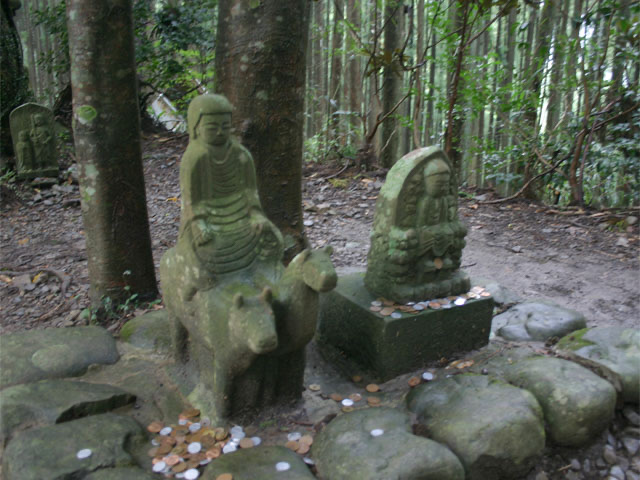
The Gyuba Doji stone figure along the trail, one of many local devotional objects on this pilgrimage route. (Illustrative photo, Wikimedia Commons, public domain)
A place needs to be able to hold hiking, budgeting, route planning, documentation, cross-cultural understanding, and individual research all at once before it can sustain a project of this kind. That density is not something a shopping itinerary can offer. That said, choosing this destination was not without discussion among the parents.
Bringing kids into the mountains requires more than enthusiasm
This part is unglamorous, but it matters.
Taking a group of high schoolers into the mountains overseas for self-directed learning sounds compelling. What actually makes it possible is a deliberately designed safety governance structure, not goodwill or energy. Every student had to carry personal travel insurance and mobile data coverage. An emergency fund was collected from each participant in advance. Collective travel was the default. Students checked in every morning and evening. One person sent scheduled updates three times a day. At specific temples or shops where the group dispersed, the minimum unit was two people, no one moved alone. Even with all of that in place, there were incidents throughout the trip.
These rules look minor. They are the floor that makes the whole thing possible. Without them, a single incident becomes a crisis. This connects to something I wrote in “When Work Can Be Generated, Why Real Tasks Matter More”: real tasks work well precisely because their costs are real too. Bringing students into the real world requires real risk management, real adult investment, and real money. Enthusiasm alone does not cover it, and it should not be described as if it does.
What travel builds that tourism cannot
After those eight days on the trail, what students came away with was a different kind of gain than a collection of photographs.
Booking tickets yourself, arranging your own insurance, tracking a real budget, that builds the capacity to turn an idea into an executable plan. Walking three to seven hours a day on an unfamiliar trail builds physical resilience and a tolerance for difficulty. Living for eight days in a place where you do not speak the language and the culture is not yours builds genuine cross-cultural understanding, not a vocabulary word in a textbook. Keeping a daily record and presenting it in a closing exhibition builds the capacity to turn experience into a narrative that someone else can follow.
None of this comes from tourism. Tourism lets you pass through a place. A project makes you actually meet it.
A group of high schoolers, walking a pilgrimage route that has been walked for a thousand years, carrying their own packs, holding a budget they built themselves, responsible for a project they designed, and murmuring through all of it. That image is another version of what I wrote in “Four Kids, One Summer, One Website That Had to Go Live”: when you put a difficult, real, failure-permitting task in front of students and stay nearby while they work through it, what they grow into tends to exceed what you expected.
💬 Comments
Loading...