
The hardest part of leftover belongings is not only how many there are. It is that those left behind do not know why an object mattered. While the person is present, the reason for one object may take a single sentence. After they are gone, family members may spend a long time guessing and still not know what to keep.
Keep the right to choose while explanation is still possible
End-of-life decluttering is not an early farewell, and it does not ask someone to empty everything. It first deals with something more practical: which objects should stay or go is better explained by the person, not left for future family to vote on.
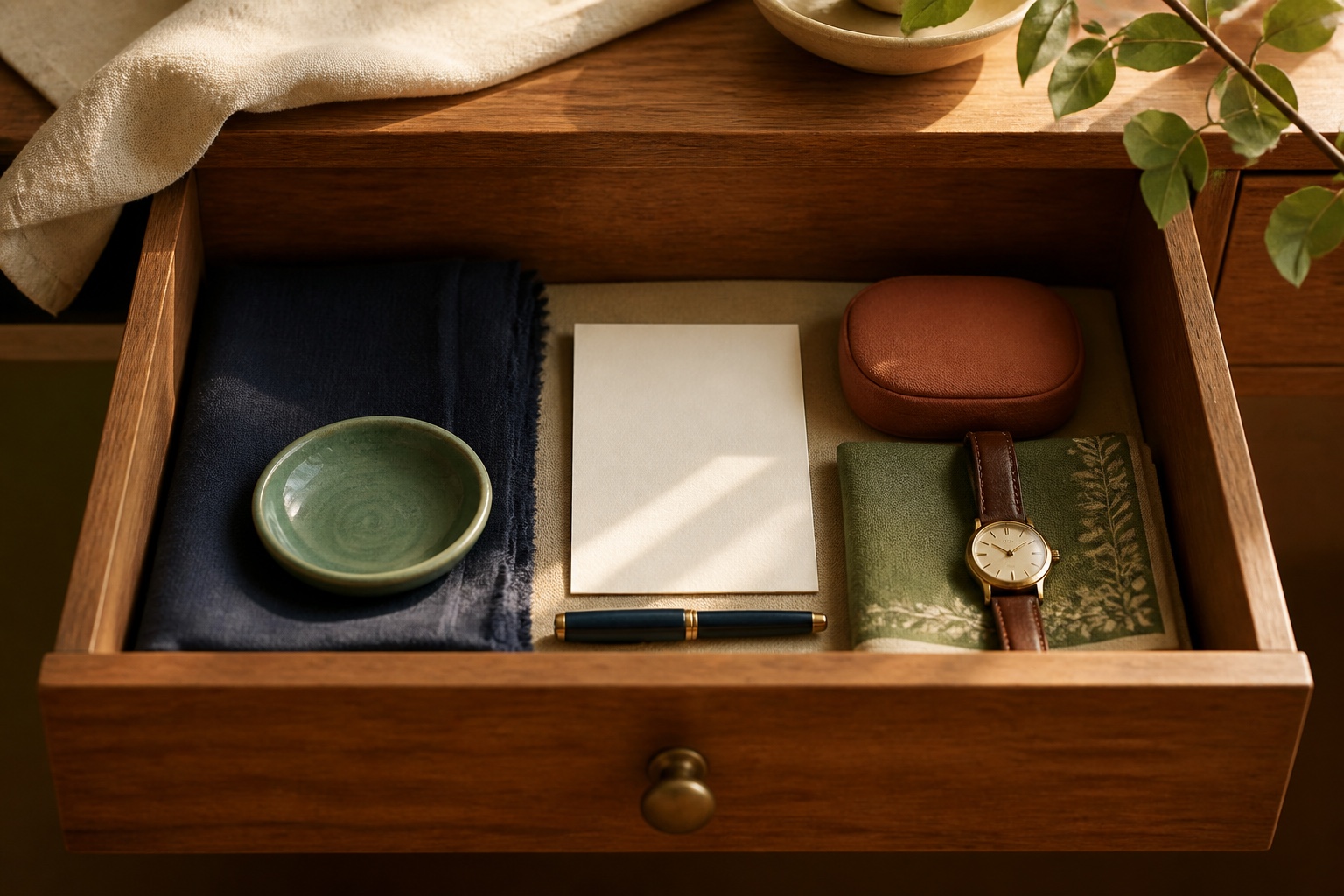
You can start with one drawer, one box of old things, or one cabinet. Ask the person to say what is in use now, what has memorial meaning, and what is only waiting because no one yet knows what to do with it. The reasons need not be complete. They should let future people know that the object cannot be judged only by whether it is “useful.”
“Take it if you can use it” is not a full account
Some people tell family that stored things can be taken if they are usable. That sounds like an instruction, but it does not say who needs them, when they would be used, what to do if they cannot be taken, or the story behind the object. For those left behind, the physical thing becomes a duty. For the original owner, the meaning still has not been passed on.
A clearer way of speaking can be: why this object is being left, who should look at it first, whether it can be handed on if no one uses it, and whether the story should be kept in photos or writing. When the choices are taken apart, family members need not mistake “leave it as it is” for “keep it forever.”
You can also first make clear the range you do not want others to handle, then leave the parts you are willing to discuss. Boundaries let family know when to stop. Reasons give them a chance, later and in different situations, to understand the original standard. That reduces misunderstanding more than leaving only the three words “don’t throw it away.”
End-of-life decluttering does not need to predict every choice. Life changes, and so does an object’s use. What matters is keeping room to discuss again, and letting family know which decisions still need to return to the person.
The process may also reopen conversation among family. Some want to leave the object. Some want to leave the story. Some only hope that in the future no one will be forced to guess on their behalf. Saying the differences aloud does not require immediate agreement. It can still let each person know which kind of choice they are facing.
If a little more understandable information is left, future sorting need not begin from silence.
This is also a way of turning care for objects into care for relationships: not requiring every thing to stay, but letting important reasons be known.
When reasons are left, future handing-on of objects is less likely to be only guessing.
That is also the most practical value of end-of-life decluttering.
It lets important choices be left in time.
It also gives people in the future a path to walk.
Recording is not moving everything onto a hard drive
Physical objects have limits of quantity and storage. Not everyone can keep a copy. You can first pick the objects that truly stand for a stretch of life, then add background with photos, sound, writing, or a short clip. The aim of recording is not to copy a whole room. It is to leave the relation between the object and the person.
Digital files also need sorting. Where they are, who keeps them, how they are opened, and how often they are looked at again should be written down simply. A record no one can find is close to no record. So the method of keeping is itself part of the account.
Leave the future with a little less guessing
End-of-life decluttering need not be finished in one pass, and it cannot guarantee that everyone in the future will make the same choice. What it can do is let the person leave part of their standard for later: which objects are worth understanding, which can be used, which stories they hope will still be told.
While the right to choose is still in your own hands, objects need not wait until the end for someone else to guess the answer. They can be kept, transformed, handed on, or, once the reason is clear, quietly step aside. That does not only reduce the burden of sorting. It also means that when an object leaves its place, it still has a path that can be understood.
💬 Comments
Loading...