
The same sum spent on a slightly more comfortable hotel is easily labeled luxury; spent on a bag that needs careful protection, it is easier to justify. The usual reason is that the experience vanishes and the thing remains. Remaining is then taken as proof that the purchase was worthwhile.
That calculation skips a stretch. As long as the object stays in the house, it has to keep being arranged: where it goes, how often it is cleaned, whether it can take a knock, when it is used, and how it will leave later. Price is only the first installment of acquisition.
After people buy an object, they may end up accommodating it
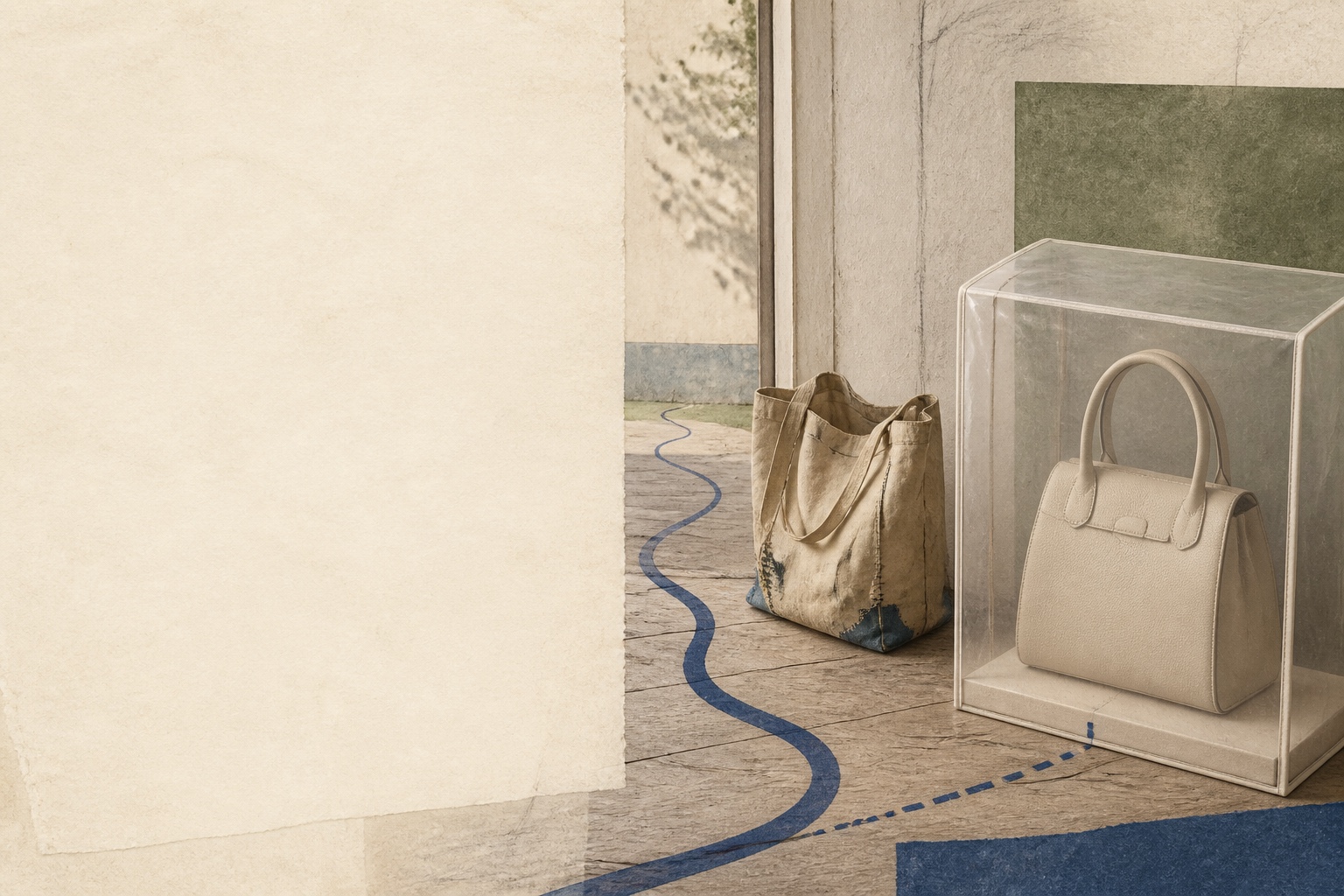
The original article describes several common situations. A high-priced bag taken outdoors has to be steered around scratches and stains, and finally stays in the closet; what actually goes to work is a durable canvas tote. Wearing a luxury watch at work, the wearer eases off force for fear of impact. Wooden furniture bought for a child, once it takes pen marks, can become something the household has to keep reminding people about.
These examples do not mean high-priced objects are always bad, or that durable objects are always cheap. What they share is this: at purchase, the object was expected to support life; after delivery, an extra set of rules appears that must be followed. The specification is not wrong. What the expectation undercounted is maintenance.
Maintenance cost does not appear on the price tag
Once an object enters the home, it occupies at least four kinds of resource: space, time, attention, and the handling cost of exit. The tag reflects the moment of acquisition. The first three may occur by the day or by the year. Exit handling usually happens only once, yet is the easiest to put off until last.
These four costs are not necessarily even, and they are not necessarily borne by the buyer. In shared space, an object that needs special protection may make others change how they walk, use a tabletop, or clean. An object used rarely may occupy the most convenient place for a long time. The harder an object is to fold into daily life, the more the household rules kept for it resemble an unrecorded management fee.
Maintenance rules can also spill into shared space. Care requirements for solid-wood furniture may become: the child must not draw, must not get it dirty, must not move it at will. When an object needs household members to cooperate, its cost is no longer only the buyer’s.
Decluttering visits also show later accounts. In some homes, unopened boxes pile in the entry and living room, skincare expires, unopened fragrance products change; in others, large numbers of unopened toys or duplicate supplies remain. The causes differ; the leftover problems are similar: occupancy, management, and, in the end, handling.
Experiences do not accumulate household stock, but that is not the same as having no environmental cost
After a meal, a trip, or a performance ends, the home does not have to clear a fixed place for it, and years later it will not become physical matter that needs hauling away. That is its difference from material spending. Long-distance travel and services themselves can still produce environmental costs. Experiences cannot be written as having no price.
One retelling mentioned splitting a monthly budget into four weeks, first taking stock, then watching demand, and buying only at the end. The original source and year were not kept, so it cannot be treated as a verified method. What can be borrowed is the structure of delayed decision. When payment and decision are pulled apart, the costs after the object comes through the door have a chance to be imagined first.
Delay is not prohibition. It only gives the buyer time to put frequency of use, storage place, and co-users back into the judgment. If during the wait an object still has a clear use, the decision can rest on firmer ground. If the need disappears, there is no need to invent a reason for it because attention has already been spent.
The criterion is not object versus experience, but whether what follows can be borne
An object with low maintenance cost, high frequency of use, and a long working life can still be good spending. A chair sat in for ten years, a pot used every day, is not necessarily less worth it than one experience. The issue is not the spending category, but whether there is a clear situation of use after the object comes through the door.
Before buying, three questions can be asked first: Where will it go? How often will it need care? When use is over, how will it exit? If the three can be answered, the price has a complete meaning. The price is written on the tag. The cost is written in every day after.

💬 Comments
Loading...