
If a rule is not paired with a concrete way of doing it, it often only changes where the behavior happens. Telling a child not to eat in the room and taking away the trash can may let adults stop seeing the trash for a while, but it does not necessarily make eating disappear. With no outlet for trash, the child can only find a place that will not be seen. The problem is not solved; it is moved to another corner.
So the second half of the rule has to be said clearly as well: if food is eaten in the room, where do the wrappers go? Which kinds of trash must leave the room the same day? Who empties it? If the child will not use a given container, is it too far, too hard to open, or has the child never been given space in which they can actually decide? If the alternative path is more trouble than the original behavior, the rule will be hard to run in daily life.
Personal space and shared safety are two different things
The child lives in the home, so the everyday order of the room needs to be negotiated together. Who bought, registered, or manages the house cannot simply stand in for how the room is used every day. The former is a rule of living; the latter is another layer of rights and responsibilities. Mixing the two into “this is my house” easily turns the discussion from how to make the room usable into who gets the last word.
That does not mean the child faces no consequences. If odor, pests, fire sources, wiring, passageways, or hygiene already affect other people, the issue is no longer only a personal choice inside the room. When an adult steps in, they can name the concrete effect: this situation already affects shared safety, so we need to deal with this particular place together. Stating consequences and using rank to override the other person are two different approaches.
Decision rights given in words have to actually remain
Some families say before tidying, “the child decides what stays; we will not interfere,” yet as soon as the child picks something up, the parent starts reminding them of its price, its story, and the past. The child wants to deal with life now; the parent wants to keep their own memories. Objects are put back again and again, and the room naturally struggles to work again.
Whether decision rights were really handed over is not shown by what was said beforehand, but by where the object finally stops. Shared-safety items can be listed first; other personal objects the child can decide within a clear range. If a parent needs to keep a particular object, they can state their own need and negotiate a place in a shared storage area, rather than taking it back into the room after the child has already decided.
Let order be able to leave the room
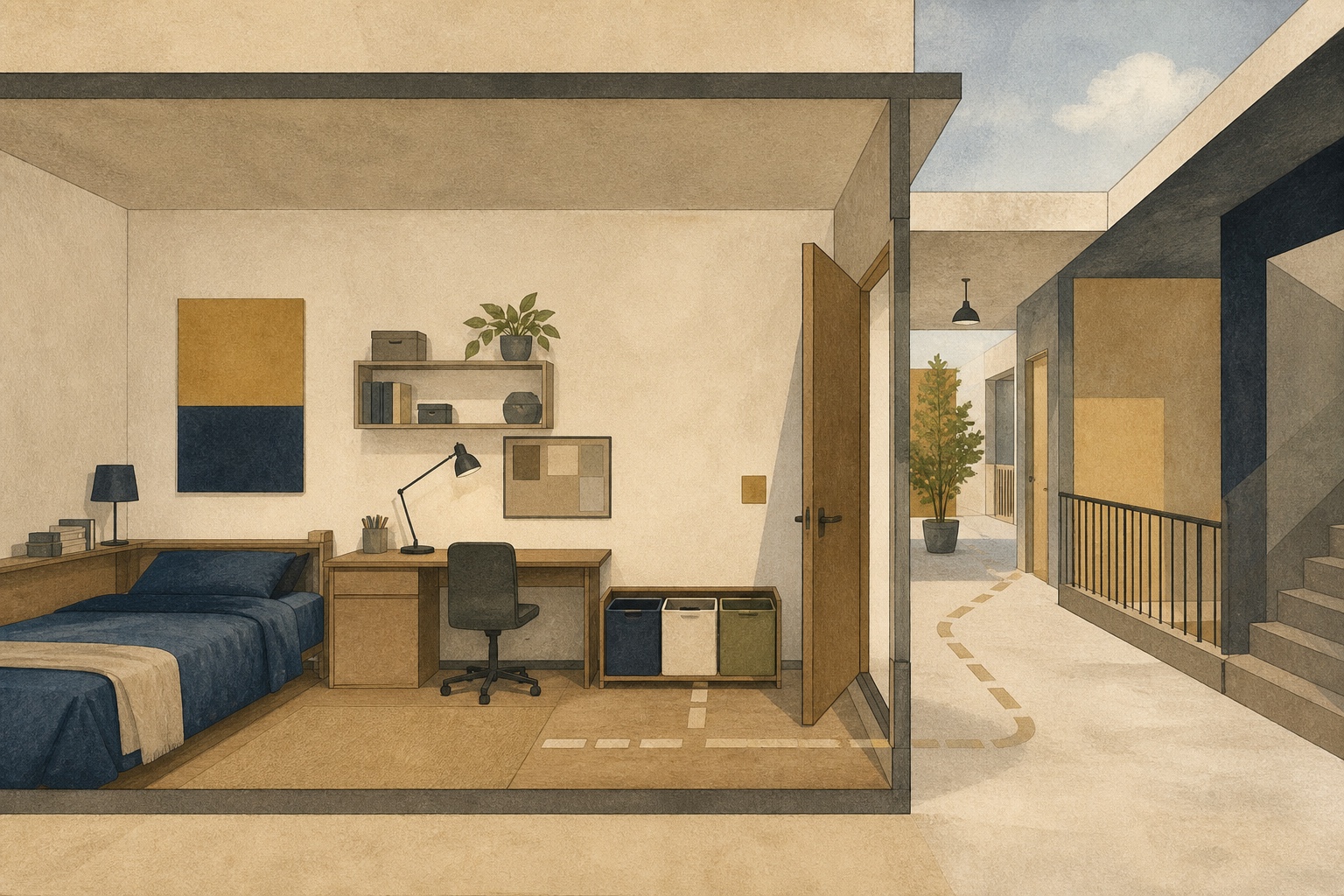
Executable rules should sit close to where the behavior happens. Trash containers within reach, a clear collection point for dirty laundry, enough working surface left on the desk, and a place for used objects to go back without a long detour. There need not be many rules. What matters is that each one can answer “where does it go next” and “who completes it.”
These arrangements also make objects less likely to be hidden, lost, or bought again. Knowing where something is makes it possible to keep using it. When it is no longer needed, it is easier, with agreement, to hand it on, repair it, or move it out. Circulation is not emptying a room by command. It is letting objects find a next place inside clear responsibility and the right to choose.
For a child’s room to change, two things can be checked first: whether they have actually been allocated this space, and whether the action you ask for is easy to complete. If neither answer is clear, do not add more rules yet. First make the path, the tools, and the shared-safety boundary explicit. Then tidying has a chance to move from a contest over power back to negotiation about living together.
Negotiation can also leave time to look again, rather than treating one conversation as a permanent rule. How the child uses the room will change, and objects will come and go. If a container is always put in the wrong place, change the location first; there is no need to add blame at once. If a safety boundary still cannot be kept, restate the shared effect and find the range that needs to be handled together. When rules can be adjusted, objects have a chance to stay where they will actually be used, rather than moving back and forth between command and resistance.

💬 Comments
Loading...