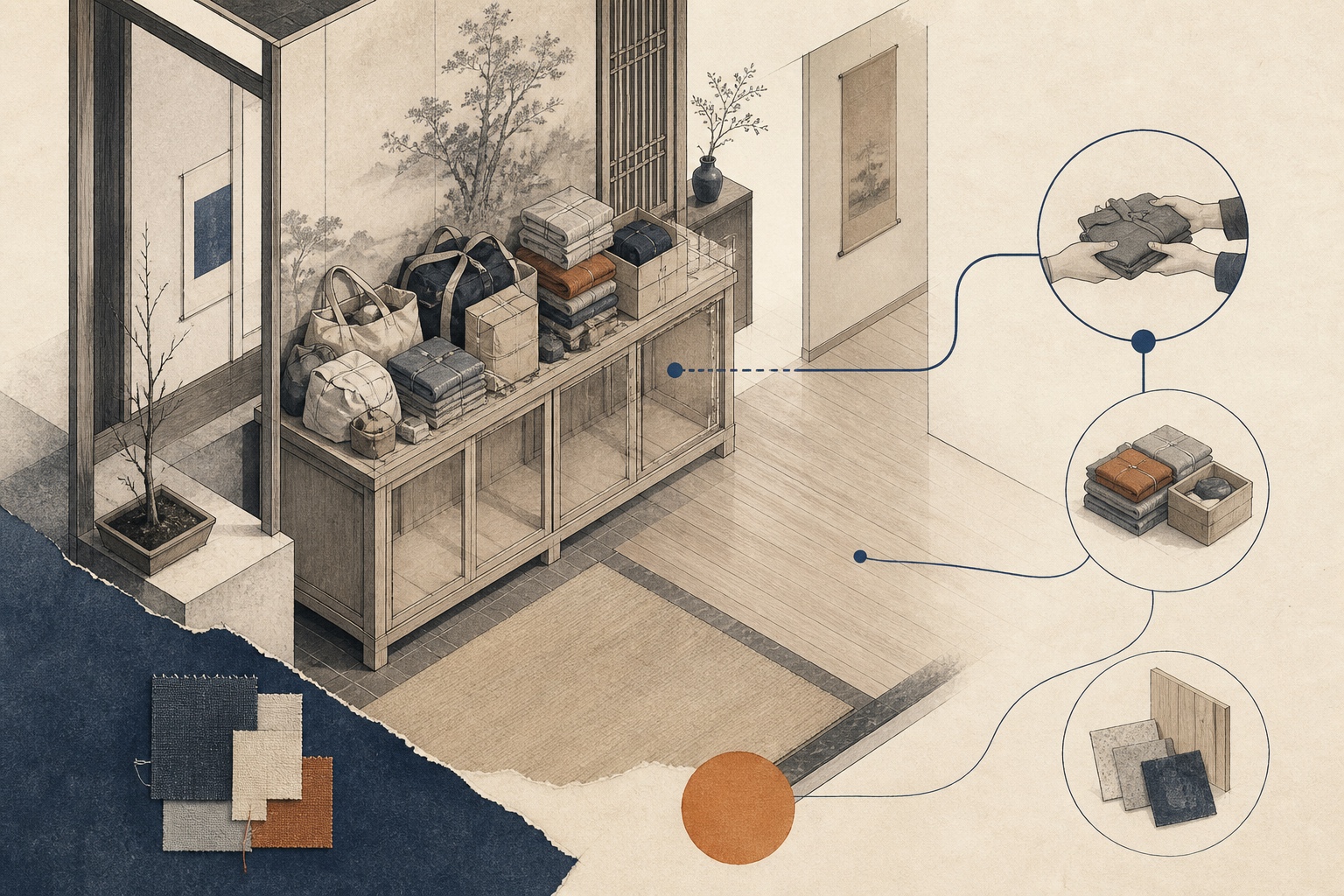

After a large object loses its function, it often does not leave at once. It may first keep its original place, then become a surface for parcels, hanging clothes, stacked cartons, or miscellaneous things set down for later. Over time, what people notice is that there seems to be more and more stuff, without easily seeing that one large piece may have been providing an entry point for new clutter all along. The original case makes this possibility clear, but it should not be treated as a law for every household.
That does not mean every large piece of furniture should be moved out. Objects still in use, needed by someone, or with a clear everyday function must be judged separately from large pieces that have retired yet keep occupying space. The first question is not how large it is, but whom it still serves, which activities it serves, and how long it has gone without being truly used.
A large piece can stall three possibilities at once
The original case shows that a large object whose function has ended may stall three things at once. First is surface: a surface at a convenient height is easily treated as a place to “put this down for now.” Second is depth: a bed frame, cabinet, or appliance that is too deep may let things go in where they cannot be seen and are hard to take out. Third is movement: the heavier and harder to dismantle a large piece is, the less it will be shifted in ordinary daily life, and the floor around it may gradually become its extension.
When these three happen together, tidying easily stops at the surface. People put small things away without dealing with the center that keeps attracting things set down for later; after a while, objects return to the same area. What truly needs to be closed may not be the last bag of miscellaneous items, but the entry point that no longer has a function yet still receives objects.
Confirm first whether the function has ended
You can start by inventorying every large object at home and asking three questions: Who is using it now? Does it carry its original activity, or only other objects placed there for the time being? If it were not here today, would daily life lose a necessary function, or only a habitual surface?
These questions are not meant to treat “putting things down” as having no function. They help distinguish use from burial. If someone still works at a table, it is a work space; if for a long time it only holds things waiting to be dealt with, it is worth checking again. If a cabinet still lets you find everyday items clearly, it is storage; if opening it reveals only contents that have gone unconfirmed for years, it may have shifted from storage to concealment.
During the inventory, you can first photograph what the object currently holds, then clear a small passable or workable surface and watch for a few days whether it is truly needed. If the emptied place is quickly filled with the same kinds of objects, what may need checking is the path by which things enter and are held, not merely finding a larger piece of furniture. If it is not filled again, the original function of that large piece may already be gone from present life, and it is worth moving to the next confirmation and arrangement rather than relying on guesswork alone.
For large objects, put the exit first
Large pieces are hard to handle usually not because people do not know whether they should leave, but because the decision, dismantling, moving, and handover conditions are not in place at the same time. So you can confirm first: Does anyone still need to use it? Can it be handed over intact? If not, is there a suitable way to dismantle it or handle the materials? Who can complete the move within a safe range?
Items that can be reused should be arranged first for the next user; those that cannot be taken on directly can then be considered for dismantling and corresponding handling. This article does not turn a general essay into moving or safety professional instructions; actual movement still depends on the object’s weight, the space, and professional capacity. What matters is not to take a large piece apart when there is no exit, transferring the problem into more small parts.
When the home has been tidied and quickly becomes messy again, look first at the large objects that have gone longest without being reconfirmed. They may not be the whole problem, but they may be where clutter begins. Confirm ownership, the object’s condition, receiving conditions, and lawful handling first, then arrange movement with appropriate labor or professional help; once the conditions are in place, other objects have a better chance of returning to a genuine path of use.

💬 Comments
Loading...