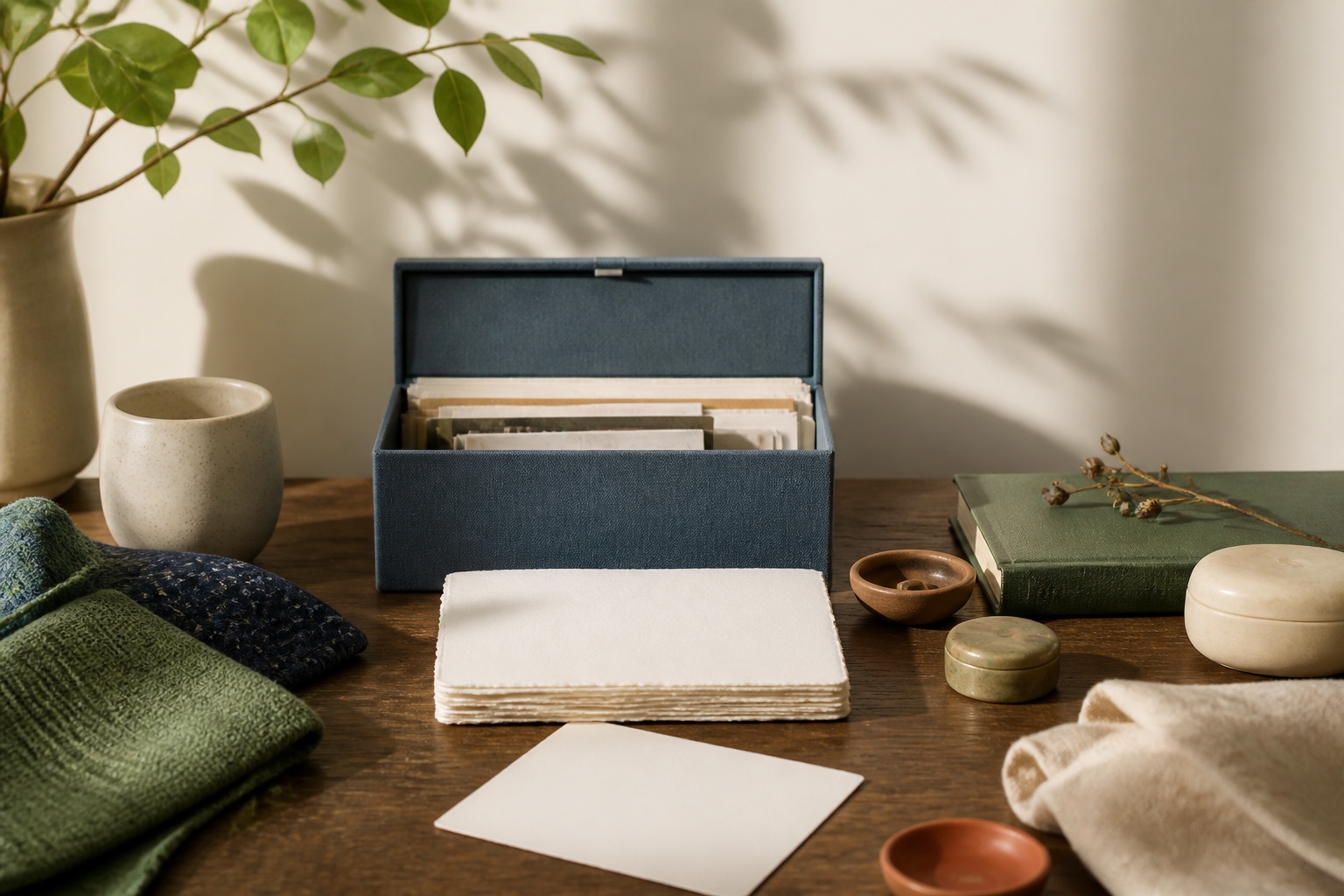

When sorting keepsakes reaches its end, the real decision is not how much to keep, but in what form a stretch of life can still be understood. Physical objects are limited by space, quantity, and time; stories need not stay bound forever to the same object.
After the house is emptied, the stories need not vanish with it
A piece of clothing, a photograph, a cup may look ordinary to others, yet for family they may stand for a rhythm of living. When a space must be used again, not every physical thing can be kept; without transforming first, family later can only recall from impression how that person once lived.
Transformation does not deny the physical object; it admits that objects can carry only part of memory. You can keep a few pieces that most represent the relationship, then add photographs, sound, writing, or a short clip for the situations of use. What is preserved widens from the object to the story, so sharing need not happen only with the person who holds that object.
Selection can keep touch and traces of use; images can keep space and arrangement; oral accounts can supply reasons others would not see. They need not replace one another, and they need not all be finished. Ask first what future people most need to understand, then choose the simplest way to record, so sorting does not become another large project.
If an object is still fit to use, it can, with consent, go to someone who truly needs it, while a short story is kept. That kind of transformation does not wipe the relationship off the object; it lets function and memory each find a fitting destination.
Some family members need an object they can touch; others need a stretch of sound they can hear again later. Different forms need not compete, because they answer different doorways into memory. Admit that difference first, then decide the scope of what to keep; that usually comes closer to the problem than arguing over who cares more.
Choosing what to record can also become a shared sorting. Family look at objects together, hear stories, and confirm what is suitable to keep; what remains is then not only one person’s judgment. Even if no one can keep every physical thing, they may still decide together which relationships are worth passing on.
Shared sorting is not the same as making things public. Family may keep records only among themselves, or agree which contents can later be shared and which stay for particular people. The more forms there are, the more you need to confirm first who can see, who can edit, and who is responsible for custody.
The earlier these boundaries are stated clearly, the less later preservation turns into a new burden.
Preservation therefore needs edges.
Select first, then record
If every item is photographed, digital files are only another kind of pile. A more practical order is to ask what this object represents, then decide whether to keep the physical piece, an image, or a line of explanation. Selection gives recording a range, and lets future people know what is central and what was only stored for the moment.
Images can keep space and detail; oral accounts can add origin and how something was used; writing suits background that will still be needed later. Different forms need not all be used; what matters is that together they answer why this object is worth being understood.
Records themselves also need to be organized
Digital files do not take living space, yet they meet problems of files that cannot be found, formats that change, devices that fail, or accounts no one knows. Every important record should carry a simple filename, a storage location, a custodian, and a way to open it, and should be looked at again at the right time.
If records are to be shared with family, confirm the scope and consent first. Preserving a story is not making private life public; being able to pass something on does not mean it can be used at will. Only when data are properly protected do they have a chance to accompany the next generation for longer.
The way out for a keepsake can be keeping it, or transforming it. When an object’s story is chosen, written down, and carefully kept, even if the physical thing leaves its original room, the relationship still has a chance to remain. This is not moving memory onto a hard drive; it is finding memory a form that can be understood, shared, and looked at again.
💬 Comments
Loading...