
TL;DR: In the summer of 2018, I gave four middle schoolers a real task: one summer to build a functional e-commerce website from scratch, with genuine stakes either way. I remember the first two weeks as a blank page, everyone still exploring and finding their footing. A month later they delivered something remarkable. Authentic tasks build capability because they carry real purpose, a real audience, a real deadline, and the genuine possibility of failure. The biggest thing I took from that summer was a confirmation I keep returning to: we consistently underestimate what kids can learn.
In the summer of 2018, I made a decision: no practice exercises for four middle schoolers. A real website that actually had to launch.
This was my summer session of Introduction to the Entrepreneurial Spirit. I could have handed out a simulation, a fake brand, fake products, a fictional client, fill in the blanks, collect the scores, everyone goes home satisfied. I didn’t. The task I gave them was this: one summer, four people, starting from a blank page, build an e-commerce website that could actually operate. Whether they pulled it off or not would be real. I also brought in Pecu, Professor Tsai Yun-cheng, then an assistant professor at National Taiwan University, to guide the project, along with two of her sophomore students as teaching assistants. Between the professor, the two TAs, and me, we were four adults supporting four students. We stayed at a youth hostel on Qingdao East Road and used that space as our learning environment, making sure everyone had enough time together to communicate.
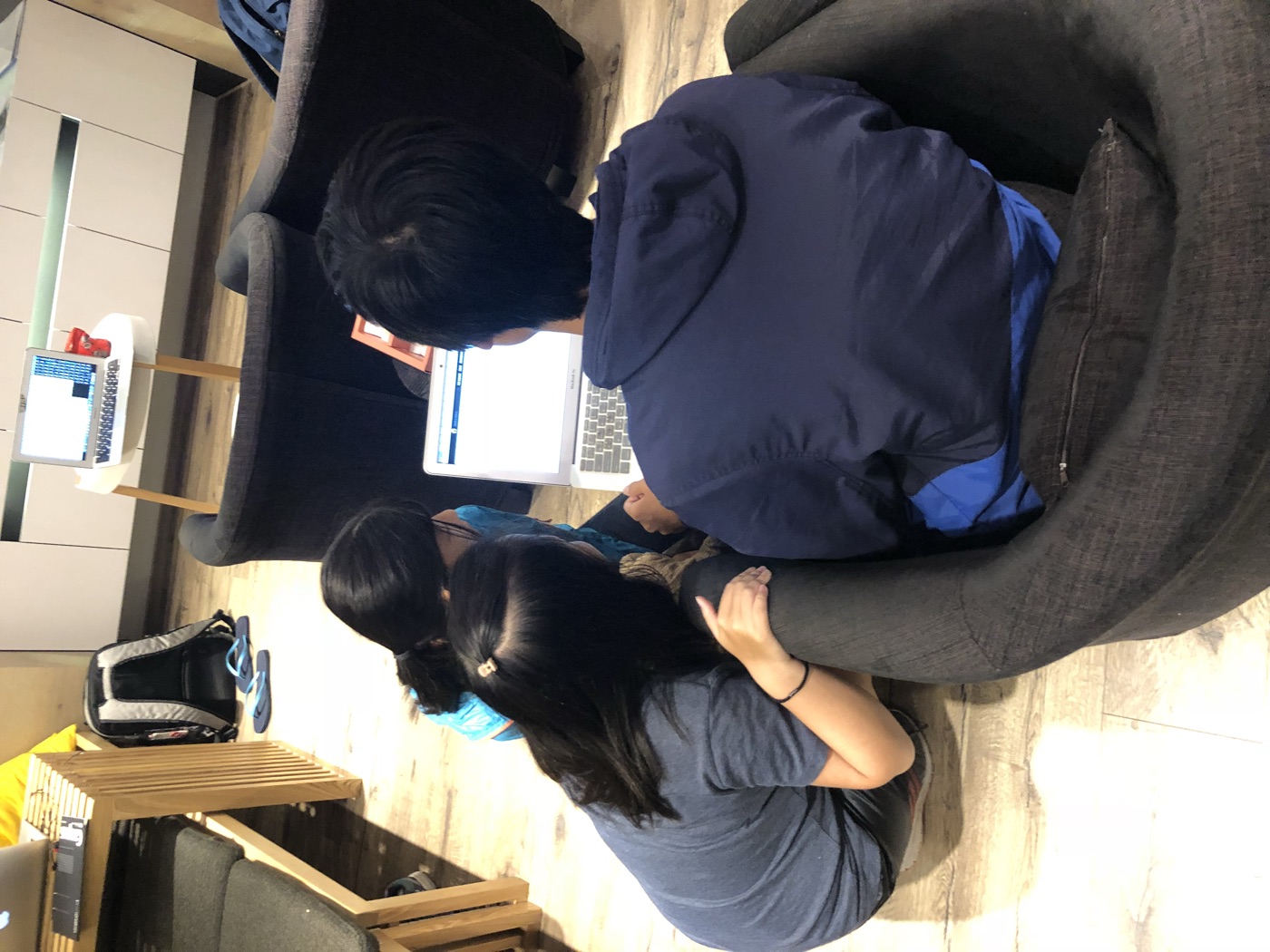
The youth hostel on Qingdao East Road was the four kids’ learning base that summer.
Living together was deliberate. You can’t run a project like this by everyone going home to do their own piece. It’s closer to going to work: a group of people has to live together, eat together, and work together, because many of the problems only surface through the friction of being around each other all day.
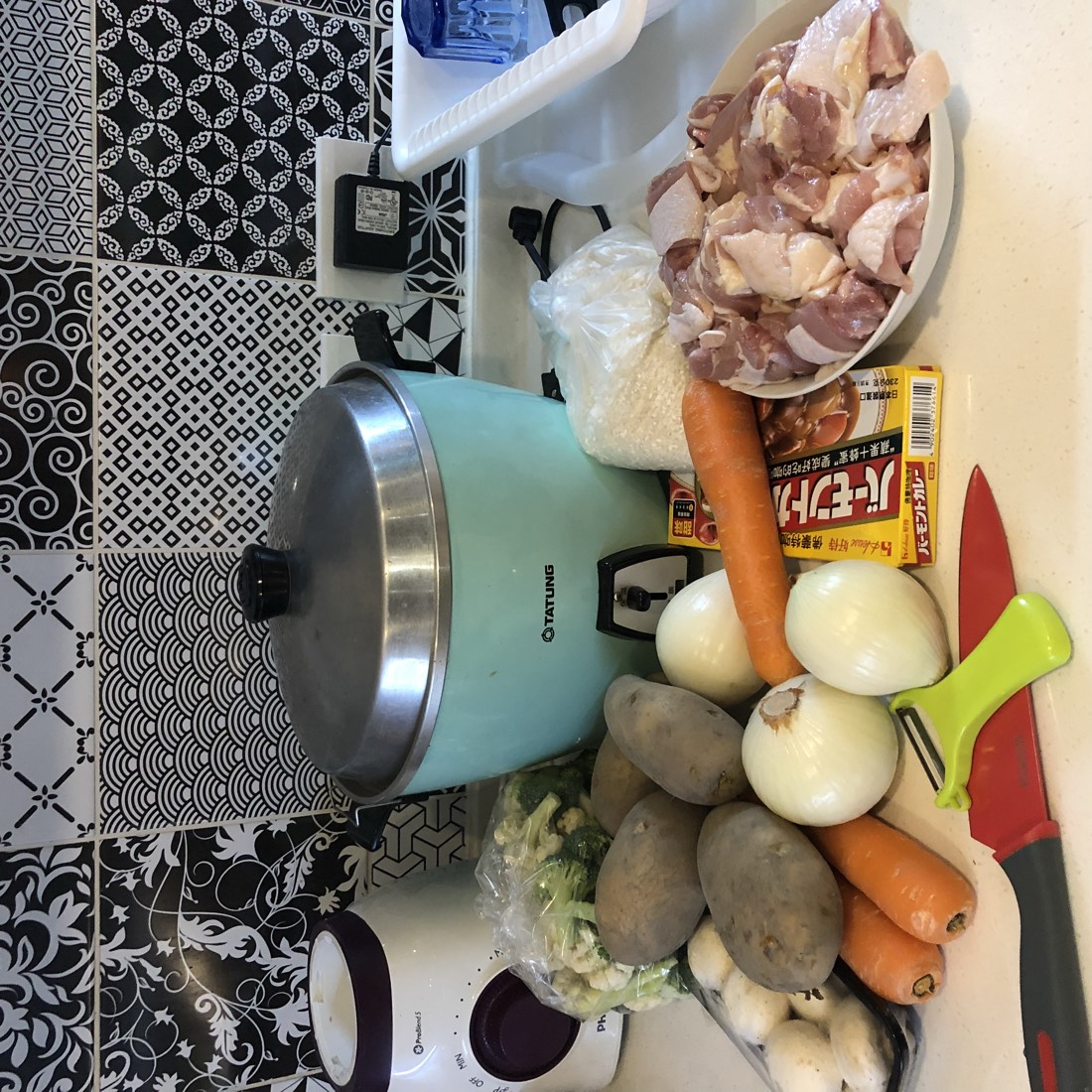
Cooking curry together at the hostel. During the project they lived together, more like colleagues than classmates each doing homework alone.
The reason I designed it this way is that I had grown increasingly skeptical that simulations could build real capability.
What Simulations Remove
What genuinely separates a practice exercise from an authentic task comes down to four things.
An authentic task has real purpose: the website actually has to make people understand, trust, and then buy. It has a real audience: the teacher’s grade isn’t the only verdict, anyone who lands on the page counts. It has a real deadline: the summer ends with a public presentation, and time doesn’t wait. And it carries genuine consequences for failure: if it doesn’t get built, it doesn’t get built. No consolation prize.
Simulations strip all four away. The scope is pre-defined, the model answers are ready, and nothing bad happens if you fall short. So students can stay indefinitely at “I think I get it” without ever having to think something all the way through. The gap between “I think I get it” and “I can actually do this” is precisely what education is supposed to address.
I staked everything on that gap.
The First Two Weeks: A Blank Page
The challenge arrived quickly.
Two weeks in. Nine in the morning, after our daily check-in, I stared at their screens. Four people, two weeks of work, and the site was still almost completely empty.
At first I thought it was a pacing problem. Then I understood it was a cognitive problem. Where they were stuck wasn’t “where’s the button”, it was a question one step earlier: what is this website actually supposed to do? Who are we, what are we selling, why would anyone trust us, how does a customer complete a purchase? Without answers to those questions, every page was just floating decoration. No amount of tool proficiency would give it anywhere to land.
My arrangement with the guidance team was this: Professor Tsai and the two TAs handled technical questions; I worked with the students on starting from zero with the customer in mind, how to figure out what they actually needed.
That blank page looked like failure. The truth was the opposite: the task was only starting to actually happen. This kind of stall never appears in a simulation, because practice exercises pre-think the problems for you. Here, no one did that for them. I later wrote up the cognitive mechanics of this moment in full in “System vs. Intuition”: why “thinking it through” is a hundred times harder than “getting it done.”
What the Adults Did on the Side Mattered More Than What They Did For Them
Being stuck there was actually hardest for me.
I wanted badly to just hand them the answers. Frame the brand this way, categorize the products like this, write the homepage like that, ten minutes and that blank page would have something on it. But the moment I did that, the task would shift from theirs to mine. The capability would stay with me, never reaching them.
So I converted my job into asking questions. Who are you? Why would someone buy from you instead of someone else? A person lands on your site for the first time, what do they need to see in three seconds to stay? How do they get from seeing to buying? I held back the answers and returned each question to them, one at a time, forcing them to work through it themselves.
At the same time, I held two boundaries. First: I don’t do it for you. Second: I don’t let the task collapse. Along the way they argued, re-divided the work, and at points someone wanted to quit. I didn’t smooth the conflict away. I left it there and treated it as a problem they had to solve together. The educator’s role in an authentic task is closer to standing nearby, present at the critical moments, catching the experience and helping them shape it into understanding.
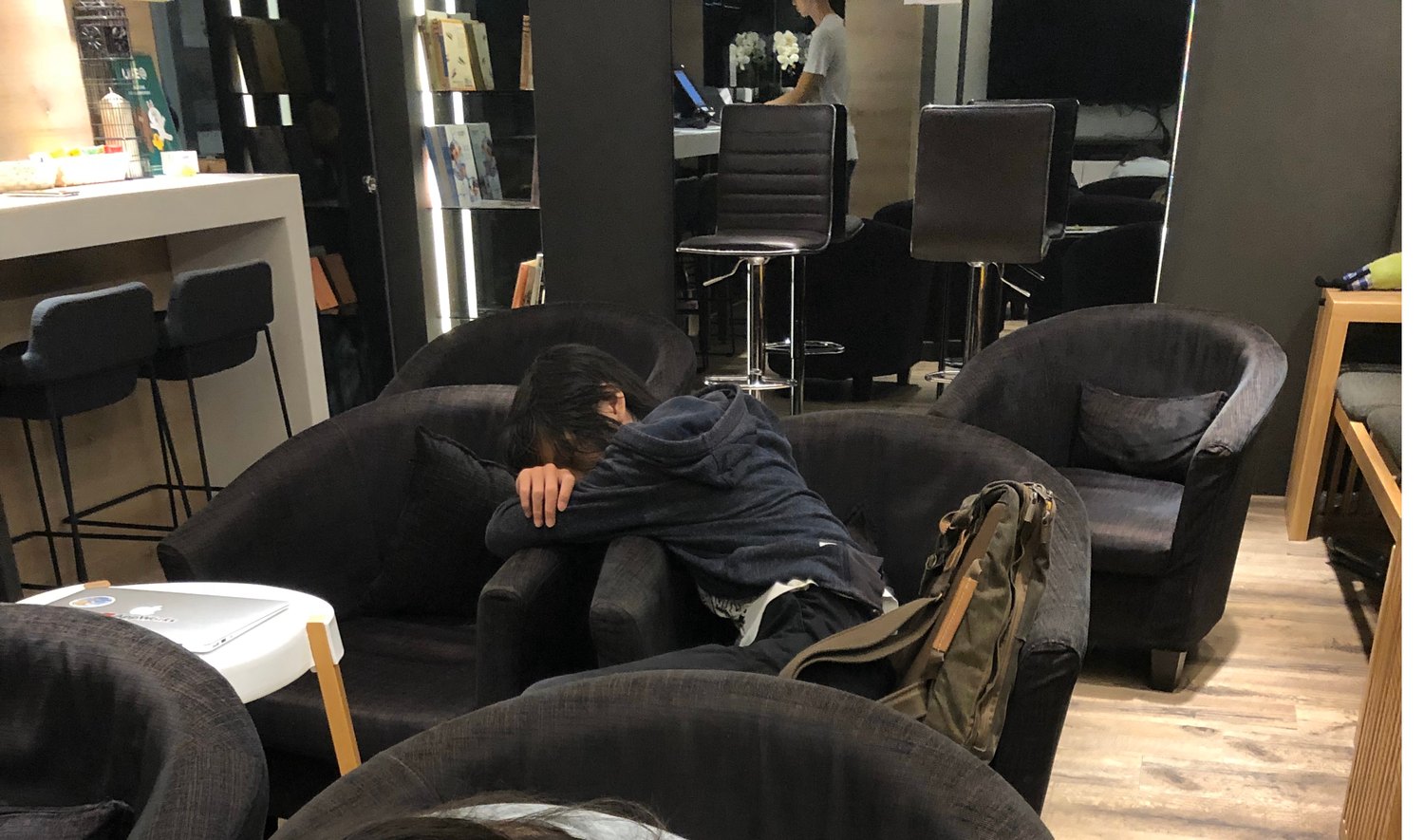
What the grind looks like: worked until tired, asleep right there on the hostel sofa.
A Month Later: A Website Worth Presenting
Then things started to grow.
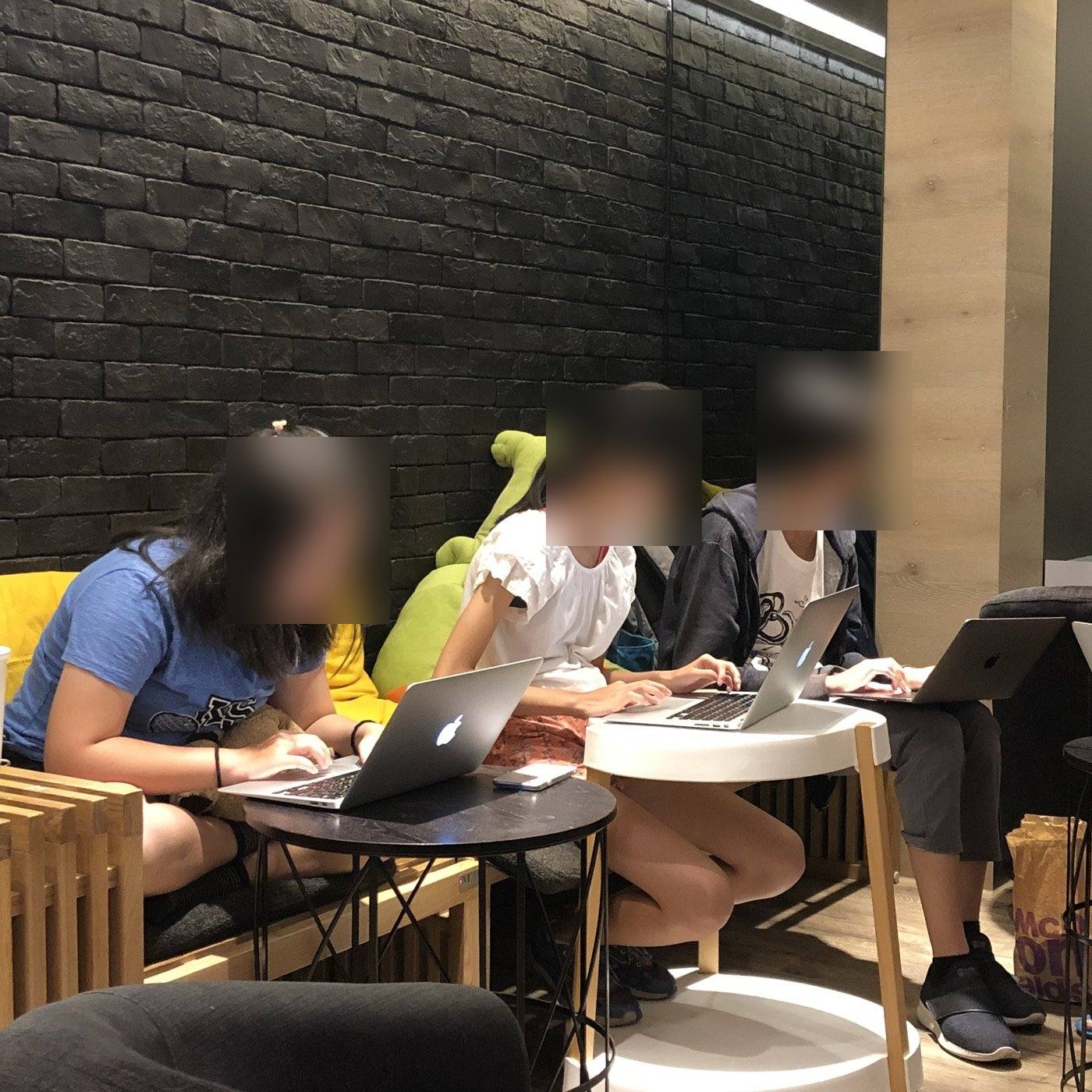
What growth looked like: sitting in a row, each carrying a piece. Faces blurred to protect the minors.
Once they had answers to what they were building, the pages had somewhere to put things. They began turning “who we are” into a homepage, “what we sell” into product pages, “how to buy” into a clear path. The four of them sorted out their division of work along actual lines of the process rather than working in parallel at nothing. From a blank page in week two, to a month later, they delivered a website ready for a public presentation, and a genuinely impressive one. We later arranged for them to demo at AppWorks.
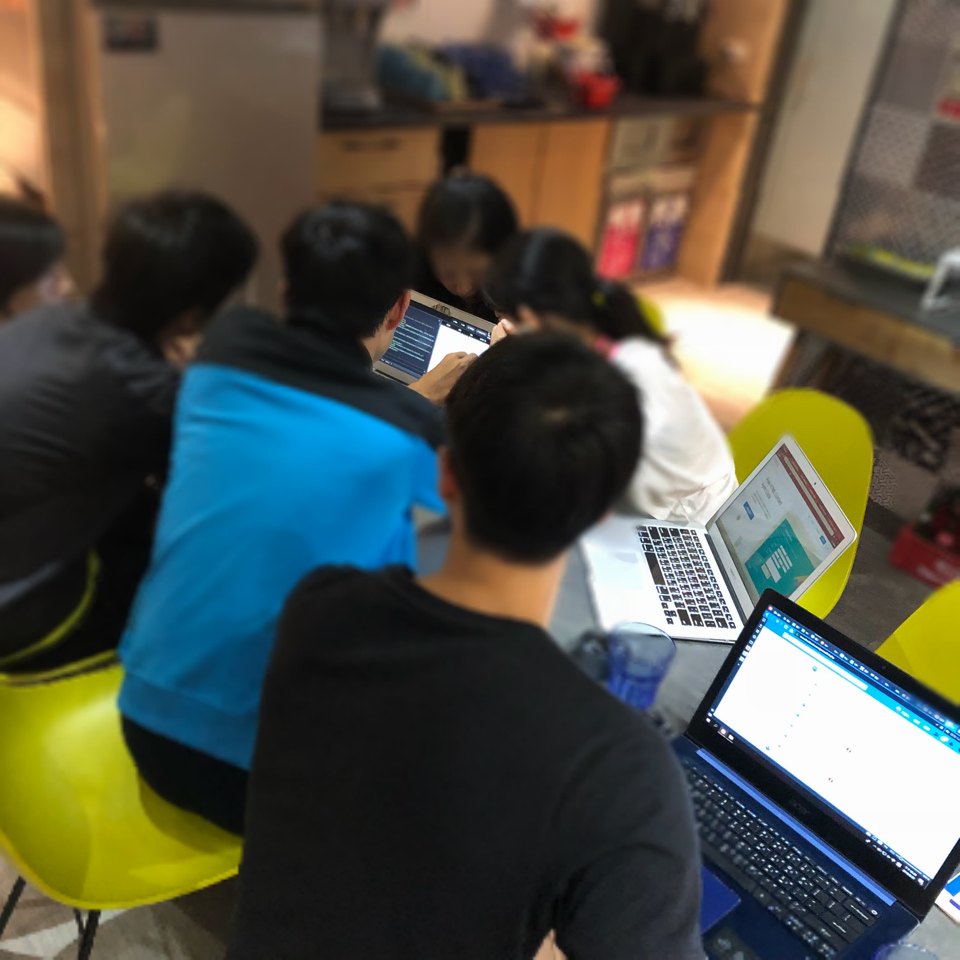
This website was built exactly like this, the four kids and two teaching assistants clustered around laptops, working it out one piece at a time.
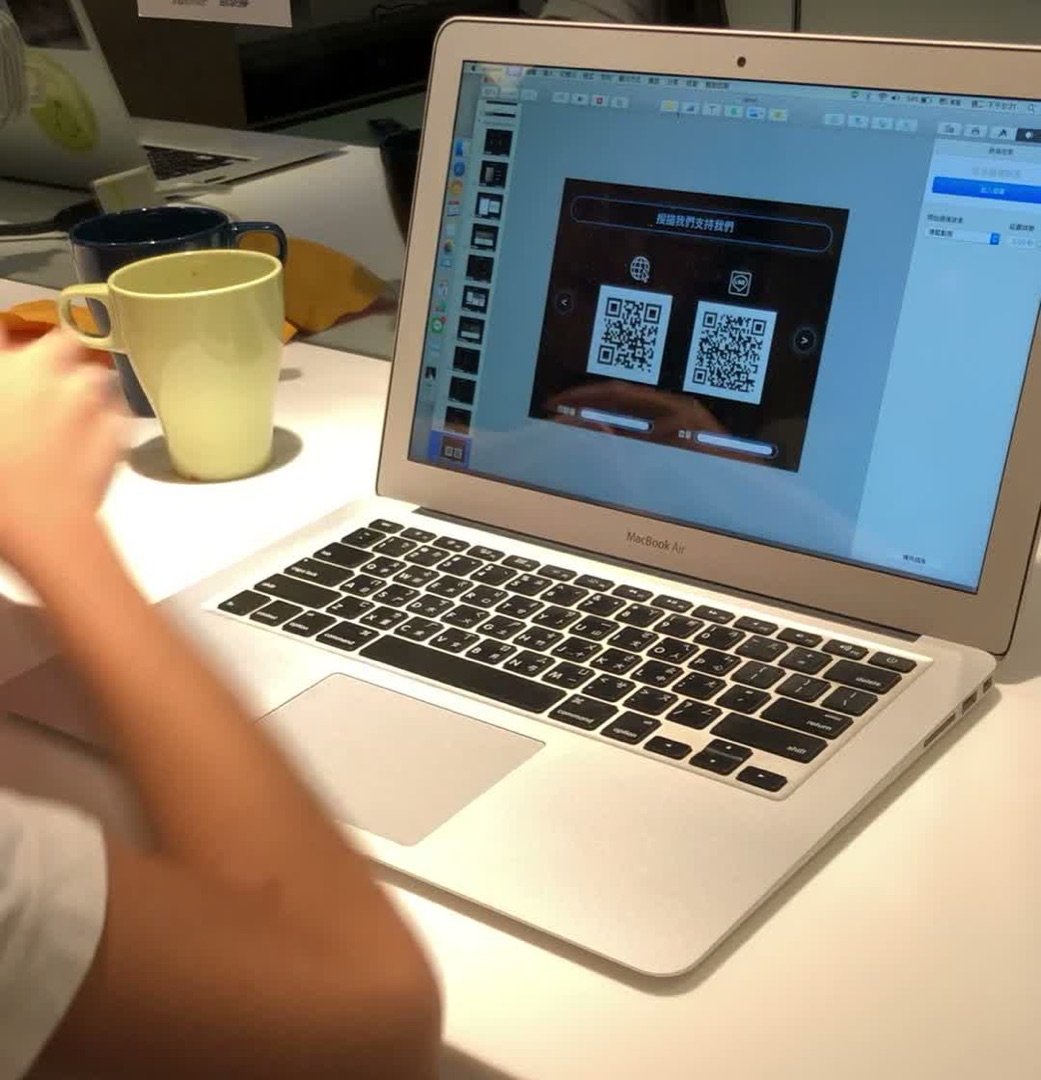
They really did build the site.
Looking at what they’d made, what rose in me was a voice I’d had throughout the process of working with them: we consistently underestimate what kids are capable of learning.
Adults often assume children can’t manage something, so they pre-simplify the task, pre-protect them from difficulty, hand them a safe but hollow version. But when you actually put a hard, real, failure-possible task in front of them, and stay nearby, what they produce regularly exceeds what you dared to expect. This had nothing to do with these four kids being exceptional. It’s that this kind of task carries this kind of force in itself. That’s the power of the environment.
This Can’t Be Romanticized
I should account for the practical details, or this piece becomes a flattering success story.
Projects like this consume adult time. That month, the hours the professor, the two TAs, and I invested in questioning, accompanying, and absorbing the chaos far exceeded what producing a practice exercise would have taken. Not every teacher, not every family, has the conditions to sustain that kind of investment over time. The results of authentic tasks are real, but so are their costs. Both need to be said for the picture to be honest.
And one case is not a formula. Four kids and one summer website is not something anyone should try to copy exactly. What it offers is a set of design principles to think with: put real purpose, a real audience, a real deadline, and genuine failure risk back into the task. Then let the adults shift from people who give answers to people who design the environment, ask the probing questions, hold the boundaries, and encourage.
Along the way, the four of them also negotiated their own division of roles: someone handled visuals, someone handled content, someone handled front-end, someone handled back-end. Some areas were cleanly separated; others overlapped. Each kid’s task was to keep designing as they went.
This is the first authentic-task case study in the “Beyond the Flip” education series. It aims to answer something from the overview piece “Beyond the Flip”: authentic tasks expose the gap between “thinking you understand” and “actually being able to do it.” That summer, four middle schoolers used a blank page and a remarkable website to demonstrate that sentence for me, in real time.
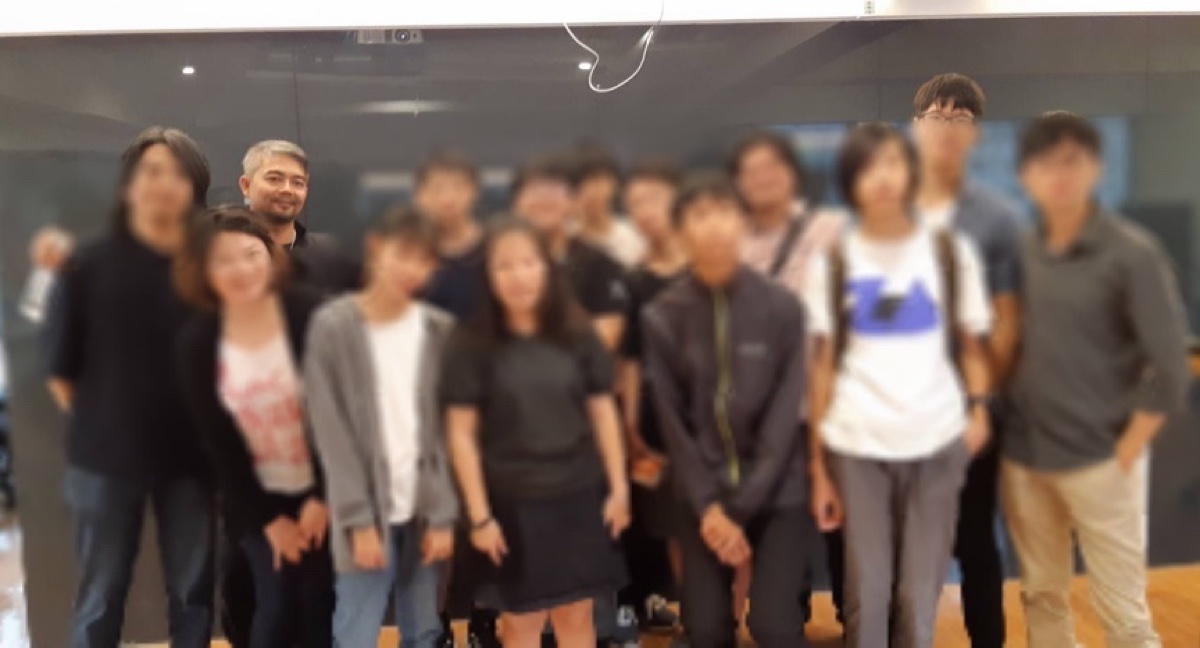
The team that summer: the four kids, Professor Tsai, and the two teaching assistants. Faces are blurred to protect the students’ privacy.
💬 Comments
Loading...