
TL;DR: Homeschooling is not a departure from the system. The experimental education plan goes to a municipal review committee. The education office issues an approval letter. A thirty-plus-page learning report is due every school year. Assessment uses no exams, it runs on daily real-world tasks and immediate verification. In the final year of high school we ran all three tracks: special admission, the university entrance exam, and the employment program, because unconventional paths come with no guaranteed placement. In the end, we stayed inside the institution, and entered university through special admission.
Many people assume that homeschooling begins with leaving: leaving school, leaving the curriculum, leaving the system.
Sorting through my child’s university application files, the document sitting at the very front told a different story: a personal homeschooling application submitted to the municipal education office. The one at the very back was a university special-admission acceptance letter. What happened between those two documents is what this piece is about.
The conclusion first: not one step along this path was an escape from the institution. Every step was a different way of being seen by it.
Homeschooling Is Applied For
Homeschooling in Taiwan operates under the legal framework of experimental education, formally called “non-school experimental education.” Our family’s path had two phases: enrollment in an experimental education institution starting from middle school, then a transfer to personal homeschooling in the second semester of eleventh grade.
The first step of that transfer: the family writes a complete experimental education plan covering learning objectives, curriculum design, teaching arrangements, and assessment methods, then submits it to the municipal experimental education review committee. Once the committee approves it, the education office issues an approval letter, and the student’s homeschooled status is officially recognized for that year. The same cycle of plans and reports repeats every school year after that.
Put plainly, “homeschooling” means a curriculum design document that a government body will review. I wrote in “The Truth About Homeschooling” that homeschooling is not outsourcing education to freedom; it is high-density educational design. One thing to add here: it is educational design that gets submitted for approval.
The Homeschooled Student’s Summer Assignment: A Thirty-Page Report
At the end of each school year, personal homeschooling students submit a learning outcomes report to the education office.
My child’s report for the final year of high school ran over thirty pages, organized around an official framework: stated objectives, implementation, progress toward goals, difficulties encountered and recommendations, and future outlook.
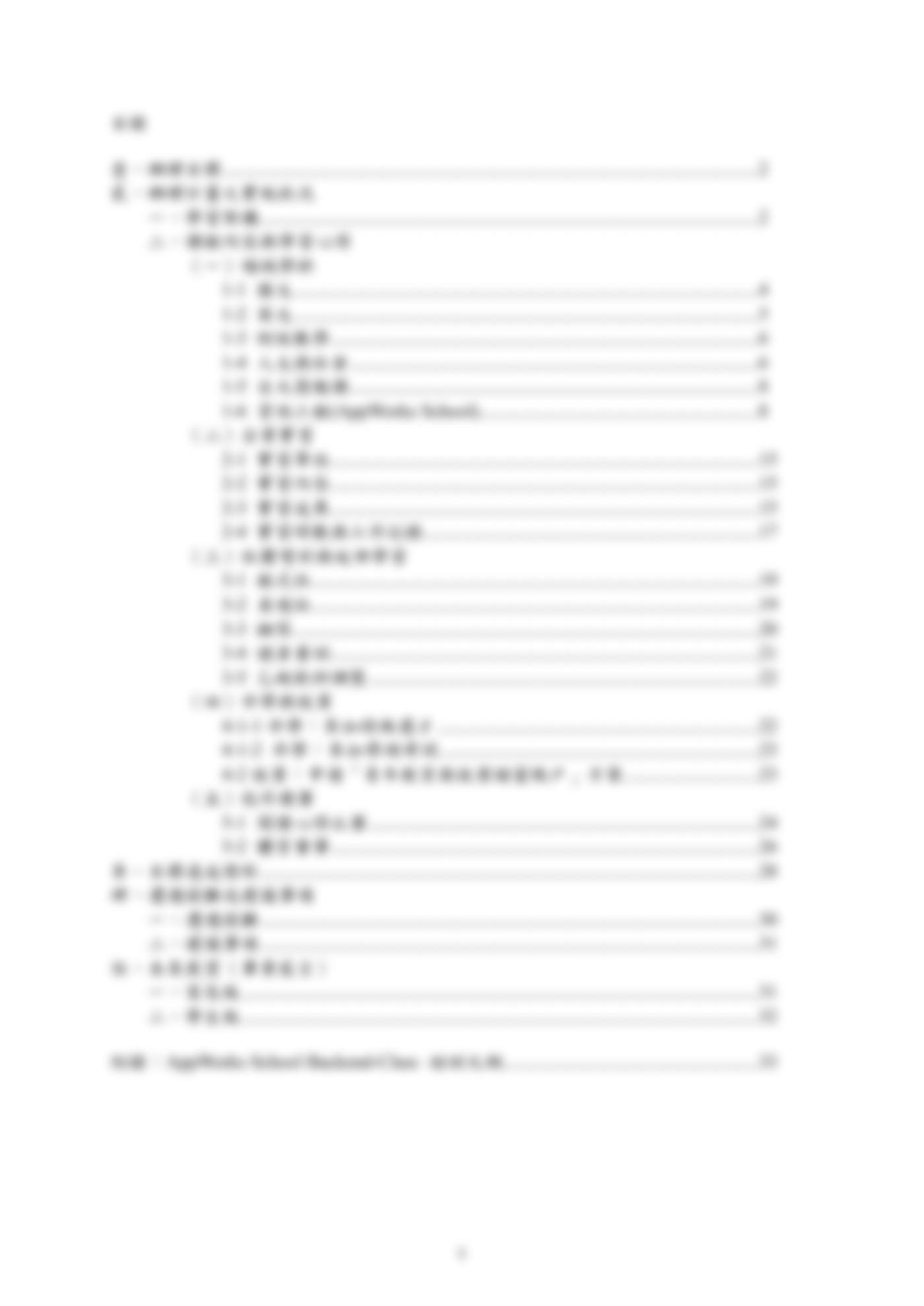
The table of contents from that thirty-plus-page annual learning report. The document has been blurred and de-identified; only the structure is shown.
Opening the implementation chapter, you find a full year’s dual-track schedule. On the academic side: Chinese, English, financial mathematics, humanities and social studies, plus a university presentation course and a completion certificate from a backend engineering training program. On the internship side: working as an operations assistant at a bakery storefront, handling an e-commerce system migration and paid advertising. The extracurricular column lists programming, board games, piano, strength training, and cocktail mixing.
Let me be clear about one thing: the academic subjects were not dropped just because we chose self-directed learning. Chinese, English, mathematics, these fundamentals still followed the curriculum guidelines, and the basic STEM foundation was maintained. The only difference is that we didn’t drill them relentlessly for the sake of exams; the time saved went into authentic tasks instead.
Each subject gets its own section in the report, student reflection, parent self-assessment, and instructor comments running side by side, following the same assessment philosophy as “Assessment Without Grades.” This report does two things at once. For the education office, it fulfills a legal obligation. For the family, it is a yearly reckoning that forces you to gather scattered learning into something an outsider can actually read.
Assessment Without Exams
The report includes a passage I wrote on assessment. I’ll quote it directly:
Assessment outside the formal system does not rely on exams. It happens immediately after each face-to-face teaching session or conversation. Beyond that, whether every identified difficulty was genuinely addressed is plainly visible. Either it happened or it didn’t. Whether something was accomplished, or not yet, is always clear.
Real-world task assessment is that straightforward. Whether the e-commerce migration was completed, whether the advertising numbers were good, whether a supplier appointment was met, these are verifications that actually happen. When the supplier arrived at seven in the morning to pick up goods bound for a convenience store warehouse, my son had to show up on time to help unload and sign for the shipment. That is harder to fake than any semester exam.
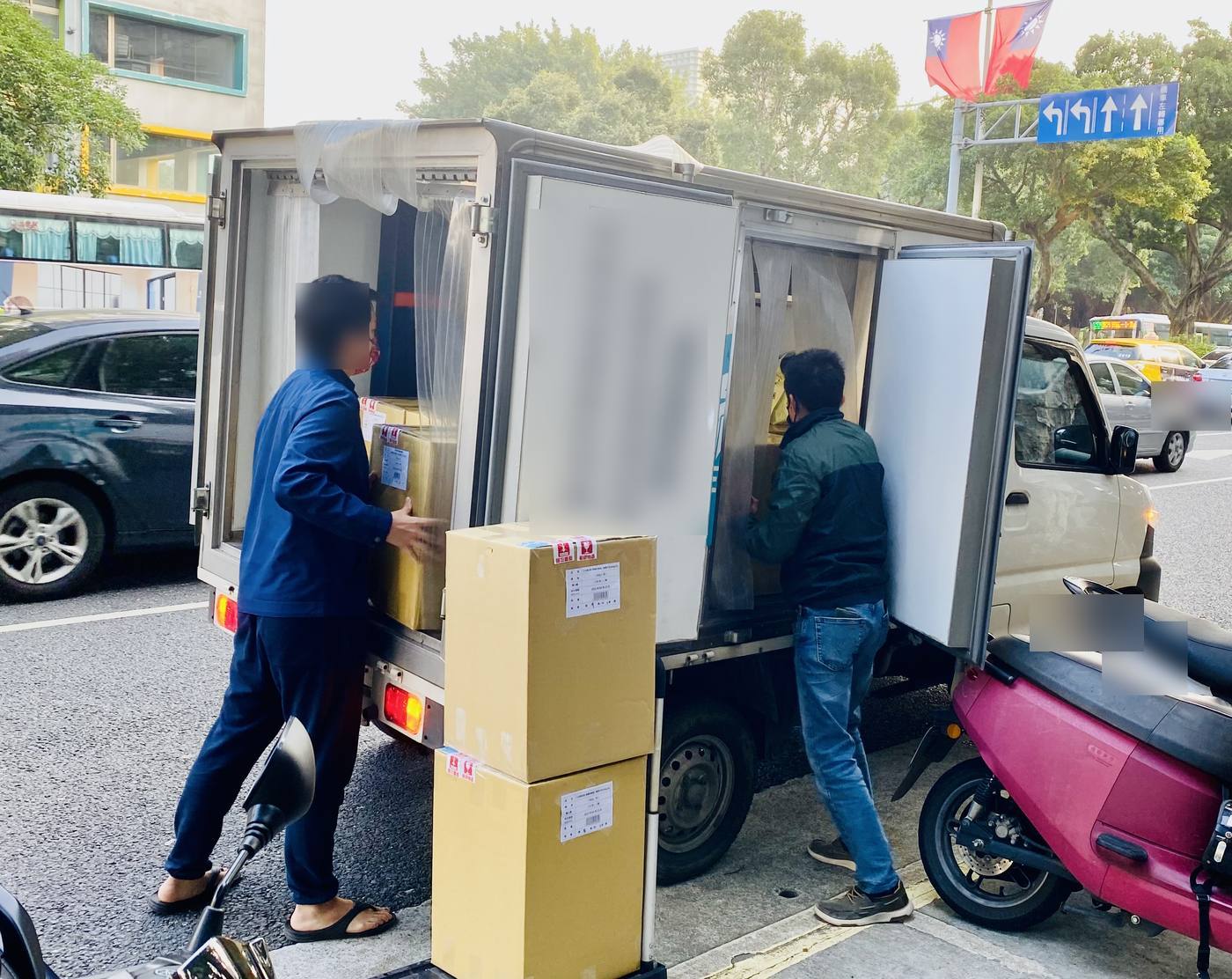
The pickup site at seven in the morning. The photo has been de-identified: faces, license plates, and vehicle markings are blurred.
We also wrote the drawbacks of this approach into the report. Assessment here carries no visible grades. Every checkpoint involves cross-disciplinary integration with no standard answer, which means making the institution understand it requires an additional layer of translation.
The Final Year: Three Tracks at Once
When the university application year arrived, we pursued three possibilities in parallel.
The first: school-specific special admission programs. The second: the university entrance exam, registered for on the standard schedule. The third: the Ministry of Education’s Youth Education and Employment Savings Account program, the work-first route after high school, for which we actually submitted the application.
Why? Because unconventional paths come with no guaranteed placement. Special admission slots are scarce and the variables are many; putting all hope on one track means leaving the next chapter of a child’s life to chance. In his personal statement, my child wrote that he didn’t want to spend most of his time preparing for academic exams. His focus was on making himself genuinely capable, “so that whether I go on to university or head straight into work, the choice stays in my hands.”
That line is often read as bravado. Set it back against the three-track design and it reads as a plain description of fact. Keeping the choice in your hands doesn’t come from a declaration. It comes from three sets of application materials, each prepared seriously.
What the Institution Finally Understood
The special admission track came through first: my child was admitted to a university.
Looking back, what special admission reviewers were examining was exactly the record this path had been building all along: ten years of a learning history archive, annual learning reports, internship and project work. How that record gets organized into something a review committee can read in an afternoon is a separate craft, which I write about in “The Translation Work of Application Materials.”
One thing still needs to be said clearly. Every step of this path came at a cost. Parents spent hours writing plans, drafting reports, arranging suitable teachers and learning environments. What my child carried was what he himself named in his personal statement: too few peers his own age. The entire path also depends heavily on the time and resources a family can invest. It is not an option every family can reach for, and there is nothing romantic about that.
The institution is static, and often rigid. The way it comes to understand an unconventional path is through one document after another, one review after another, one report after another, and a great deal of running into walls. If the path works, it isn’t because the system suddenly became warm. It works because the family invested time in uncertain learning and translated it into something the institution could read. You don’t get to decide things on your own terms simply because you feel like it. We were still inside the larger institution, still living within human society.
Leaving was never the verb on this path. The verbs were: apply, report, translate, hit more walls, and keep working to be understood.
💬 Comments
Loading...