I saw a number that made me stop.
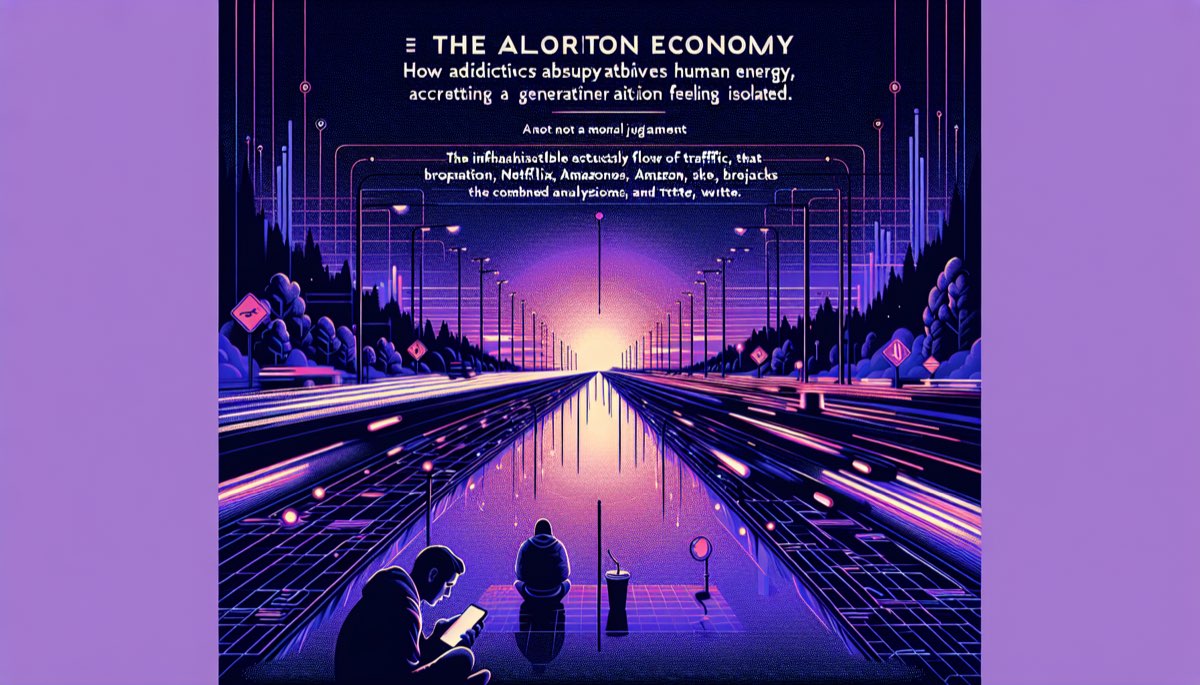
The global annual traffic of pornography sites exceeds the combined traffic of Netflix, Amazon, and Twitter. A single-function industry outperforms the world’s three largest media platforms in traffic.
Pornography’s problem isn’t moral decay, but how an industry has been carefully designed.
Borrowing from Scott Galloway’s observations on the porn industry, I call it “the McDonald’s of sex”—fast, convenient, ubiquitous, but nutritionally empty. This metaphor is uncomfortably precise. Fast food fills your stomach but hollows out your body; pornography fills your senses but hollows out your capacity for connection. What they share in common is zero friction. You don’t need to negotiate, communicate, or take any social risk. Click, complete, leave.
But pornography is just the tip of the iceberg.
Short videos, social media, mobile games—they all use the same formula: instant stimulation multiplied by zero friction multiplied by infinite supply. TikTok’s algorithm will endlessly push the next video to you. Instagram continuously refreshes your feed. Every like is a precision hit of dopamine.
These systems aren’t designed for you to watch one video. They’re designed so you never stop.
Borrowing from Galloway’s observations on the male loneliness crisis, I use “Homo solo” to describe this phenomenon—the lonely human. Living alone, economically vulnerable, socially isolated, with shorter lifespans. These people exist in large numbers in modern cities. Many of them struggle to build real intimate relationships—the cost is too high. Rejection hurts too much. The risk is too great. So they turn to those zero-friction substitutes.
And platforms know this. Platforms optimize for this.
Design teams sit in offices discussing how to make users stay longer, click more, return more frequently. Every notification, every autoplay, every recommendation algorithm serves the same purpose. No one is sitting in a boardroom plotting harm. It’s simply that the logic of the business model is straightforward: Attention is the commodity, desire is continuously optimized by algorithms, and human energy is unknowingly diverted.
I spent fifteen years in seminary. That time didn’t teach me to judge anyone; it taught me to see structural sin—not a matter of individual choices, but what entire systems intentionally or unintentionally create. The addiction economy is structural sin. It’s not someone’s moral decay, but an entire business ecosystem systematically extracting humanity’s most precious resource.
This is also why “prohibition” doesn’t work. Galloway puts it clearly: the point isn’t to extinguish desire, but to preserve a flame. That flame is the energy that makes you willing to go out, willing to bear the risk of rejection, willing to build real relationships with real people. If that flame goes out, all technology becomes just more sophisticated cages.
I use the concept of “energy sovereignty” to understand this. Each person’s daily time and attention are limited. If we allow the easiest stimulations to steal our energy, we gradually lose the power to pursue long-term values. Pornography is just one example. More pervasive is the endless scrolling of short videos, the meaningless refreshing of social feeds, the overwhelming bombardment of information. These things appear free but actually consume our most precious cognitive capital.
To restore energy sovereignty isn’t about prohibiting all stimulation, but relearning how to choose. Choosing to spend time on worthwhile things, choosing to invest energy in real relationships, careers, and creation.
In another article on this site, “When Nudity Becomes Language,” I discussed how nudity becomes “traffic insurance” for algorithms—the body transforming from a medium of self-expression into data nodes feeding platforms. That piece addressed alienation at the linguistic level; this one addresses extraction at the energy level. Both are different facets of the same system.
Civilization’s choices often hide in the smallest daily moments. Choosing to open short videos, or going out to have a meal with friends. Choosing to indulge in virtual pleasures, or facing real risks. These micro-choices determine whether we become Homo solo, or energy-filled beings connected to others.
Loneliness looks like personal failure. It’s actually a systemic design outcome—a byproduct of an economic system optimized for energy absorption.
But energy sovereignty can be reclaimed. As long as you start noticing that it’s being taken away.

💬 Comments
Loading...