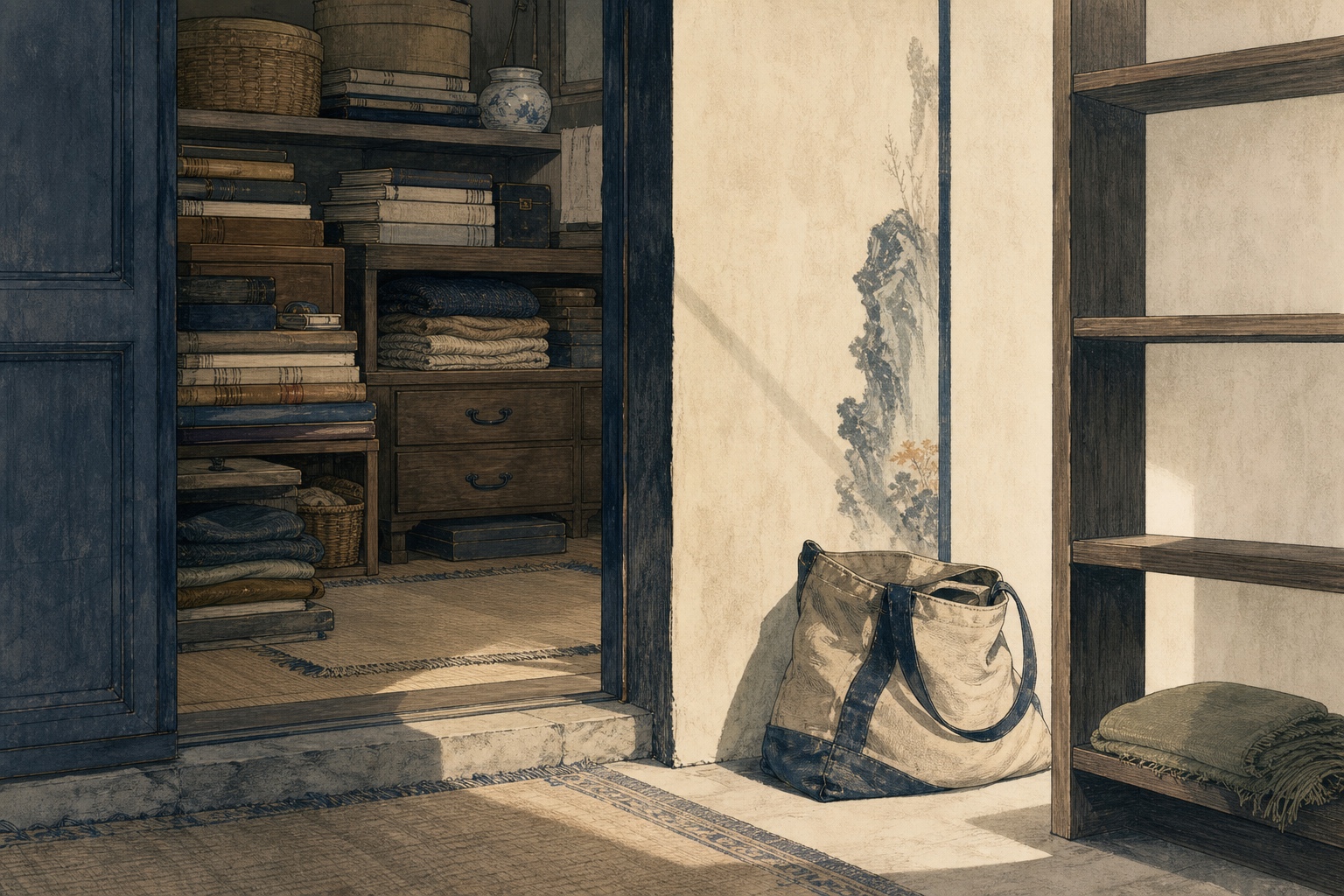

Two generations walk into the same storage space and may not be seeing the same things. Parents see traces of their children’s growing up, days of care they once gave, and a relationship in which “these things have not truly left home.” When the children return, they may see only occupied space, no use they can find, and a responsibility their parents still have to keep.
That gap is easily translated into who is more devoted. What needs asking first is: who do these things belong to now? Who has the right to decide keep or go? Who is doing the work of storing, cleaning, moving, and handling them later? Put feeling and responsibility on the same table, and there is a chance to talk about the next step.
Leaving objects behind does not mean the relationship stayed in place
When parents keep a child’s textbooks, clothes, or work, they may be continuing a relationship of care. After the child grows up, the objects still sit in the old room, so the parents can see that former life every day. This keeping need not be mocked, and it need not be proven reasonable; it does occupy present space, and someone is genuinely doing the custody.
When children say “throw it out if there’s no room,” they are sometimes saying they no longer want to be responsible for storage, not necessarily denying their parents’ memories. When parents say “come back and look yourself,” they may be returning years of keeping decisions to the real owner. If both sides first admit that the responsibility exists, the talk need not stay stuck on whether the objects have value.
First confirm who can decide
Before sorting, objects can be split into three kinds: clearly the child’s, used jointly by the household, and ownership or use still unclear. The first should involve the child in choosing to reclaim, keep, or hand on; the second needs discussion among those who share them; the third should not be thrown out in a hurry—confirm origin and rights first.
This is about everyday decisions and custody, not the same as legal ownership, inheritance, or the right to dispose of property. Family members cannot assume they may handle something because it has sat in a room for years; nor can they demand that another person accept storage forever because they once did the keeping.
Practical arrangements can be small: set a time for each original user to look at one area; parents say which things have been kept for years; children say which they will take, and which need time to confirm. The result of sorting is not only more space. The keeper no longer has to be solely responsible, and the user takes back their own choice.
To keep the talk from becoming mutual interrogation, start with a simple list: name of the object, current location, last user, keeper, and who will confirm the next step. The list need not judge anyone’s feelings; it only makes visible who knows, who keeps, and who can decide. If something has gone unused for years, write it as pending confirmation first; do not force an answer in the first discussion.
The story can stay; not every object has to
For objects with feeling, record the story, take a photo, or choose one representative piece first; the whole batch need not be treated as the only proof of the relationship. This is not asking the family to replace memory with digital files. It is offering another way to hold the meaning, so space need not carry all the feeling alone.
If the children cannot or will not reclaim things now, the objects can go into a clearly marked pending-confirmation area, with an agreed time to look again. A deadline is not a nudge; it keeps “temporary storage” from becoming a permanent state no one knows how to end.
When going home, besides asking what the parents need, one can also ask oneself: how much of mine is still stored here? Who is looking after it now? If I no longer use it, who can take part in the next step? When children are willing to take back their own responsibility, parents have a chance to step down from the keeper’s place, and the space can return to present life.
If the children cannot take things away in the short term, say the custody conditions clearly first: where they sit for now, who may move them, who to notify if they get damp or damaged, and when to confirm again. This is not turning kinship into a contract. It is so the previously vague effort is no longer borne only by the parents in silence. When objects have a clear next step, the relationship need not rely on quarreling to remind each other.

💬 Comments
Loading...