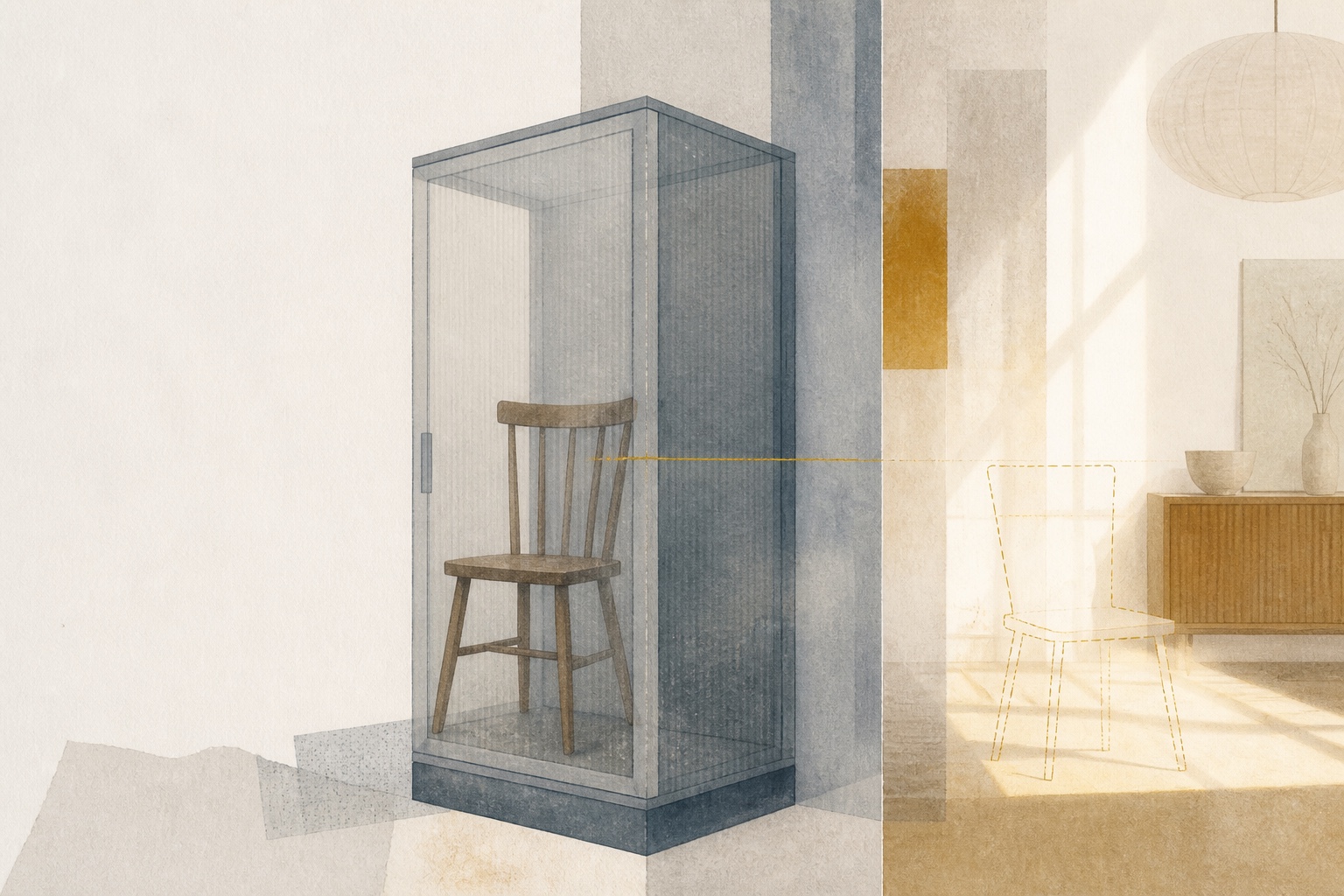

After a room sealed for years was sorted, the list was fifty-one bags of trash, zero bags of recyclables, and one bag given away.
Zero bags of recyclables should not be read as meaning the room held no recyclable material. The day’s scope was limited; the homeowner would not allow items to be moved at will, and one could not say “throw it away” in front of him. Another point was clear: this household treasured things. The daughter’s textbooks and workbooks were all kept; objects stayed for many years, and in the end almost all of them could only leave as trash.
People often think of an object’s deadline as “the day it breaks.” In practice, an object may already be hard to place with the next user before any obvious damage appears.
Sitting unused first freezes a resource, then slowly consumes it
When something is not in use, nothing seems to happen. It sits in a box, a cabinet, or a corner of a room, waiting to be taken out later. The problem is that reusability does not stop changing just because no one touches it.
Skincare, food, medicine, and cleaning products have shelf lives; time starts from manufacture or opening. Appliances and IT products are affected by plugs, charging cables, consumables, repair support, and format turnover. Paper may dampen, fabric may mold, wood may be eaten by insects; if things sit in unventilated, stacked piles, environmental wear speeds up.
The process of leaving an object in place can be split in two: at first value is frozen—it could still be used, it simply is not moving; then storage conditions and time begin to consume reusability. There is no alarm between the two stages, so it is easy to think “not broken yet” means “there will still be time later.”
A few years earlier it could be given away; a few years later it may only be hauled off
Similar outcomes keep appearing at sorting sites. A workplace manager opened unopened online-shopping boxes; most of the skincare inside had expired two or three years earlier, and high-end fragrance had oxidized unused. These things did not lose value from overuse, but from never being used.
A home workshop kitchen held expired sauces; a room held cosmetics past their dates. Someone described having to step over clutter to take drinks from the fridge when guests came, without being sure the drinks were still drinkable. Sitting unused did not preserve original function; it delayed judgment.
These cases come from different households and categories, not a follow-up of the same batch of objects years later. What they support is not a statistical ratio, but a reminder in time: the later an object is brought out for judgment, the fewer reuse options usually remain.
An object’s deadline is not one uniform line
Items with a shelf life have the shortest time. Fresh food is counted in days or weeks; packaged goods, skincare, and cleaners have their own dates. After expiry they cannot be used, and may also be unfit to pass on.
Items with format or style deadlines include appliances, IT products, clothing, and toys. They may not have failed, but if parts, consumables, or a fitting use context cannot be found, practical life shortens.
Building materials, furniture, matched book sets, and tableware may have more stable specs and longer storage, yet meet another problem: they are too large, or no receiving channel can be found. A batch of tiles stored for twenty years, still stable and undampened, was finally listed online by the homeowner; a treadmill stored more than ten years, with no obvious fault, was dismantled and sent for recycling because of size, moving, and no taker in a short time.
So “still usable” answers only the object’s condition, not whether it can circulate. Reusability has to be read together with storage, use, repair, and transfer conditions.
Timing of judgment is part of resource efficiency
The last time an object is used is often a good moment to judge its next destination. Not every thing unused for a year must leave at once, and not every thing stored a long time is necessarily spent; what matters is whether it still has a clear use context, storage conditions, and a chance of being taken on.
The same object, decided a few years earlier, is more likely still a usable item for someone else; left a few more years, it may leave only hauling fees and disposal duty. The circular economy is not about keeping everything; it is about giving objects a chance to be used again before they lose function, and returning them to materials or final disposal when reuse no longer fits.
Things do not lose their value only when they break. Sometimes they have simply been left so long that the next person who needs them can no longer find them, and they themselves cannot leave the room they started in.

💬 Comments
Loading...