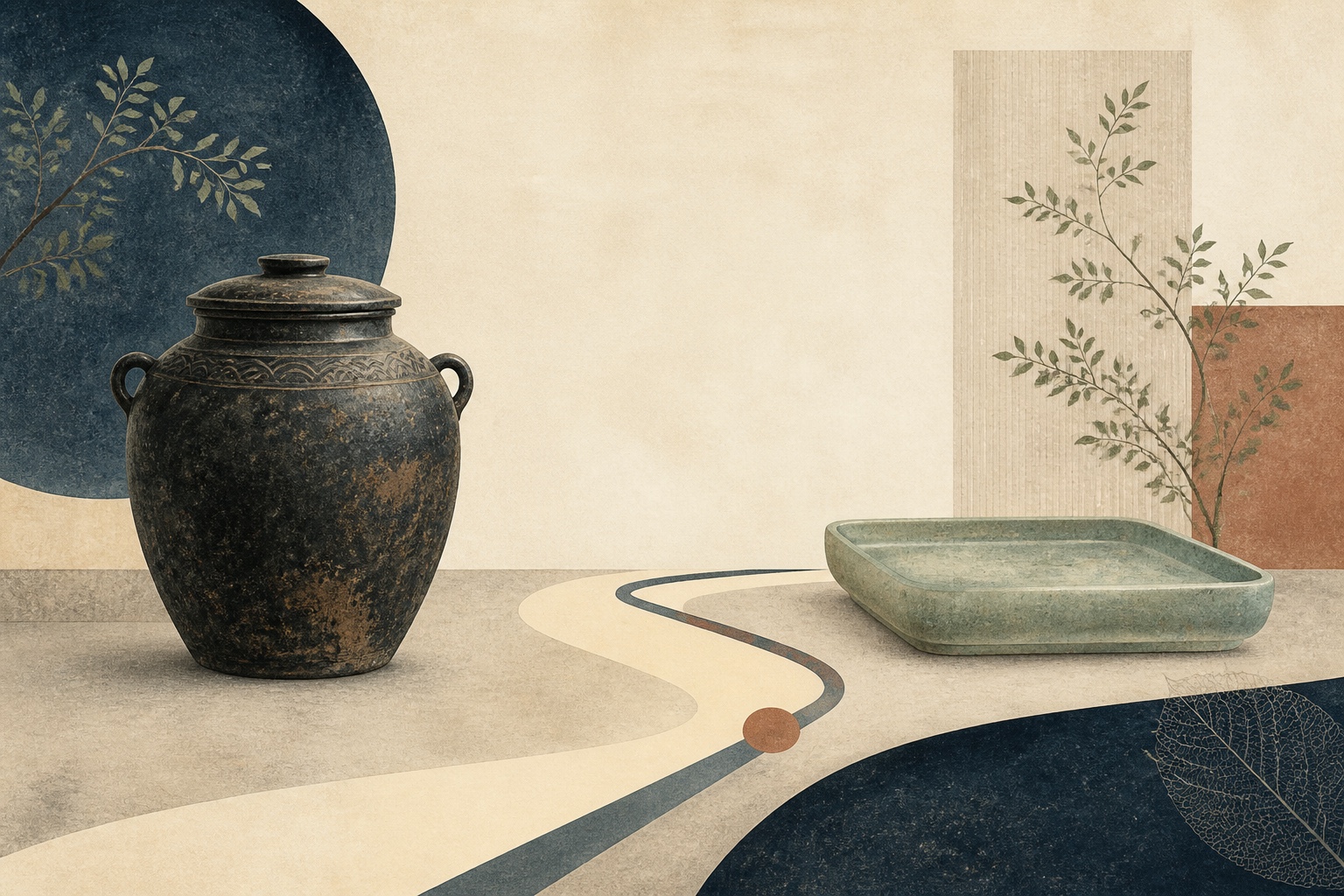

“We’ll use it someday.” That sentence has circulated in many families for a long time. It is not necessarily an excuse, and it does not necessarily mean someone is stubborn. For people who once lived through shortage, keeping an extra share, repairing things, and not discarding them lightly may have been how a household got through uncertain life.
Saving was once risk management
In years when goods were hard to obtain, keeping things had a clear reason. Hold on to what you might not be able to buy. Find a way to repair what broke. An extra spare at home meant one less risk of having no substitute at short notice. Keeping was a choice weighed at the time.
The problem is not that this set of values once existed. It is that the conditions have changed. Many objects are now easy to obtain, substitutes appear in large numbers, yet the time spent repairing, storing, and searching has not fallen in step. When “keep it if it still works” becomes the only threshold, objects may have no schedule of use, no one responsible for maintenance, and no path out.
Old rules do not automatically know the world has changed
The same household may hold two kinds of judgment. Elders see whether an object can still be used. The next generation sees whether there is room at home, whether it will actually be used, and how much effort it will take to deal with later. Neither side is necessarily wrong. They are measuring different costs.
Rather than argue over who is thrifty and who is wasteful, ask: what risk was keeping this meant to guard against? Does that risk still exist? If it no longer does, is there a time to return it, repair it, hand it on, or let it leave?
The next generation may fill a gap by buying
Generational memory can also rebound. Some people grew up with few choices and, as adults, buy or restock to prove they have a choice. Some do not want their children to live through uneven allocation, so they fill an inner gap with “everyone gets a share.”
The motive has changed; the result can still look similar. Objects enter the home, are used little, and today’s space still bears the cost. This does not mean buying is necessarily compensation. It only reminds us that intake decisions sometimes answer the past, while the cost falls in the present.
What needs to move is the place of the rule
Asking the older generation to drop thrift at once usually only stiffens the conversation. Thrift can be moved from the exit to the intake: buy fewer overlapping functions; confirm use and a place before buying; arrange use and maintenance for what you keep; for what is no longer used, confirm who will take it and how while it is still in decent condition.
In family talk, you can also start with one small class of objects rather than demand that the whole house change rules at once. Say the reason for keeping it out loud, and see whether the risk it guards against is still there. If the answer is uncertain, set a time to look again, so “we’ll talk later” does not become a permanent state. The process keeps the caution that thrift originally held, and lets people living today take part in the decision.
What truly needs updating is not a denial of the past, but a reckoning of cost. Storage, searching, moving, and final disposal should all count as the price of keeping an object. When family members are willing to see those costs together, saving need not rest silently on one person, and objects are more likely to find a next place at the right time.
This update can also be seen as a household negotiation: which things are worth keeping, which reasons need to be checked again, which objects should pass to someone who will actually use them. Negotiation is not finished in one sitting. It does keep “keeping” from being an automatic result.
The point of the conversation is not to defeat the older generation. It is to put the caution that once protected the family back where protection is actually needed today: usable space, time one can still spend, and decisions everyone can take part in.
That is also how generational experience can keep doing its work.
It need not stay only in memory, and it need not be copied onto the next generation in the same form.
This is not changing “don’t waste” into “throw it out as soon as you can.” What is scarce today may no longer be goods, but space, time, and enough room to move safely. Thrift can shift from keeping everything to using what is truly needed well, and giving unsuitable objects an exit that does not add to someone else’s burden.
💬 Comments
Loading...