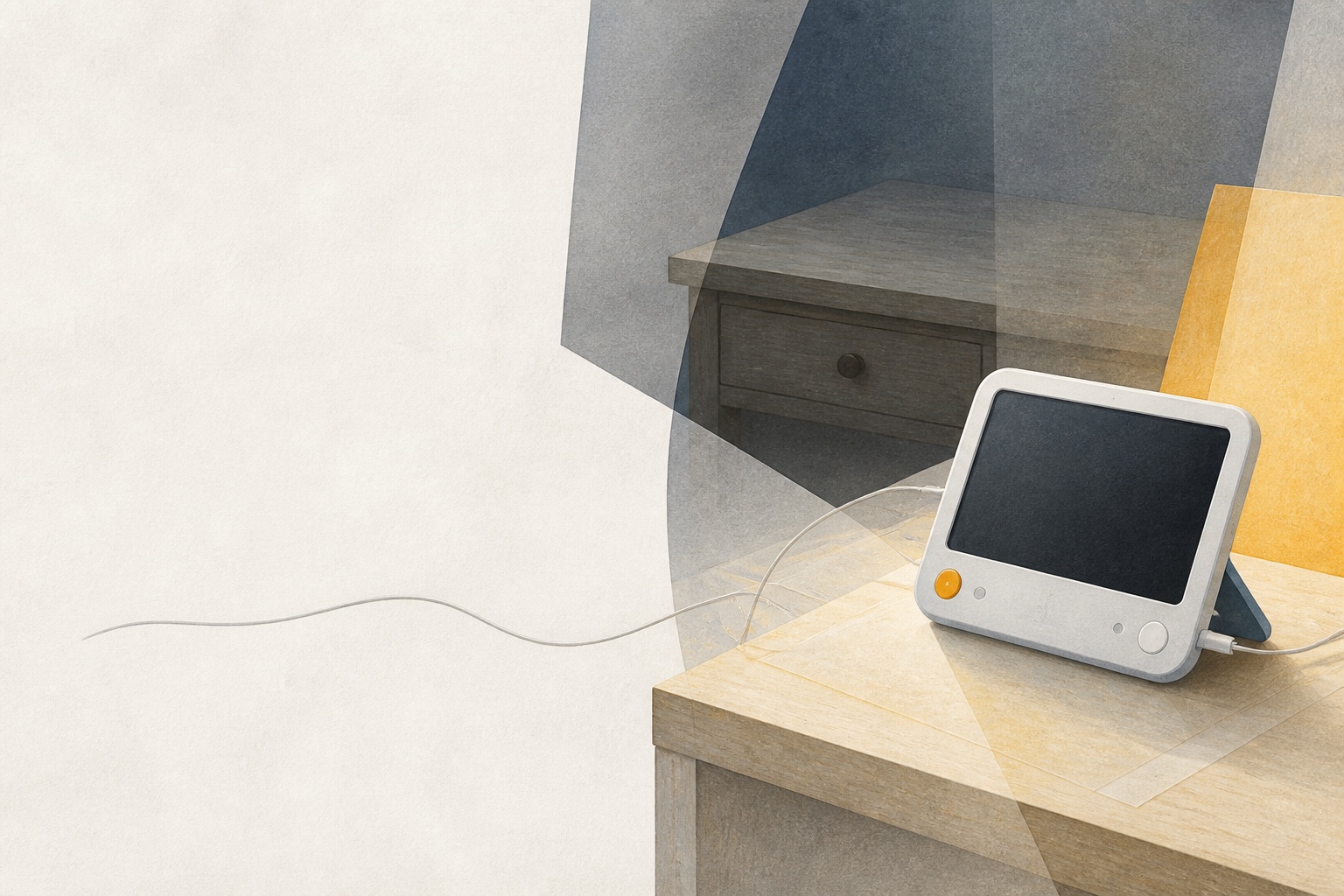

One hundred thousand NT dollars, spread over three years, nearly three thousand a month. A parent bought a children’s learning course at an exhibition. It included a simple computer and game software, and was said to carry a child from kindergarten through elementary school.
Four months later, the child had barely played it at home. The reason was straightforward: it was boring. What he usually played were high-stimulation online games; the look and pace of this educational software did not hold him.
The parent had already warned herself not to buy children’s books or learning materials on impulse. Once the product became a game on a screen, she was still moved on the floor. She had guarded against certain categories, but had not first named what the seller was actually appealing to.
What the sales floor may be selling is a parent’s hopes
Closing this kind of sale does not always rest on the content itself. The floor often folds a parent’s hopes for the child into the product: learn while playing, do not lose at the starting line, the child will like it, if you do not buy now you will regret it.
Those lines do not first answer whether the child will use it at home. They first touch a parent’s fear that the child will fall behind. If the child enjoys the trial on the floor, it is easier for the parent to treat that moment as grounds to buy.
An exhibition hall and a home are not the same environment. The hall has only that machine; home still has a tablet, a phone, toys, and the games already being played. On the floor there is a seller guiding the trial; at home only the child decides whether to open it. A few minutes on site cannot be converted directly into years of use.
Admitting a wrong purchase is also admitting that anxiety was used
An ordinary wrong buy only requires admitting that the judgment was off. Reassurance-driven consumption adds a layer: the parent must face having paid, under time pressure on the floor, because of worry that the child would fall behind.
That feeling is hard to admit, so the object is kept and the reasons keep stretching forward: the child will be interested when a bit older, it will surely be useful later, the money has already been spent so it cannot be wasted. That way of keeping things is common at a decluttering site. One homeowner kept teaching materials from a daughter’s early years because that teacher taught especially well; kept picture books from childhood because they could be used when other children visited.
The reasons are full of the past and the future, and empty of the present. The most direct question about use value is not “why was it bought then,” but “how many times was it actually opened of its own accord after it came home.”
Stretch the timeline to after the sale
A course’s promises happen before payment; its actual value appears only after. How many times in the first month? In the first three months, who opened it? Did the child want to play, or did the parent keep reminding? Playing only a few times in four months is the actual use of this course now.
In another household there were twenty or thirty boxes of assembly toys, some still unopened. The father had grown up short of goods; as a father he wanted his child to have toys of their own. At the moment of purchase every box had a reason; the rate of opening them did not rise with it.
These cases are not a denial of the value of teaching materials or toys. Some courses are used through to the end; some materials do fit a particular child. What needs checking is the trigger for the purchase: was it closed when anxiety had been stirred, there was time pressure on the floor, and the child had just been happily playing? If all three are present at once, it is worth leaving the floor first.
Being able to pass it on does not mean the full cost is recovered
For a product already bought, one can set a very low bar for actual use, or pass it on quickly once it is clear it does not fit, so the hardware and content can keep being used where that is possible. Passing it on addresses the object’s next destination; it does not automatically erase the original installments, time, and cost of judgment.
The physical part of this kind of course may be only a simple computer; other content that the price covered may not move with the machine. The later it is handled, the more hardware specs, software support, and demand from a next user may also change. Unlike ordinary furniture, what can still be recovered is more concentrated in the judgment before purchase.
Next time the floor stirs you, you can ask first: if it could not be closed today, would I still go looking for it a week later? The question is not a call to refuse spending. It is a way to look separately at the reassurance of buying and the use after it is home. An object only begins to answer the original hope when it is actually used.

💬 Comments
Loading...