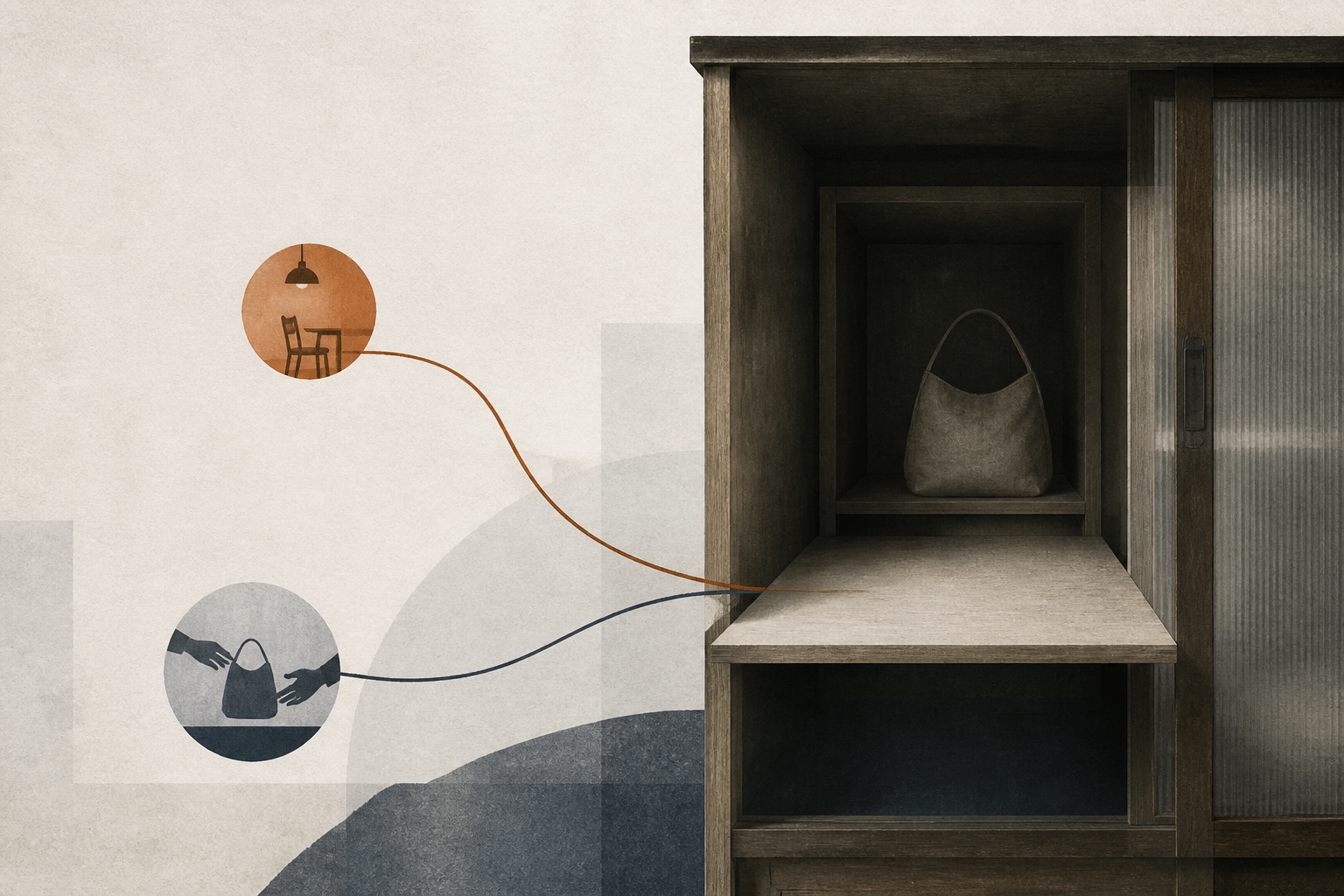

Some things are hard to throw away not because they hold memory, but because money was once spent on them.
Someone bought a data plan meant for use overseas, then could not get it installed after arriving. She kept configuring, asking again, five hours passing, several customer-service windows later; the plan still did not work. At that point, trying once more looked like the most reasonable choice, because the money was already paid, and giving up would feel like admitting the whole effort had been wasted.
The account actually already had two parts. The first was the fee paid at purchase, which could not be recovered whether she continued or stopped. The second was the time, attention, and emotion then spent trying to salvage the first outlay. The former is sunk cost; the latter was still growing.
Reluctance freezes objects in place
Move the same mechanism into the home, and it usually shows not as constant tinkering but as constant inaction. Something bought too dear, bought wrong, or awkward to use is pushed to the back of a cabinet. It is neither used nor sent away, because the moment of sending it away would be like saying out loud: “The original decision did not bring the result I wanted.”
So a place is kept for it. Maybe it will be useful later. Maybe one day it will be liked again. Maybe keeping it is better than throwing it out. The object does not regain function, yet it keeps consuming space; things that someone else could have taken on also drop out of circulation for a while.
One homeowner, sorting a collection, kept two designer bags and resold or donated the rest. The sorting notes also mention that some of the bags were bought at a promotion or on a trip, so they may carry a stretch of effort or experience; the existing material does not say why each of the two remaining bags was kept. When an object’s role shifts from “something to use” to proof of the past, it is easily locked in place.
Money already spent should not decide the next step
To judge whether to keep an object, first set the price aside. Do not ask “how much it cost then,” but two questions that still have answers now: Will it be used in the coming year? If I will not use it, can someone else use it now?
The first question returns the object to actual life; the second returns it to circulation. Only if both answers are no does disposal need to be handled. As long as someone can still use it, “keeping it in my house” need not be the only option. An object leaving one household does not mean it loses value; it may be handing the chance of use to the next person.
A sorting site once recorded 580 bags cleared from ten households that had paid for a removal service; 195 of those bags were still usable and transferable. This is not a random sample, and the ratio cannot be applied to ordinary households. It only reminds us of one thing: objects sometimes leave not because they are broken, but because they were frozen first, then gradually lost their chance after years of unused storage.
These two questions pull judgment from the past into the present, and pull objects from private memory back into actual flow. If something is still usable yet locked in a cabinet only because the original price was high, what it bears is not only occupied space but the time cost of a narrowing window for someone else to take it on. Once materials, specifications, or demand change, even careful storage may not find a next user.
Not every kind of reluctance uses the same measure
Keepsakes do not use this judgment. They hold memory; frequency of use was never their main function. “I might use it someday” is also not entirely the same as sunk cost; that binds the object to a situation that has not yet arrived, and is better handled by setting a deadline and checking later whether the situation actually appeared.
So recognizing sunk cost does not mean throwing things out at once. It means first removing price from the next step. The account settled at payment need not be paid again with new space, time, and feeling. What stays should be usable; what leaves should have a chance of being received. That is closer to objects beginning to circulate again than making the original decision look as if it were never wrong.

💬 Comments
Loading...