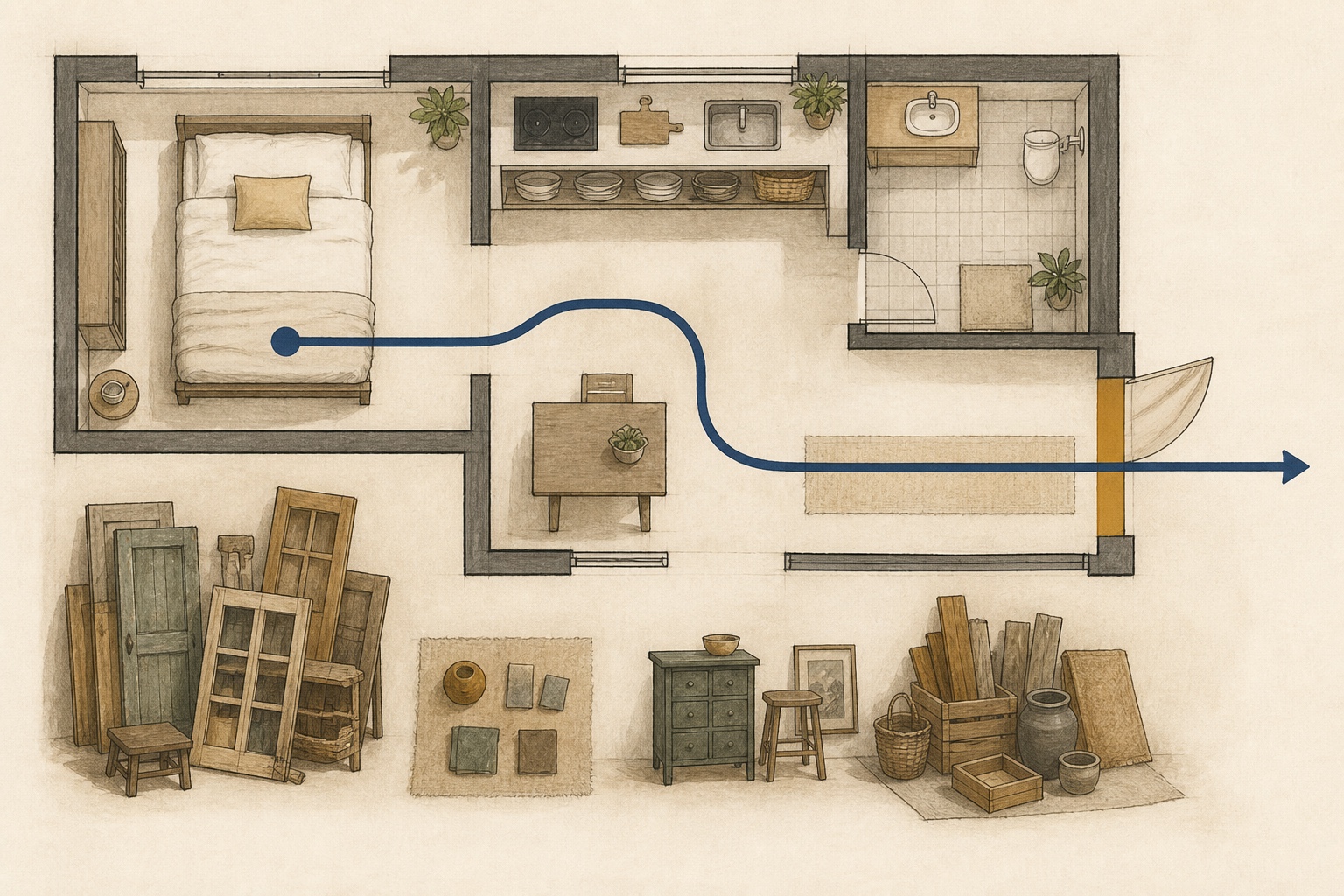

A home with many things may simply mean a busy stretch of time, or it may already affect sleeping, cooking, bathing, moving through, or opening doors. Both can look like “a mess,” but the order of handling should not be the same. The difference is not how many objects there are, or whether they are worth keeping. It is whether daily functions can still be used.
Treating function as a check line has one benefit: it answers “what to do first now,” not “what is wrong with this person.” It is not a diagnostic tool, and it does not split households into normal and abnormal. It only reminds us that when safety and basic operation are already affected, jumping straight to emptying or reducing may miss more urgent problems.
First see which usable places daily life still has
Start with a few observable questions: Can the bed still be slept in? Can the kitchen be used safely? Can the bathroom and toilet be entered? Are the main walkways clear? Can doors and escape routes be opened? These questions help a household plan the first step better than counting objects.
The check need not turn the scene into a spectacle, and it need not photograph anyone as the cause of the mess. Confirm which places already affect daily life, and mark the items most likely to create immediate risk. Combustibles near a heat source, covered cords and outlets, and blocked doorways or passages should be treated as safety first. If moving things or professional help is needed, put that help into the plan instead of asking one person to push through alone.
Once the function threshold is crossed, the order has to change
When daily life still works, you can start with one surface, one drawer, or one category, and slowly talk about reducing, putting things back, and redistributing. But if the bed cannot be slept in, the kitchen cannot be used, or the way in and out is already blocked, the first priority should be making the space usable again. Whether particular things stay can wait. Restore passage and the safety positions first.
This sequencing can also keep choice over objects. If needed, gather things first into a temporary area that does not obstruct daily life, mark them as pending confirmation, rather than throwing everything out while someone is away. Objects may mean different things to different household members, and may involve ownership, use, and later responsibility. Clearing without consent is not only handling objects; it may also make the next collaboration harder.
Do not use quantity to conclude about a person
A complete collection, tidy boxes, and expensive objects do not mean daily function is fine. Conversely, many objects at home do not automatically mean the person has lost the ability to live. A function check is only for sequencing. It cannot be used to classify a person’s worth, character, or health. If physical or mental health, home safety, or care needs are involved, those should be judged by appropriate professionals and support systems.
A circular view belongs here too: handling for safety is not the same as turning everything into trash. After daily function is restored, you can still tell which objects can keep being used, which need to go to someone who can actually receive them, and which are suited to recycling or disposal. Let people and space become workable again first; only then is there a condition for talking about an object’s next stretch of life.
So, facing a home that looks very messy, you can ask three questions first: Can you sleep? Can you cook? Can you walk and leave safely? The answers help decide whether to start from safety, negotiation, or reducing, rather than rushing to put a label on someone.
These three questions also need not be answered by one person alone. Residents know best which places are still in use. Family can help confirm routes. When needed, invite appropriate safety, care, or community resources to judge together. If someone is not willing to handle things for now, you can still make the hazardous spots and passable routes clear, and leave room for later negotiation. Restoring a bed you can sleep in and a path you can walk does not mean other decisions about objects have been cancelled. It only gives daily life the conditions for the next step.
After function is restored, do not rush to treat the temporary area as the final answer. Confirm with the resident which objects still need to be kept, which can be repaired or passed to the next user, and which should leave. Safety first, then negotiation, then handling, puts both a person’s life and the continuation of objects into the judgment, instead of trading one emptying for surface neatness.

💬 Comments
Loading...