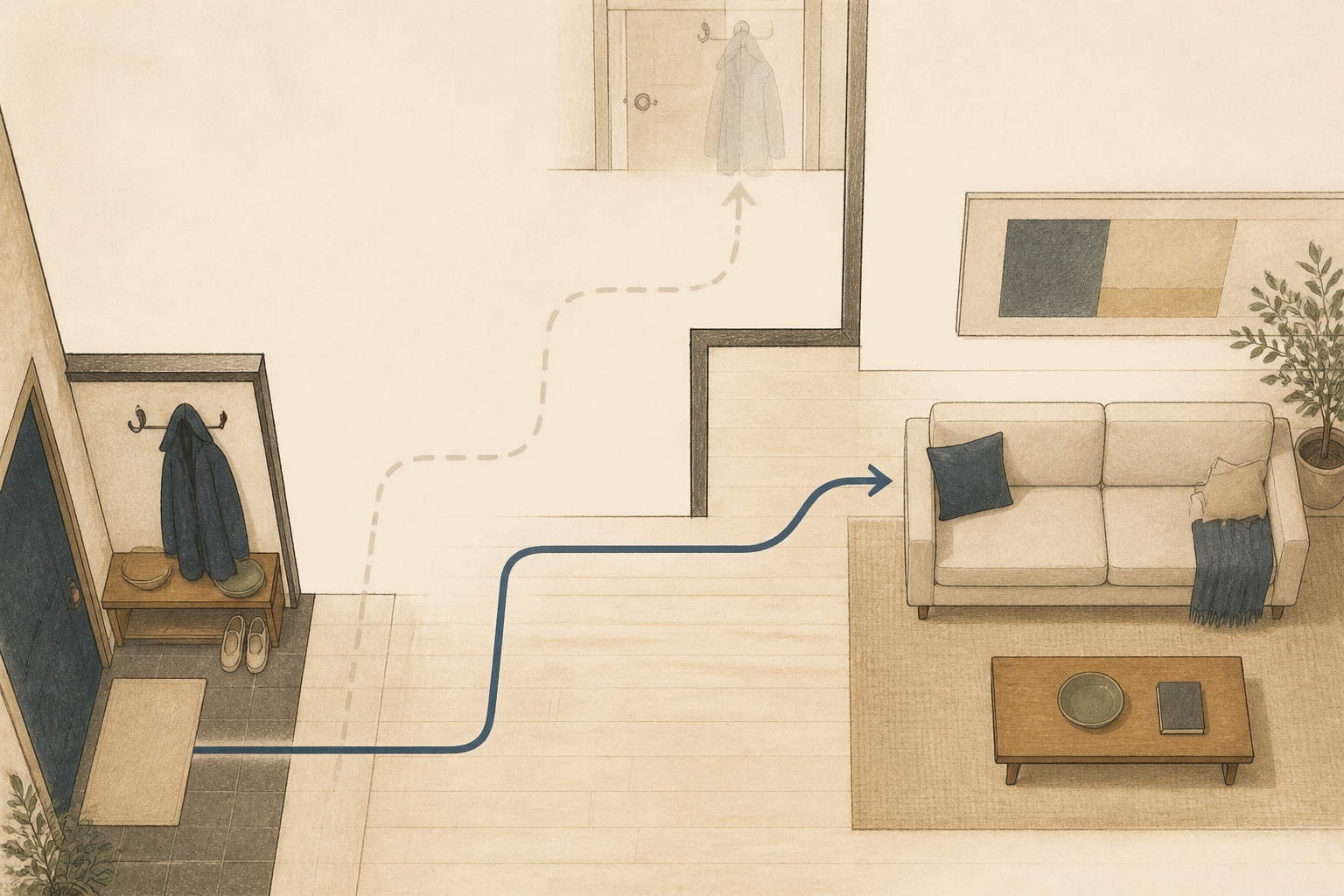

The same object can sit on a table for days and draw completely different reactions. One person walks past it every day and finds it obvious. Another never treats it as a message that needs handling. That gap is easily translated into attitude: How could you not see it? You just don’t care. From that sentence, housework that could have been discussed becomes evidence of character.
A steadier approach is to treat “he really did not see it” first as a fact still to be verified. Do not believe it at once, and do not deny it at once. Check the object’s location, how clear the rules are, the steps of the task, and whether the whole thing depends on one person remembering. This does not excuse anyone. It only keeps you from judging the person before the problem has been located.
Seeing is not the same as knowing the next step
Even when an object enters someone’s field of view, not everyone receives the same message. A bag on the table may be read as a temporary drop. A coat on a chair back may be read as something to wear again. Food in the fridge may have no owner of the next meal. If a household task requires first recognizing, then judging, then finding a place, and finally remembering when to finish, it is more than a problem of seeing.
So rather than asking the other person to try harder, make the action visible and startable. Put the coat’s home on a path people actually walk. Keep everyday things where they can be reached without opening several cabinet doors. Give a daily task a fixed container. These designs reduce dependence on memory and searching. They do not take responsibility off anyone.
Rules should be set with the people who use them
When one person unilaterally announces “put it back after you use it,” what often remains is an outcome without a shared path. What counts as put away? How soon counts as done? If there is not enough space, who adjusts it? If household members have different habits, should there be two drop points near the entrance? Until those questions are clear, a rule cannot really be checked.
Setting rules together does not mean everyone must do the work the same way. Some people drop things at the entrance first; others walk straight to a room. Storage can follow actual routes, but shared life still needs an outcome everyone recognizes. A handed-off task also cannot be corrected from the sidelines the whole way. Otherwise the other person is not doing their own housework; they are executing someone else’s method.
Not seeing is not a free pass, and responsibility cannot rest on memory alone
If the same thing keeps being missed, ask first whether it depends too much on reminders. Reminders have a cost: the person who must remember to remind becomes the household’s memory manager, and the person being reminded only starts when an instruction arrives. Responsibility can be split into smaller actions: a fixed place, the shortest path after use, a clear wrap-up point, and periodic shared checks.
That arrangement also makes it easier for objects to stay in use. If you know where something lives, you are less likely to buy another because you cannot find it. If it returns after use, you are less likely to throw away something still usable because you thought it was lost. Circular economy in daily life does not have to begin with large equipment. Letting objects be seen, used, and found already reduces unnecessary replacement.
Two things can be checked at the end: Does this household task still happen only if one person remembers? If so, can the place or the steps be moved closer to actual life? “He really did not see it” need not be the end of an argument. It can be the start of redesigning a shared path.
Checking can also return to the object itself: After use, can it go back? Next time it is needed, can it be found? When it is no longer used, does someone know how to hand it on? When an object has a clear path in, through use, and out, housework does not have to be held up by reminders. That does not mean everyone will change at once. It means shifting responsibility from “you have to remember” to “we make the path easier to see.”
💬 Comments
Loading...