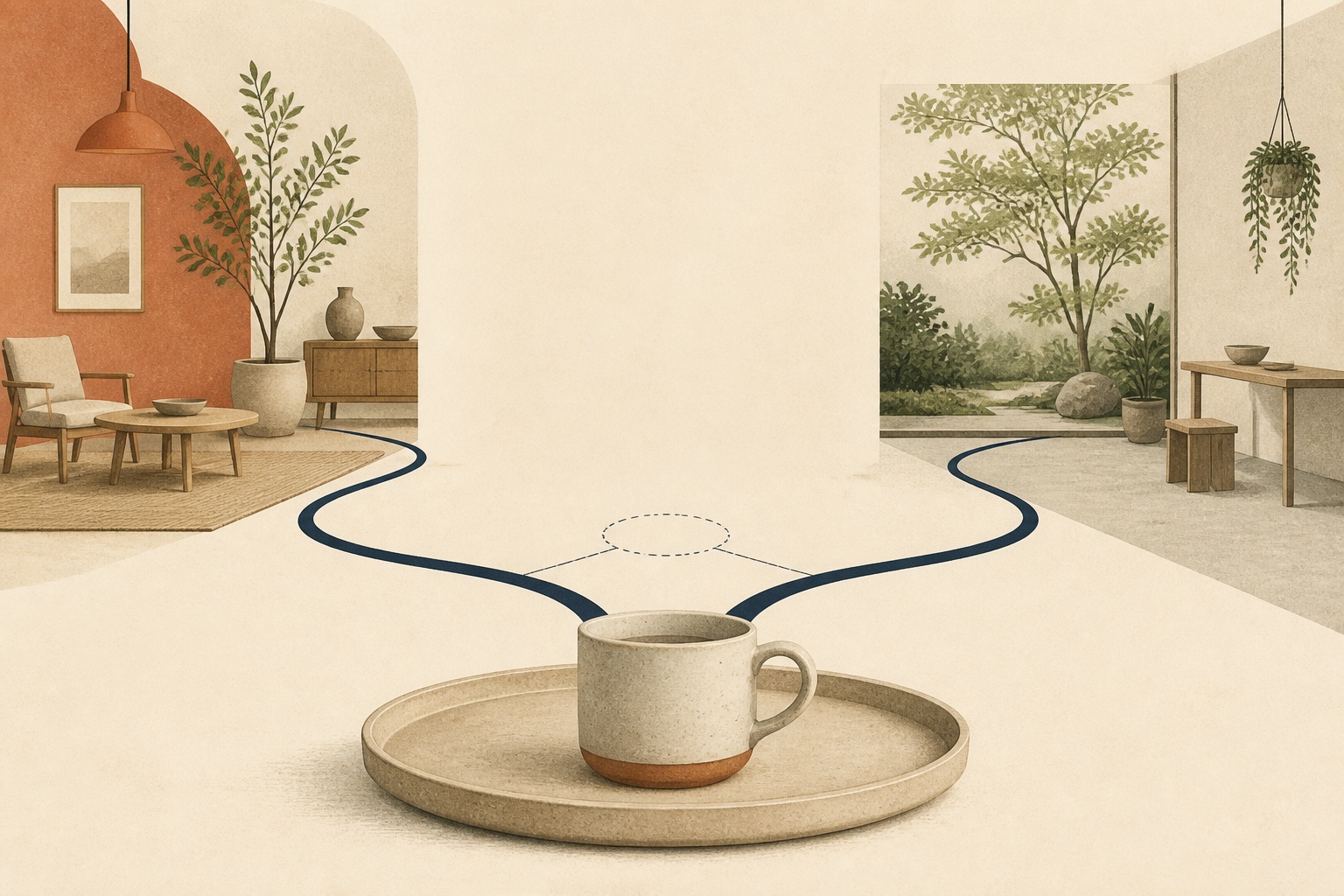

Some things are kept because the householder believes they will come in handy someday. Time passes, the object stays where it is, the packaging unopened, the function unused. At that point it is not necessarily well preserved; the next step simply has not been decided.
Keeping is only storage, not circulation
Leaving an object at home can keep it from being thrown away at once, but it does not necessarily extend its useful life. It still takes up space, and it still has to be found, wiped, moved, and managed. Without long-term upkeep, something that was still usable may no longer be fit to hand over when it is finally opened.
Valuing objects cannot stop at “was it thrown away?” It also has to ask: who will use it now? When will it be used? If this household no longer needs it, who might take it on? When none of the three questions has an answer, keeping it is often only a pause in dealing with it.
Giving it to family does not necessarily complete circulation
Objects move easily from one room to another and then get described as “finding a new home.” But if the person who takes it has no need and only accepts it because it would feel wasteful not to, it has only changed custodians; it has not truly returned to daily life.
A handoff needs a situation of use: the recipient knows why it is needed, where it will go, when it will be used, and whether it can be passed on again if it is not used. Otherwise one household’s stock can become another household’s burden. This is not blaming the recipient; it is separating goodwill from actual need.
Still usable also needs someone who can take it on
Before giving something away, at least four things should be confirmed: whether its condition is clean, complete, and safe; whether the recipient truly needs it or is only reluctant to refuse; whether the handoff can happen while it is still suitable; and who is responsible for packing, moving, contact, and later problems.
These conditions are not meant to make circulation cumbersome; they keep the cost of dealing with the object from being dressed up as kindness. When an object of unclear condition is sent out, the recipient still has to clean, repair, or find another outlet, and disposal is only delayed.
Channels are part of valuing objects
Many people are not unwilling to share; they do not know whom to find, and they do not have time to describe condition, reply to messages, wait for a recipient, and arrange a move. When all of that work falls on the householder, throwing the object away becomes the least effortful option.
A household can start with one category and build a list that states condition, quantity, timing, and takeover conditions. A community or a service needs demand to be visible, and someone to take on receiving, temporary holding, and moving. It is not enough to say “take it if you need it” while leaving the matching work to the person most eager to free up space.
Handoff should not rest on enthusiasm alone
A more stable approach is to break the handoff into a few points that can be reviewed. First confirm that the object still meets safety and use conditions, then confirm the recipient’s actual need, and finally agree on a delivery time and what happens if it is not completed. Only when each step has someone who knows what they are responsible for will the object not return to a corner when messages stop.
This also means “sent out” should not be the only measure of success. Some objects are suited to a direct handoff; some need repair or cleaning first; some should leave the cycle once a deadline is reached. Separating these states makes it easier for the householder to decide, and the recipient does not have to take on work they cannot carry. Circulation is not prolonged waiting; it is making every wait have a reason and a limit.
When handoff conditions are stated, valuing objects moves from a personal virtue to a shared arrangement. That arrangement also makes the next use easier to see, rather than only moving the object from one corner to another.
An object has completed a round of circulation only when it is actually used.
Otherwise, keeping it only pushes the problem later.
That is why the clearer the handoff conditions, the more likely the resource will truly remain in daily life.
Valuing objects also needs a stopping point
If no one uses it, there is no suitable recipient, and there is no reasonable time for upkeep and waiting, it has to be admitted that it may not belong in the cycle any longer. True valuing of objects is not keeping everything until the end; it is letting an object, while it can still function, arrive at a place where someone will actually use it. When use, takeover, timing, and responsibility are made clear, the object has a chance to keep living.

💬 Comments
Loading...