Between slowness and memory there is a secret bond; between speed and forgetting, too.
Milan Kundera, Slowness
TL;DR — Taiwan treats food like fast-moving consumer goods: egg tarts, shokupan, a new craze every year or two, arriving fast and fading just as fast. But a bread built around long fermentation and health can’t be sold with FMCG logic. This tension followed me throughout my time marketing this bakery.
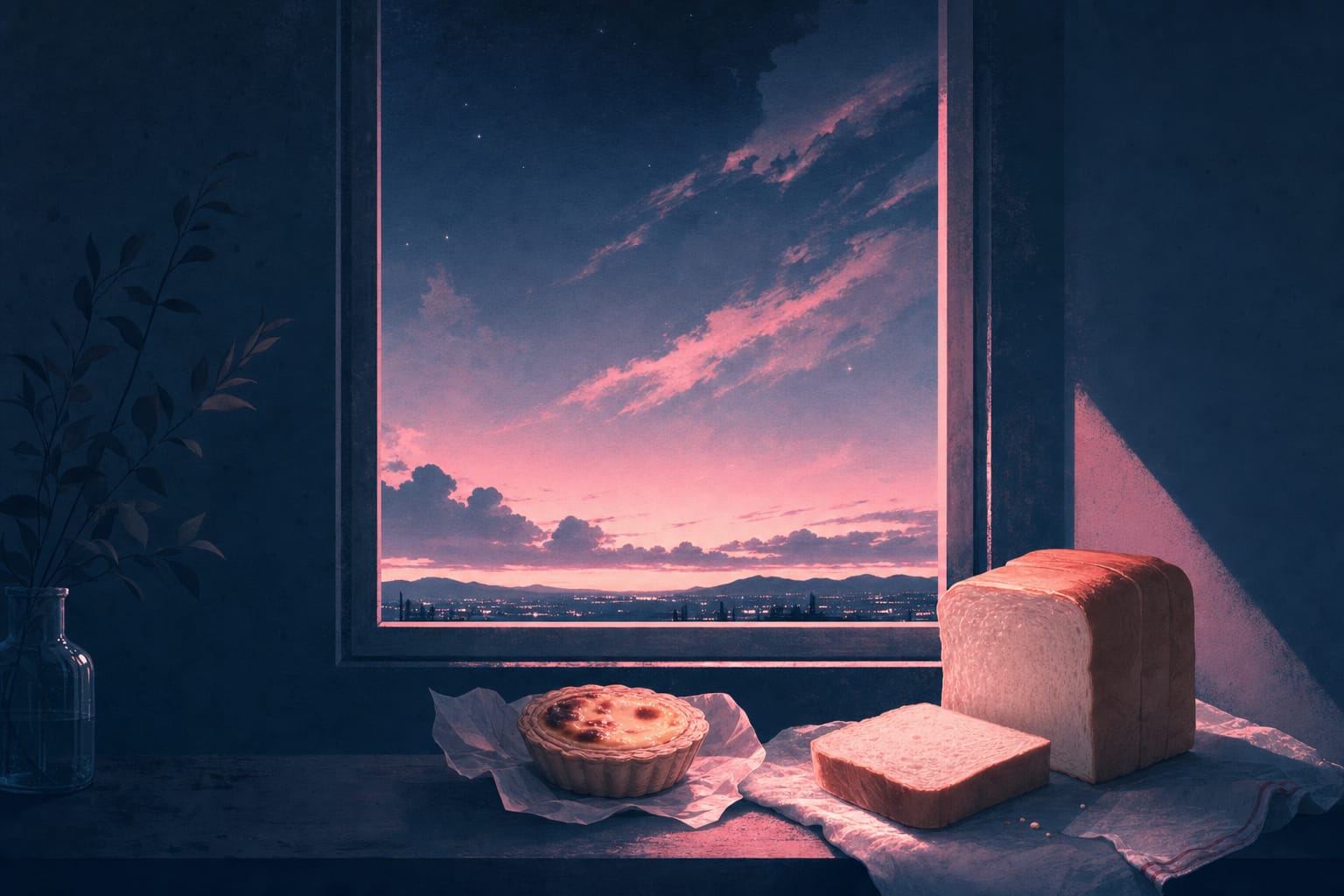
Taiwanese consumers love chasing food trends. Years ago people queued for Portuguese egg tarts. More recently it’s been shokupan. A new one surfaces every year or two. They come fast and go fast. Many of the shops that rode the previous wave were gone before the next one arrived.
I handled digital and marketing for this Taipei bakery, and the bread I was working with was the opposite of a craze. It requires 18 hours of fermentation, leads with health, and is meant to be eaten for ten years, not photographed once in a queue. The moment I started pushing it out into the market, I hit the same wall. FMCG communication logic simply doesn’t fit.
Two Ways of Selling, Two Kinds of Logic
FMCG sells newness. Limited-time offers, buzz, queues, photo ops: you manufacture a wave of heat, sell through while it’s hot, then move on to the next item. A trend is designed to be short-lived. It runs on the fear of missing out.
Healthy, slow food sells something else entirely: longevity, trust, the body. You don’t want customers to make one impulsive purchase. You want them to eat for years, to build a habit. You can’t ride a single wave to get there. You have to earn trust slowly. When you say “this is good for you,” customers don’t believe it the day they hear it. They believe it after eating for a while, after the body registers something. That takes time.
These two logics are mutually exclusive. In the cost structure of FMCG products, marketing often accounts for well over 40 percent.
If You Can’t Win a Price War, Don’t Fight One
Shiga has an observation in his book. In France, the baguette is an everyday staple: no matter how premium the bakery, you’d be hard-pressed to charge the equivalent of two or three hundred NT dollars, because people eat it daily and expect it cheap. In Japan, bread is a kōbutshin, a luxury item, not a dietary staple, something closer to a treat. Precisely because it occupies that position, it can carry added value and command a higher price.
That’s the approach Shiga took. In his shop, a single loaf at 1,000 yen is ordinary; the more elaborate ones run 3,000 to 4,000 yen. He calls this kakaku hakai (price destruction), only in reverse: he’s pushing prices up, not down. His reasoning is straightforward. A small independent shop can’t win a price war against large manufacturers, so don’t fight one. Do instead what the large manufacturers cannot: make a loaf worth a special trip, worth giving as a gift.
To walk that road, you need your own signature. Shiga argues that a first-rate baker must have their own spécialité, built on original work, not an imitation of someone else.
This is the inverse of FMCG. FMCG runs on “fear of missing out.” Non-everyday premium runs on “irreplaceability.” A bread meant to be eaten for ten years belongs in the second category. It has no business chasing the next shokupan.
The Tension I Kept Observing
Anyone who works in marketing understands the pull of chasing heat. The question I kept facing: should I package this bread as the next shokupan, ride the wave for a cycle, and enjoy strong short-term numbers?
I didn’t want to do that. It would mean selling something designed to be eaten for ten years as if it were meant to be eaten once. Customers who come in because of a craze are there to keep up. When the trend passes, they leave. They don’t come back. The customers this bakery actually needs are the ones who return after finishing a loaf, who bring their families. That kind of customer doesn’t arrive through FMCG mechanics.
Around that same period I began working on a health ecosystem project with FamilyMart, a digital transformation initiative aiming to integrate biometric data into consumer behavior profiles and recommend more appropriate health foods and everyday products.
That work confirmed something for me: a great product is no substitute for the right distribution channel. The tension this bakery faced may not have an answer in marketing technique. The answer may be whether a channel exists that puts health first, one that can place this bread in front of the people who already care about what they eat.
My eventual conclusion was simple. Marketing health food isn’t about engineering it into a fast-moving consumer good. It’s about holding steady and finding a different way to speak with people who are willing to eat something for ten years. Slower, but it lasts.
This and the Previous Piece Are the Same Problem
Writing this, I realized it connects directly to the previous piece.
That piece argued that a system incapable of choosing slowness, where only fast is available, represents a kind of loss of control. That was the production side. The Taiwanese consumer appetite for food-as-trend is the other end of the same thing: the consumption side. A market that perpetually chases novelty, speed, and the fear of missing out is itself a form of “only fast.” The question is whether it can sustain something that asks you to eat slowly and trust gradually.
How mature a market is may come down exactly to that: whether it can let things that refuse to chase trends survive.
Eleven Years, Without Riding a Single Wave
This bakery has been open for eleven years. It wasn’t carried by any food craze, and it didn’t rise because of one. Through the egg tart fever and the shokupan fever, it kept going: one oven a day, slow and steady.
Back to the line that opened this series: none of this was planned. It’s the product of circumstance and a craftsman’s persistence. Some things cannot be rushed. From tending seven starter cultures daily and maintaining the discipline of long, slow fermentation, to earning a customer’s trust, to finding the right channel to reach the right people: none of it can be hurried. Some costs must be paid quietly.
The observations in this piece about Japanese bread pricing and the “non-everyday” positioning are drawn from Shiga Katsuhide’s Pan no Sekai: Kihon kara Saizensen made (講談社選書メチエ), summarized and interpreted by the author rather than quoted verbatim. The epigraph is from Milan Kundera’s Slowness.

💬 Comments
Loading...