
TL;DR — In 2019, Lin-san asked me in Japan whether I’d help look after a bakery he’d invested in back in Taiwan. I said yes. Only afterward did I realize I’d stepped onto a thread running from Tokyo to Taipei: the bakery’s director is fermentation master Shiga Katsuei, and its head baker is his apprentice. A lot of good things between Taiwan and Japan run on fate, not planning. And none of it had anything to do with the semiconductor boom of the past two years (on 2019/12/31, TSMC closed at NT$331).
Looking back, most of the things that mattered weren’t planned. One day someone asks you a question, you say yes, and the road bends.
In 2019, Lin-san was in Japan when he asked whether I’d help look after something he’d invested in back in Taiwan. A bakery. I said yes, without much thought, just doing a favor, walking a stretch of road with him. Only gradually, once I was inside it, did I see what I’d actually stepped into: a thread running from Tokyo to Taipei.
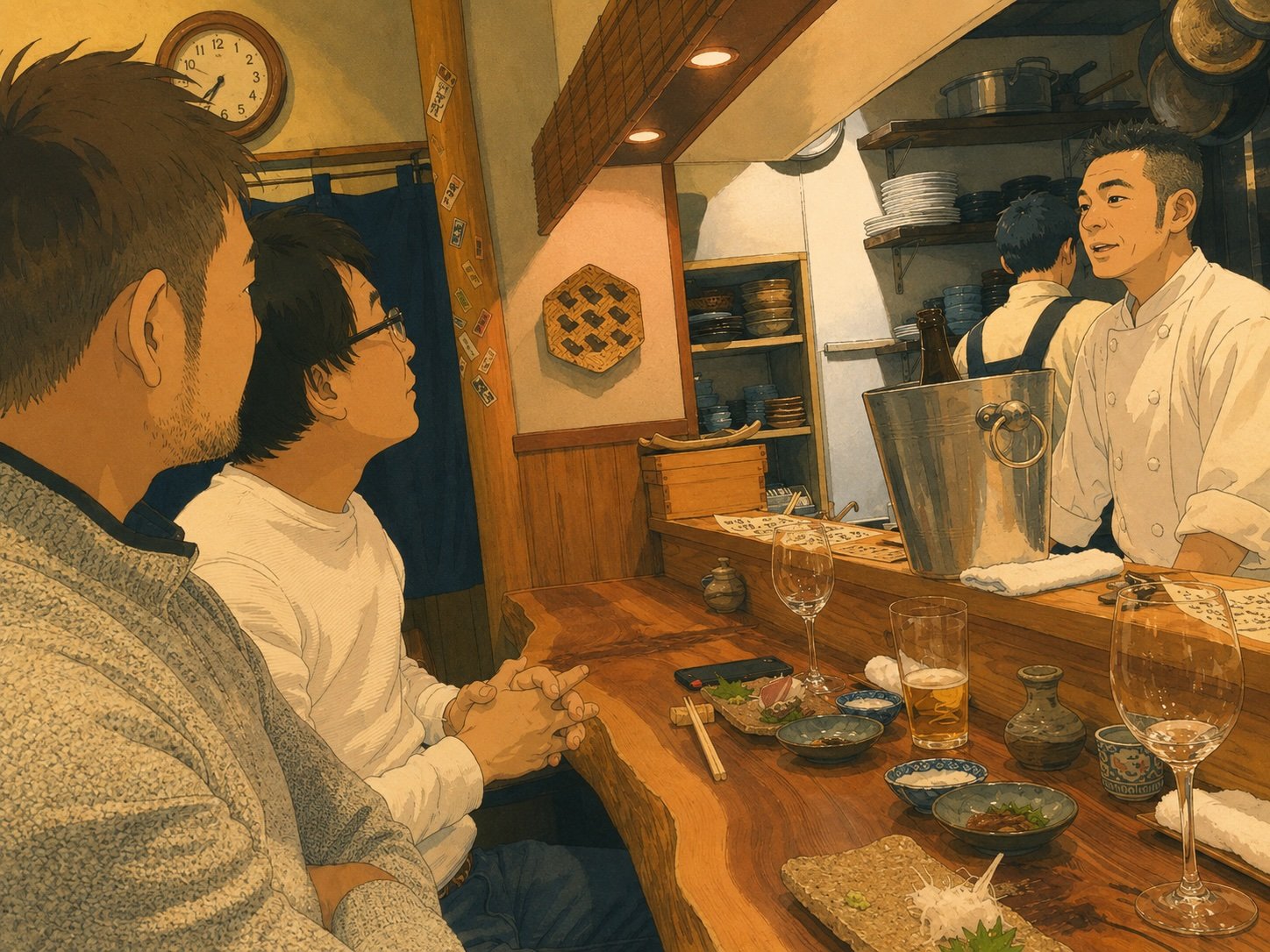
Following a Name Back to Tokyo
I happen to care about food. From 2014 to 2019, I was deep in an agriculture-related startup, traveling across northern, central, southern, and eastern Taiwan, spending time with farmers all over the island. In 2017, I made a trip to Shinagawa, Tokyo, to visit Oisix, a popular Japanese subscription service for fresh food and meal kits. What I was thinking about then was whether Taiwan could build something similar: a vertically integrated agricultural e-commerce platform.
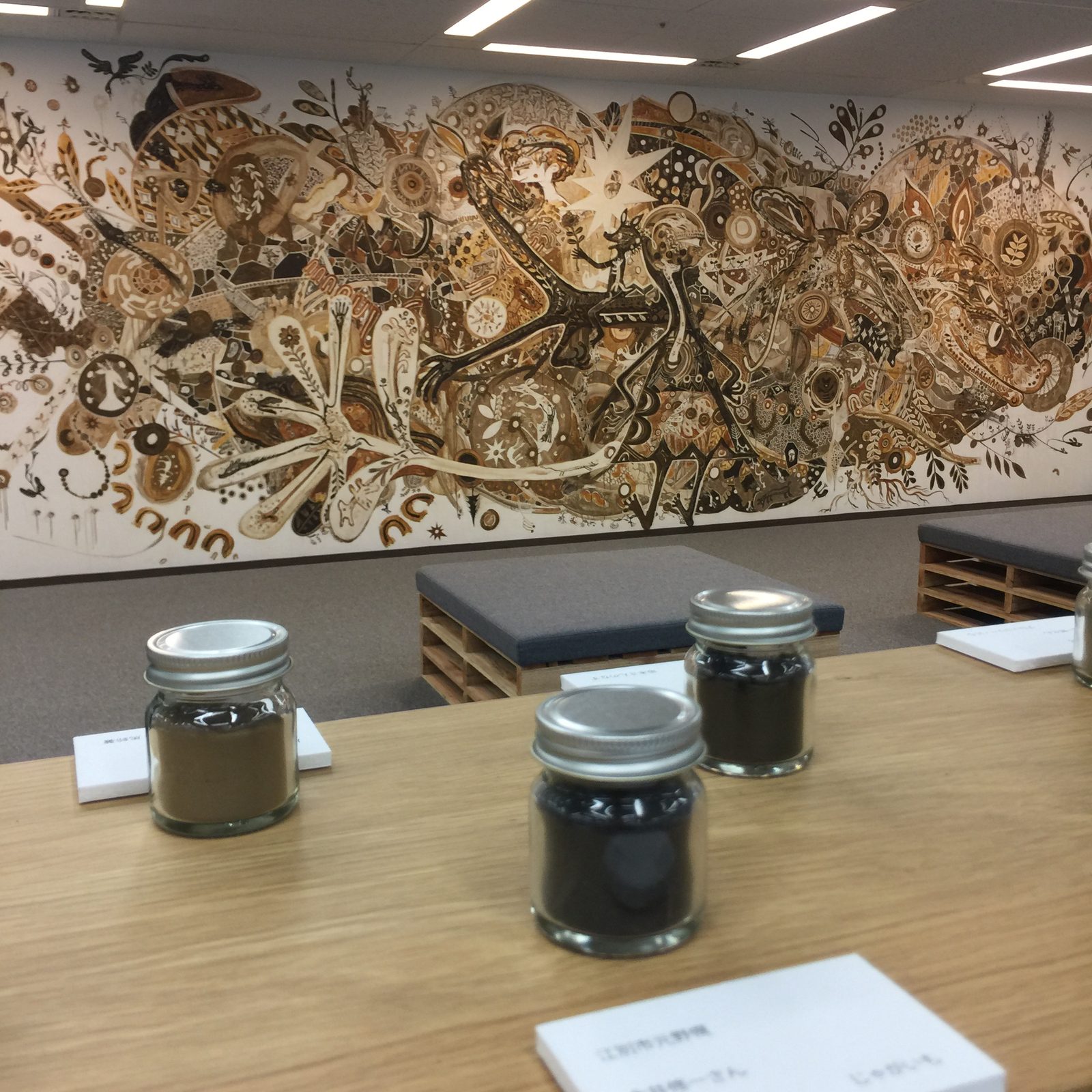
There’s a small story behind that photo. The glass jars on the table hold soil from different parts of Japan. There were more than three on display that day; I was too busy taking pictures, and my camera only caught three small jars. What I took away from it was something like “the land shapes what grows on it and the people who grow it”: different soil, different produce, and every region carries its own terroir. Those jars of soil have stayed with me as an image I keep returning to, about whether that sense of place survives once food gets loaded onto the shelf of globalization. I’ll save that thought for a later piece.
I’d traveled the full distance from farm to table. So I had some sense of how remarkable fermentation is, and how unforgiving. Same flour, water, salt: shift the temperature a degree or two, change the timing by a few hours, and you get something entirely different. When I started looking seriously at what this bakery was doing, I went online to learn about the people behind it.
The shop’s stated philosophy pointed to one name: Shiga Katsuei, listed as “General Director.” What caught me was the name of his bakery in Setagaya, Tokyo: Signifiant Signifié.
Those two words come from the linguist Saussure: signifiant and signifié, the signifier and the signified, describing the relationship between a sign and what it points to. Saussure’s linguistics happened to be something I knew a little about. When Lin-san explained the name to me, he reached for the ancient Chinese paradox “a white horse is not a horse” as a parallel. A French linguist’s theory of signs on one side; a classical Chinese logical puzzle on the other. Put together like that, I wanted to know who had chosen such a name. Lin-san said Shiga was a philosopher.
A baker called a philosopher. That was enough to make me look him up properly.
Shiga Katsuei is a figure you cannot ignore in any serious conversation about fermentation in Japanese baking. He treats bread as a fermented food: minimal yeast, several starter cultures raised from scratch, long cold fermentation that runs the full length of a day. He measures a loaf’s work in days, not hours. Everything I found said that Michelin-starred restaurants and luxury hotels specifically sought out his bread.
This small shop in Taipei had him as its director. Head baker Lisa was his apprentice, one of the few people outside Japan still making bread according to his philosophy.
That was when I understood. I hadn’t just walked into a bakery. I’d walked into a lineage still being carried forward. A Tokyo fermentation philosophy, passed through an apprentice’s hands, settled onto a street in Taipei. Almost no one knew.
A Taiwan-Japan Thread Nobody Planned
Lin-san’s background, I also pieced together slowly. At first I only knew he was the investor, based in Japan. Later I learned he was from Tainan, sent to Japan by his father to study as a young man, fluent in Mandarin, Taiwanese, and Japanese. He’d built a software company in Japan, taken it public, and sold it to IBM Japan. He’s now president of CyberSolutions, which listed on the Tokyo Stock Exchange Growth Market in October last year. He told me he is the first foreigner to have taken two companies public in Japan.
Put all of that together, and a line finally surfaces. A Tainan kid who put down roots in Japan, one day encounters Shiga’s philosophy of bread-making and is moved by it, moved enough to want to bring it back to Taiwan. Lisa is willing to hold to that slow craft, day after day, in Taipei. Shiga is willing to lend his name to a small shop far overseas. And I got pulled in because Lin-san asked me a question.
Not one step in that sequence was planned. No one wrote a Taiwan-Japan collaboration proposal and then executed it. One person found something he couldn’t let go of, and along the way kept meeting people willing to carry it with him. When you get down to it, it’s fate.
I Got More Than I Gave
I often say I came to “help,” but honestly, what I’ve received from this bakery over these years outweighs what I’ve put in.
In the startup world, everything is about efficiency, scale, and breaking processes down until they can be automated. This bakery showed me a different relationship with time. Dough doesn’t rise faster because you’re in a hurry. Those dozen-odd hours it needs: shortchange it by one and you’ve shortchanged the whole thing. Some good things cannot be rushed, good ingredients and good food among them. After going deeper into the world of fermentation, I feel that more strongly than ever.
I love good food but don’t bake. My path into this bakery started with Lin-san. Because I wanted to help protect his investment, and to keep learning from him, I ended up in contact with Lisa and her fermented bread. What I did was take the bread Lisa made with her head down and help more people find it, through digital channels and e-commerce. Calling that “help” feels like too much. It was more like opening another window onto something I also valued. What has always sustained this shop is the slow craft, and Lisa and Lin-san’s quiet commitment to it.
A Few People, One Thing, Each Contributing a Piece
My understanding now is that genuine Taiwan-Japan exchange is not found in press releases, not staged at marketing events, and not measured by a government overseas-project KPI. It’s a few specific people, committed to one specific thing, each bringing a piece. A Taiwanese man who built his life in Japan. A Tokyo fermentation master. A Taiwanese apprentice holding the philosophy steady in Taipei. And me, pulled in by curiosity. Together, that loaf that takes 18 hours to proof makes it to a Taipei breakfast table. This is exactly the kind of Taiwan story I’ve been trying to record in the Contemplation and Memory thread of this site.
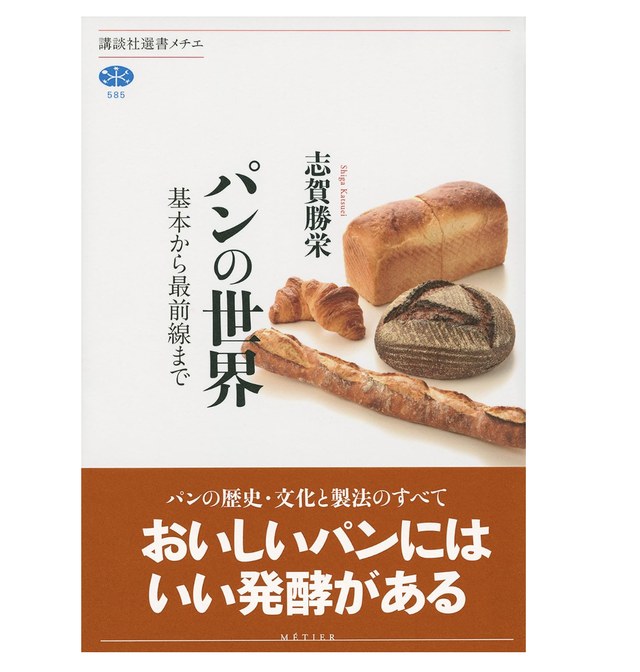
A few years ago, I asked Lin-san for materials on Shiga-sensei because I wanted to use them for online content. He was in Japan and sent me a digital file: Shiga’s book on bread-making. I’d only wanted a few lines for copywriting. That book left me thinking about Japanese craftspeople, civilizational history, food, and much more. This one essay cannot cover it all.
So I’ll tell this story across a few installments. Next: those 18 hours, and why, in an age that demands speed at every turn, someone would choose slowness instead.
Postscript: A Few Verifiable Facts
Lin-san’s history is not anecdote. His early company, the Japanese arm of Internet Security Systems, was founded in 1997, listed on JASDAQ in 2001, and sold to IBM Japan in 2006. His current company, CyberSolutions (サイバーソリューションズ), listed on the Tokyo Stock Exchange Growth Market on October 23, 2025, under ticker 436A. Two companies, both listed in Japan. Shiga Katsuei’s official website also notes that his bread is used by Michelin-starred restaurants and luxury hotels.
Sources: CyberSolutions CEO Profile, Nikkei: “CyberSolutions Lists on the 23rd”, Panaderia Craftsman Interview: Shiga Katsuei.
💬 Comments
Loading...