
TL;DR — Taiwan has changed course twice on how it regulates regenerative medicine, eventually landing on a dual-track framework covering both medical procedures and pharmaceutical products. Minister Shih Chung-liang frames this not as a compromise but as a matter of international alignment: if Taiwan uses only the procedural track domestically, other countries still treat the same therapies as drugs, and the products cannot go abroad. In the first six months after implementation, the procedural track received 651 applications, 515 approvals, and 2,545 cumulative patient enrollments.
This is the middle installment of a three-part series, corresponding to slides 7 through 15 and the middle portion of the lecture. The first post covered the market figures and Taiwan’s positioning from the first six slides. This post is about the framework itself.
The authority structure and the conditional approval pathway are analyzed at the statutory level in two other posts: Taiwan Regenerative Medicine Authority Map and Conditional Approval and the T-RMAT Pathway. This post is the version of that same framework as explained publicly by the competent authority.
A note on sourcing
- Text in quotation marks represents Minister Shih Chung-liang’s spoken remarks, transcribed from the lecture.
- Unquoted statements are drawn from the slide deck or verbatim transcript.
- The editor’s own judgments and inferences appear only in the “Editor’s Notes” section at the end, not in the main text.
What Are the Five Strategic Priorities for the Biomedical Industry?
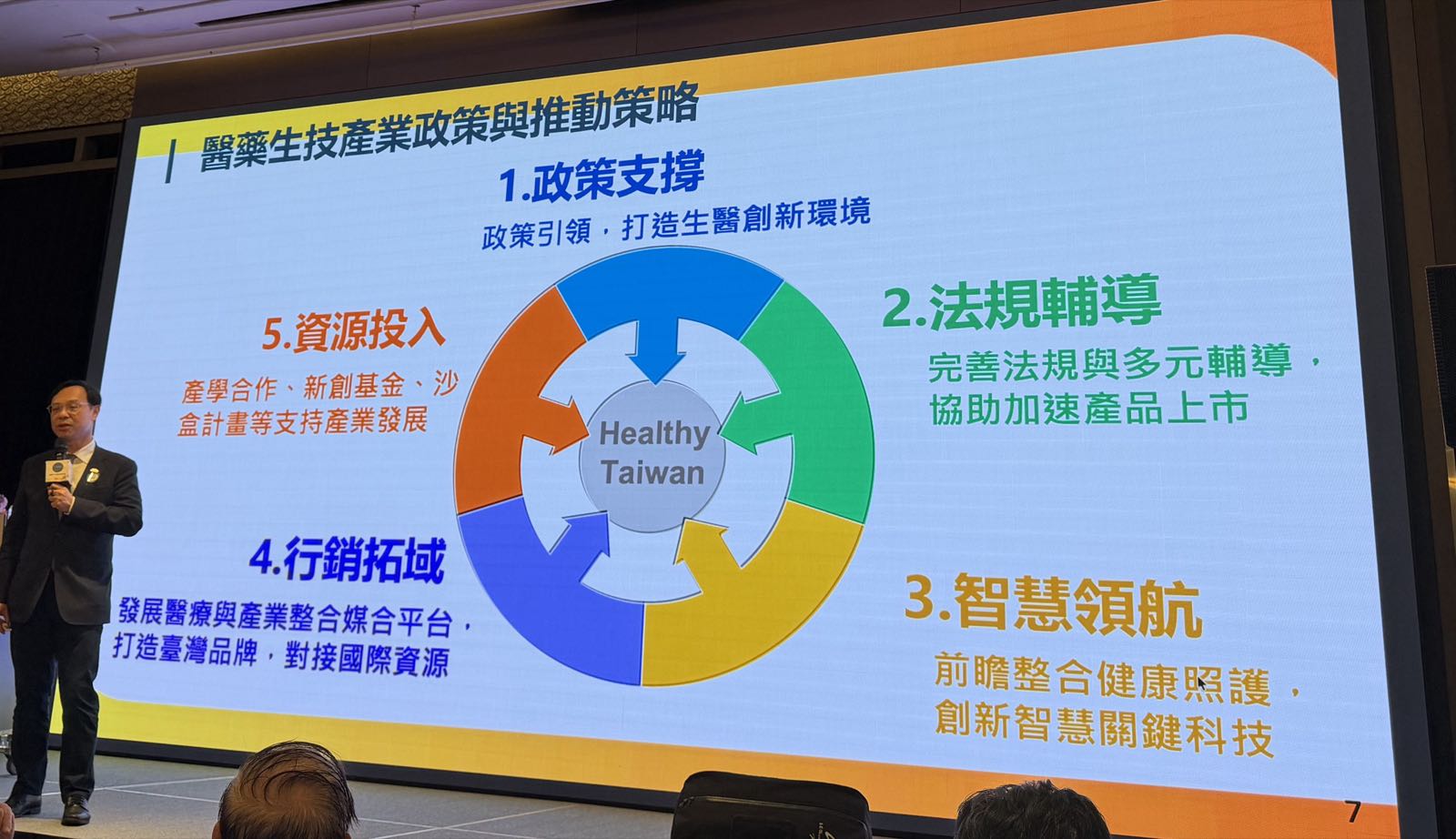 Slide 7: Biomedical Industry Policy and Strategic Priorities
Slide 7 organizes everything under the “Healthy Taiwan” banner and identifies five strategic priorities:
- Policy Support: Policy-led development to build an innovation-friendly biomedical environment
- Regulatory Guidance: Strengthening regulations and diversifying advisory services to accelerate time to market
- Smart Pathfinding: Forward-looking integration of healthcare with key smart technologies
- Market Development: Building a platform for medical and industry matchmaking, establishing the Taiwan brand, and connecting with international resources
- Resource Investment: Industry support through industry-academia collaboration, startup funds, and sandbox programs
Minister Shih’s remarks on this slide:
“The policy direction is already settled: regenerative medicine is a priority upgrade policy for the pharmaceutical sector. The question now is how regulatory guidance, technology adoption — clinical trials, smart medicine — and marketing translate into something actionable, and ultimately how resource support gets built out.”
He then mentioned two items not shown on the slide:
“From a policy standpoint, we have the BTC. In two weeks at the BTC conference, we will report on regenerative medicine again — both how we’re accelerating clinical trials and how our funding will work. We have set up a fund called the Pharmaceutical Upgrade Development Fund, a fund of NT$10 billion, and we’ll be reporting on how it will provide support.”
Editorial note: across two separate recordings, the fund name was heard as both “pharmaceutical” and “medical” (醫藥 vs. 醫療). The transcript standardizes to “Pharmaceutical Upgrade Development Fund” (醫藥升級發展基金); the official name should be confirmed from the BTC announcement. Slide 18 separately lists four core strategies under “National Development Fund Investment in Taiwan’s Biomedical Industry” — whether that refers to the same fund cannot be determined from the available materials.
What Three Regulatory Instruments Support the Biomedical Industry?
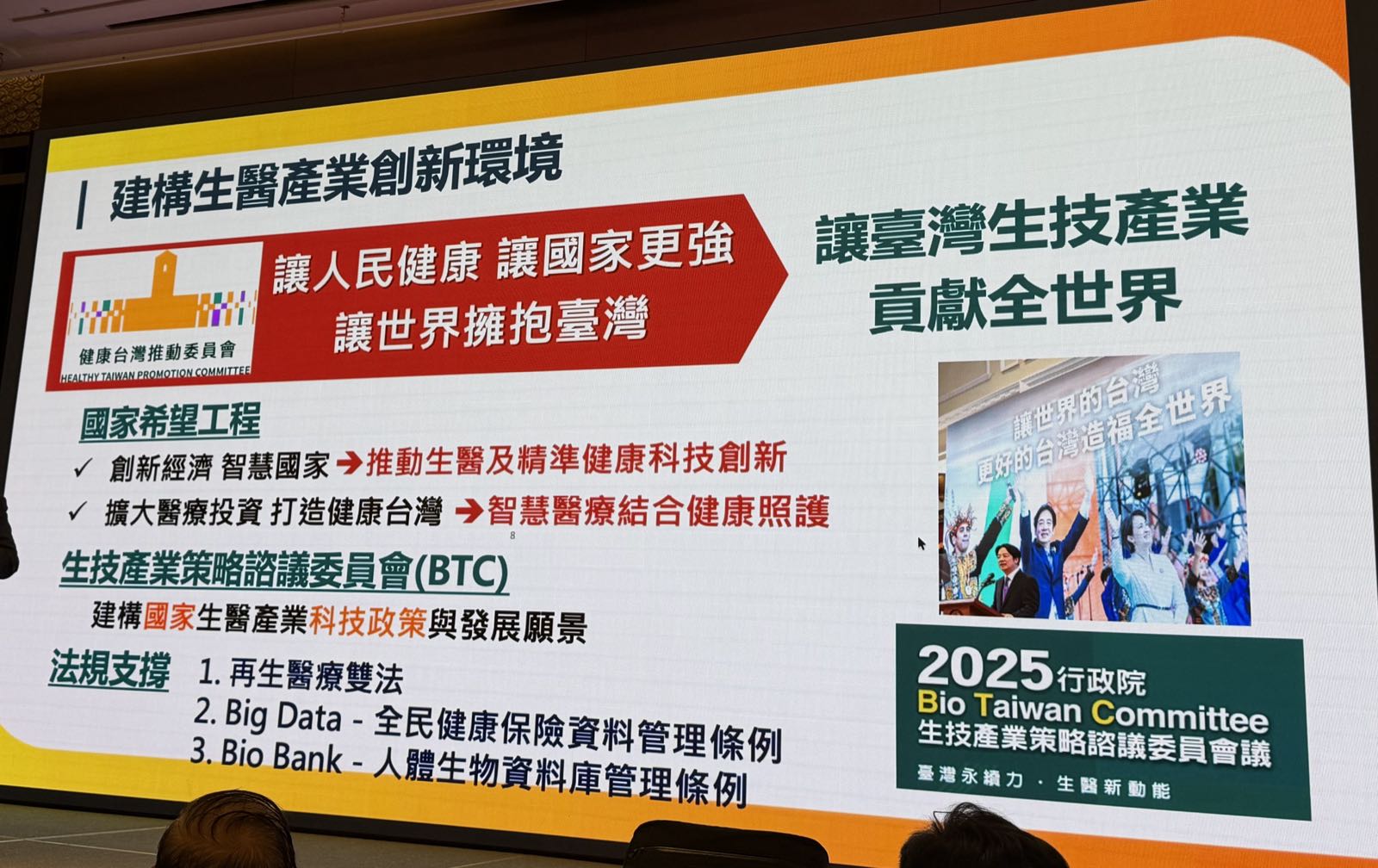 Slide 8: Building an Innovation Environment for the Biomedical Industry
Slide 8 lays out the institutional architecture: the Healthy Taiwan Promotion Committee (“Making people healthier, making the country stronger, making the world embrace Taiwan”), the National Hope Project (promoting biomedical and precision health tech innovation; expanding medical investment to build a healthy Taiwan; smart medicine combined with healthcare), and the Biotech Industry Strategy Advisory Committee (BTC), which sets national biomedical industry policy and a development vision.
The same slide identifies three regulatory instruments:
- The two regenerative medicine laws
- The National Health Insurance Data Management Act (Big Data)
- The Human Biobank Management Act (Bio Bank)
Minister Shih said all three have been “completed in sequence,” with the third still in revision:
“The Human Biobank Management Act is also being revised — expanding from the traditional model of biospecimen and data repositories to include digital data, genomic data, and imaging data.”
Three Priority Areas
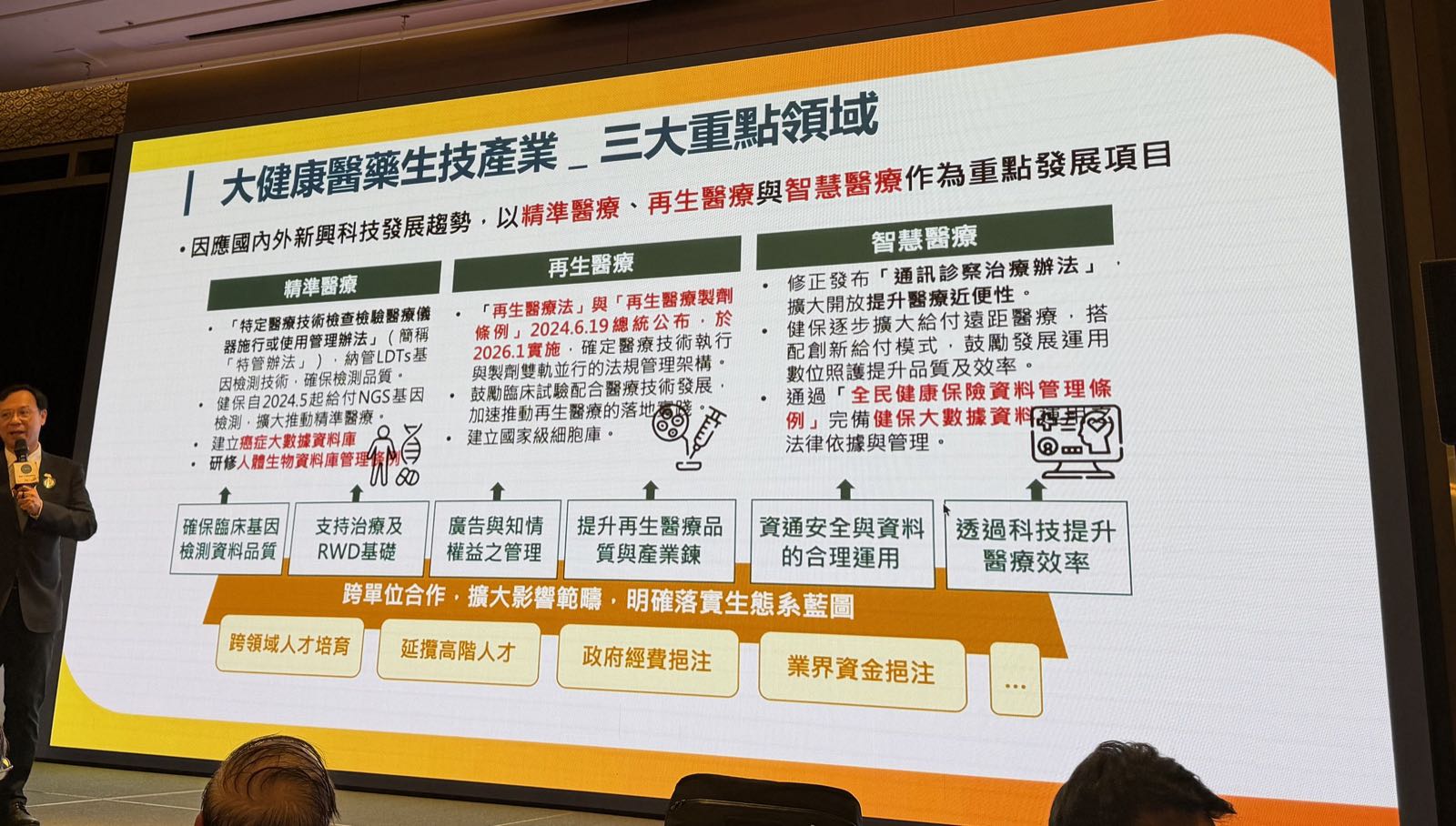 Slide 9: Big Health Biomedical Industry: Three Priority Areas
Slide 9 identifies precision medicine, regenerative medicine, and smart medicine as the three priority areas.
Precision Medicine: LDT genetic testing included under the Special Medical Techniques Regulations; NHI coverage for NGS genetic testing began in May 2024; establishment of a cancer big data repository; revision of the Human Biobank Management Act.
Regenerative Medicine: The Regenerative Medicine Act and the Regenerative Medicine Preparations Act were promulgated by the President on June 19, 2024 and took effect in January 2026, establishing a dual-track regulatory framework covering both medical procedures and pharmaceutical products; encouraging clinical trials in support of medical technology development; establishing a national cell bank.
Smart Medicine: The Telemedicine Diagnosis and Treatment Regulations have been revised and republished; the NHI is progressively expanding coverage for remote medicine; the National Health Insurance Data Management Act has been passed.
The same slide lists six supporting elements: ensuring the quality of clinical genetic testing data, supporting treatment and real-world data infrastructure, advertising and informed consent management, improving the quality of regenerative medicine and its supply chain, cybersecurity and appropriate data use, and using technology to improve medical efficiency.
Minister Shih elaborated on two of these (he alternated between “smart medicine” and “digital medicine” during the lecture; the slide uses “smart medicine” as the official term):
“When it comes to digital medicine, data governance is the foundation of digital infrastructure. Clinical application must achieve the goal of interoperability — building an ecosystem that works across systems. That is critical.”
“On precision medicine: real-world data and real-world evidence are indispensable for doing precision medicine well. That requires digitalizing all clinical data, then standardizing its structure, before it can actually support industry development.”
How Many Times Has Taiwan Changed Its Regulatory Approach?
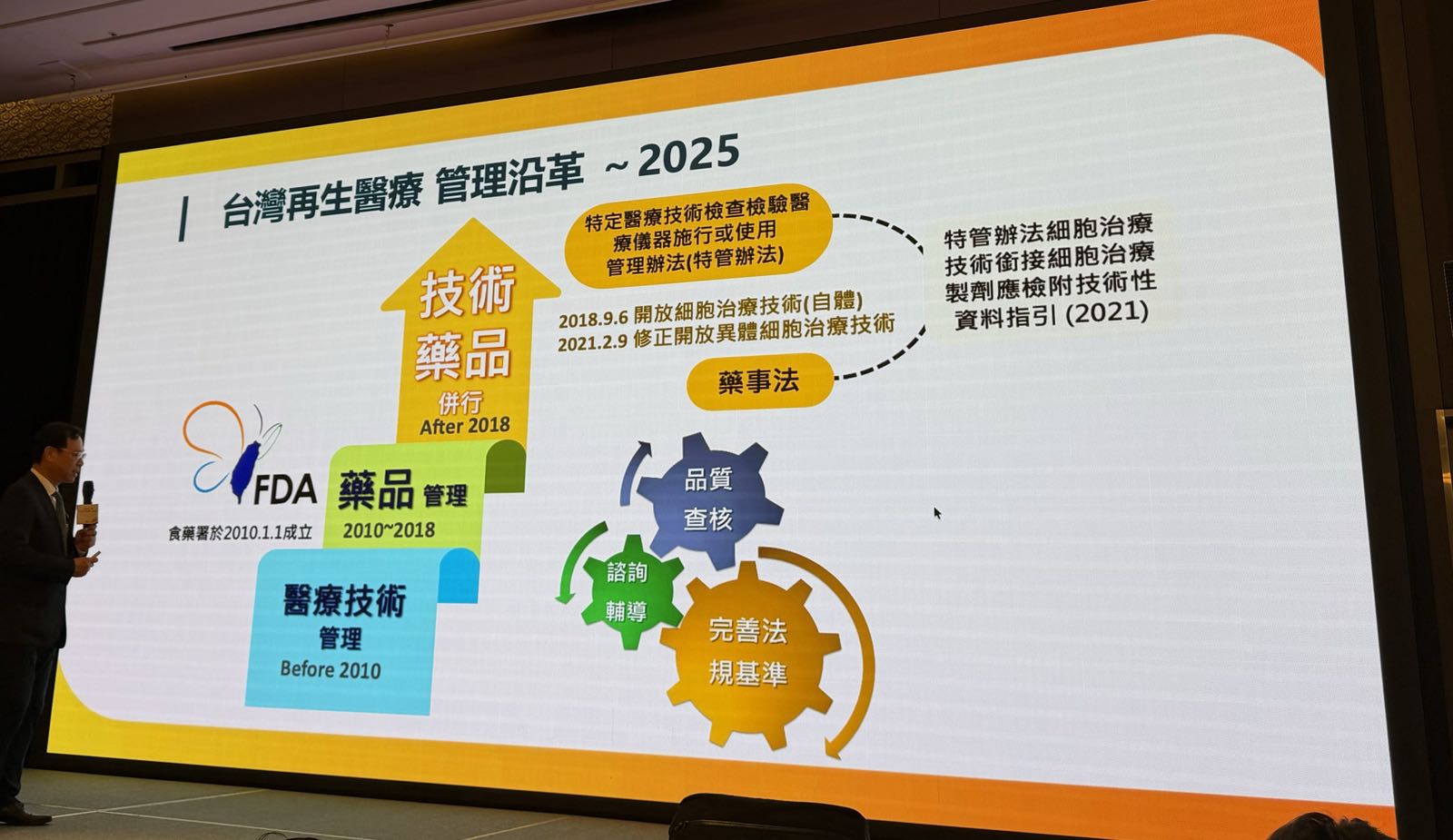 Slide 10: History of Regenerative Medicine Regulation in Taiwan (through 2025)
Slide 10 divides the regulatory history into three phases.
Before 2010: Managed as a medical technique.
“In the earliest period, before 2010, only the concept of technique existed. There was no concept of a drug. The thinking was that cells are taken from a person, processed, and then used — so there was only the concept of a technique, not a drug.”
2010 to 2018: Managed as a drug. The Taiwan Food and Drug Administration was established on January 1, 2010.
“After the TFDA was established in 2010, Taiwan followed the U.S. model and treated these therapies as drugs. But problems emerged, because cell therapies are fundamentally different from small-molecule drugs.”
2018 onward: Procedural and pharmaceutical tracks in parallel.
On September 6, 2018, the Special Medical Techniques Regulations were expanded to permit autologous cell therapy. Minister Shih read out the full name of the regulations in full during the lecture:
“The name of that regulation is very long — it’s the Regulations Governing the Administration of Specific Medical Techniques, Examinations, Medical Devices, and Their Use. Anyone with poor lung capacity won’t make it to the end. The idea behind the Special Medical Techniques Regulations was to begin with therapies that appeared safe and had potential — so it started with cell therapy, immune cell therapy, and so on.”
On February 9, 2021, the regulations were revised to permit allogeneic cell therapy. His explanation:
“After running the program for a while, it became clear that allogeneic cell use was the way forward, because it is the only approach that can be commercialized — that can scale up and bring costs down.”
The same year, the Guidelines for Technical Data Required for the Transition from Special Medical Techniques to Cell Therapy Products were also issued.
The slide identifies three pillars of oversight for this period: quality inspection, advisory services, and regulatory standard refinement.
Why Did Taiwan Reject the Single-Track Models Used in the U.S. and EU?
Minister Shih explained the reasoning behind moving from a purely procedural approach to a dual-track framework:
“But that alone was not enough, because if you want international alignment, you cannot rely solely on using it domestically as a technique. Other countries still treat it as a drug. So if you want it to go international, you have to align with international norms. That is why we have the two laws — the dual-track: procedures and pharmaceutical products.”
He described how the two tracks function:
“One track is for commercialization; the other enables early access. The procedural track allows early access. Once it goes through the pharmaceutical track, it can be commercialized and scaled.”
How Do the Two Laws Divide Responsibilities?
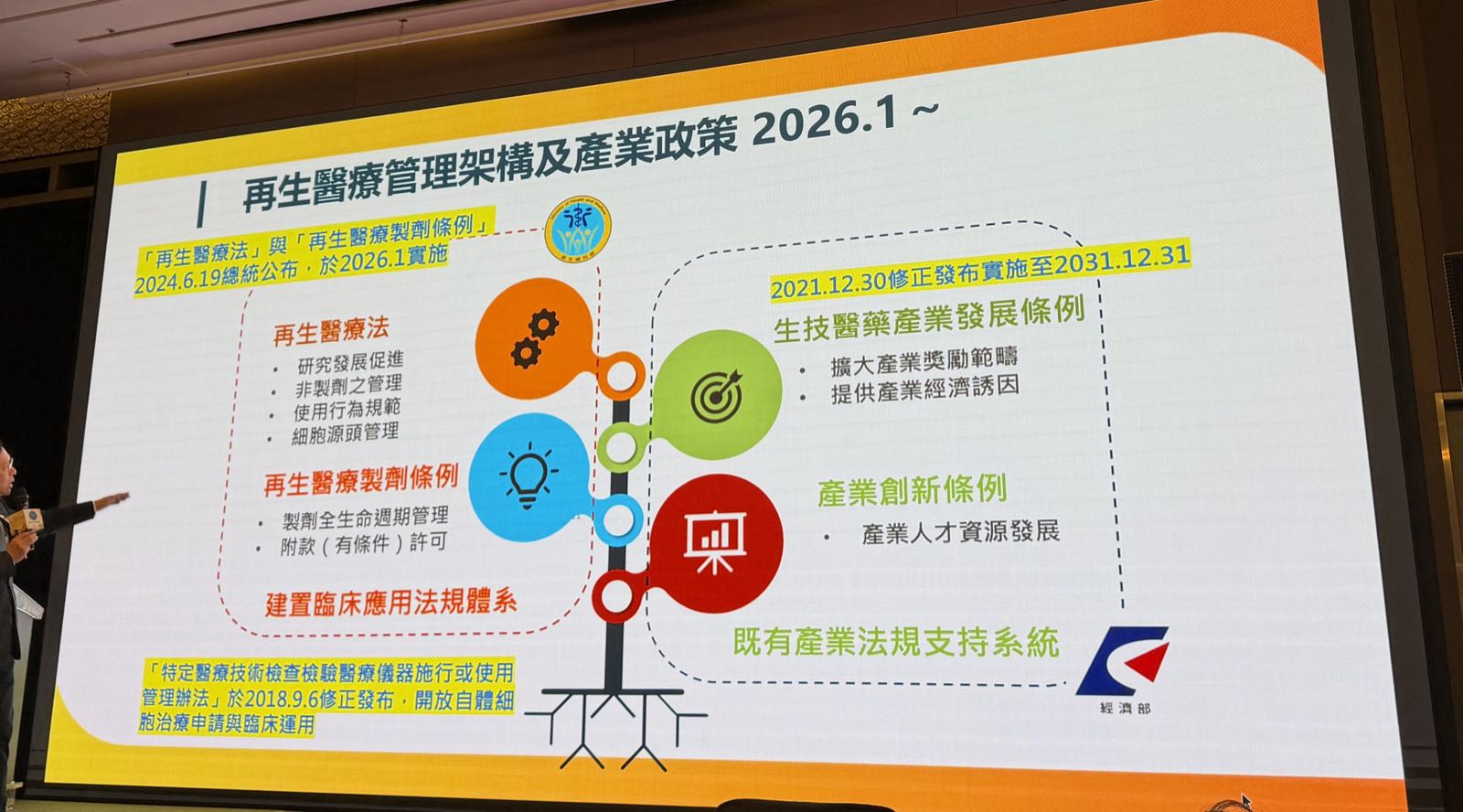 Slide 11: Regenerative Medicine Regulatory Framework and Industry Policy (effective January 2026)
Regenerative Medicine Act: Promotion of research and development, regulation of non-pharmaceutical preparations, governance of clinical use, management of cell sourcing.
Regenerative Medicine Preparations Act: Full product lifecycle management, conditional approval.
Minister Shih’s explanation:
“The pharmaceutical side introduces conditional approval to accelerate market access. The law itself handles full lifecycle management — from research and development promotion through to the governance of clinical use. The most important piece is managing cell sourcing, because if the source is properly controlled, errors won’t occur downstream.”
Together, these two laws constitute the regulatory framework for clinical application. The same slide also lists the existing industry-side regulatory support from the Ministry of Economic Affairs:
- Biotech and Pharmaceutical Industry Development Act: Revised and promulgated on December 30, 2021; in effect through December 31, 2031; expands industry incentive coverage and provides economic incentives for industry.
- Industrial Innovation Act: Human resource development for industry.
Minister Shih: “On the left is the regulatory side. On the right are the supporting industry statutes — the Biotech and Pharmaceutical Industry Development Act, the Industrial Innovation Act — both of which now include regenerative medicine, as an encouragement, whether through investment tax deductions, tax offsets, or patent incentives.”
On conditional approval, he offered an analogy: “The conditional approval here is a special authorization — the EU equivalent would be what’s called hospital exemption.”
Two clarifications: first, Minister Shih said “hospital rejection” in the original spoken remarks; the transcript treats this as a slip and corrects it to “hospital exemption,” which is the term quoted above. Second, this is an analogy offered during the lecture. No independent verification of EU law has been conducted here, and this should not be cited as a legal comparison.
The Regulatory Framework Under the Regenerative Medicine Act
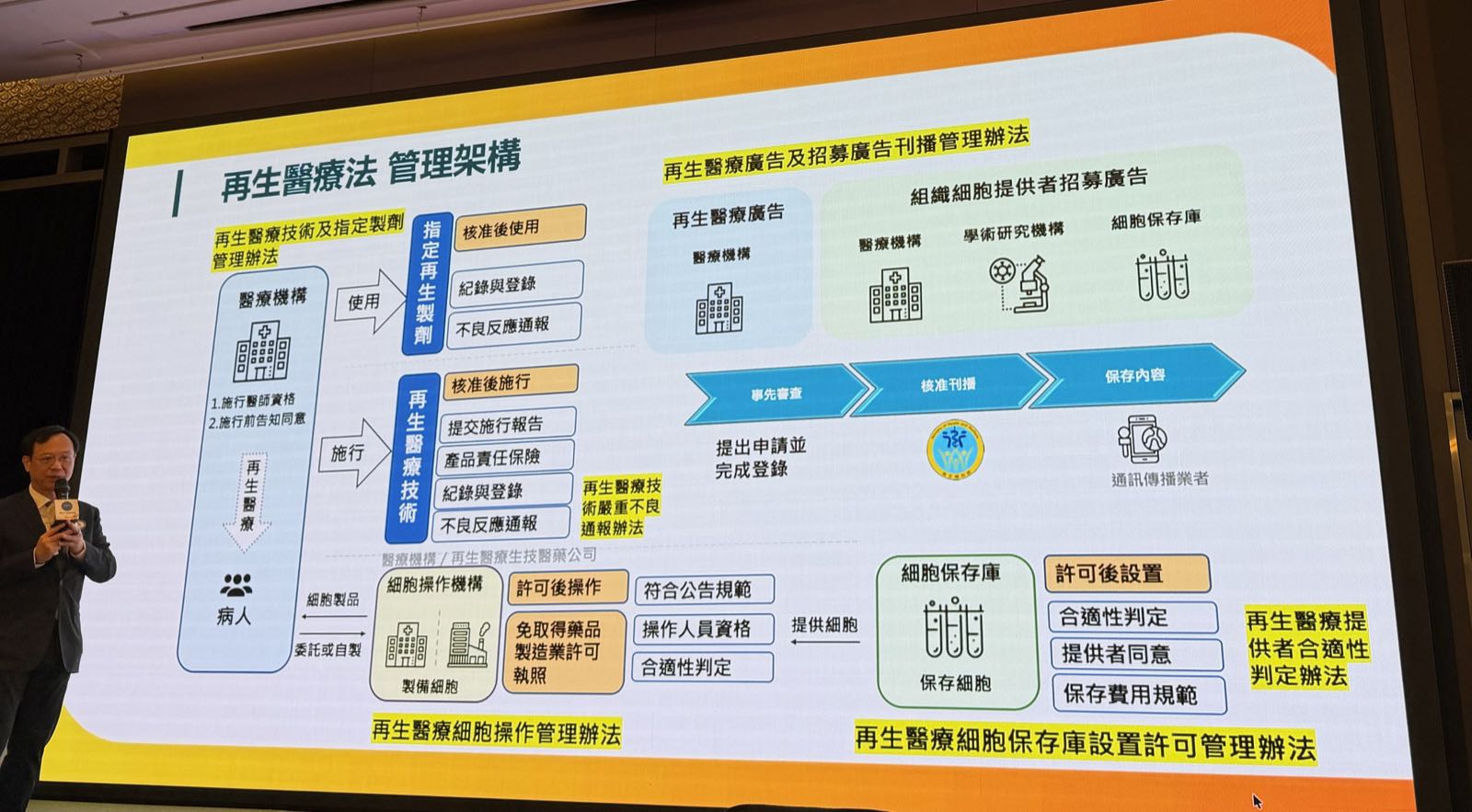 Slide 12: Regulatory Framework Under the Regenerative Medicine Act
The Regulations Governing the Management of Regenerative Medicine Techniques and Designated Preparations govern how medical institutions use and perform these therapies.
Medical institutions using designated regenerative preparations: post-approval use, recordkeeping and registration, adverse event reporting.
Medical institutions performing regenerative medicine procedures: post-approval performance, submission of procedure reports, product liability insurance, recordkeeping and registration, adverse event reporting.
Prerequisites for medical institutions: physician qualifications, informed consent before the procedure.
Cell processing facilities (either medical institutions or regenerative medicine biotech/pharmaceutical companies): post-permit operation, exemption from requiring a pharmaceutical manufacturing license, compliance with published standards, operator qualifications, donor suitability assessment — governed by the Regulations Governing the Management of Cell Processing for Regenerative Medicine.
Cell banks: post-permit establishment, donor suitability assessment, donor consent, storage fee standards — governed by the Regulations Governing the Establishment and Permit Management of Regenerative Medicine Cell Banks.
The Regulations Governing Donor Suitability Assessment for Regenerative Medicine have also been separately promulgated.
Minister Shih’s description of the overall framework:
“This is the whole management architecture — starting from source management. Because the end use happens in an institution, the question is which institutions can use these therapies and which techniques are permitted — which already extends beyond clinical trials. Then comes follow-up: real-world data collection, real-world evidence feedback, and the related process standards. The upper layer is the clinical use framework; the lower layer is the process framework. Together they represent a meaningful departure from how drugs were previously managed.”
Pre-Clearance for Advertising
Under the Regulations Governing the Broadcasting Management of Regenerative Medicine Advertisements and Recruitment Advertisements: regenerative medicine advertisements are applied for by medical institutions; recruitment advertisements for cell or tissue donors may be applied for by medical institutions, academic research institutions, or cell banks. The process consists of prior review, approval before publication, and content retention.
Minister Shih illustrated the rationale with an example:
“The last time I went out for dinner, I noticed that sake was claiming to contain stem cells — the bottle said it contained stem cells. I have no idea what effect that actually has. It felt like it might make you less drunk. Stem cells have apparently become a very common term that everyone recognizes, but in fact it is a very complex thing. So advertising is a separate area we govern. Unlike how advertising has worked in the past, this requires advance application to avoid misleading people. It’s all managed systematically.”
Six Months In: How Many Applications and Approvals?
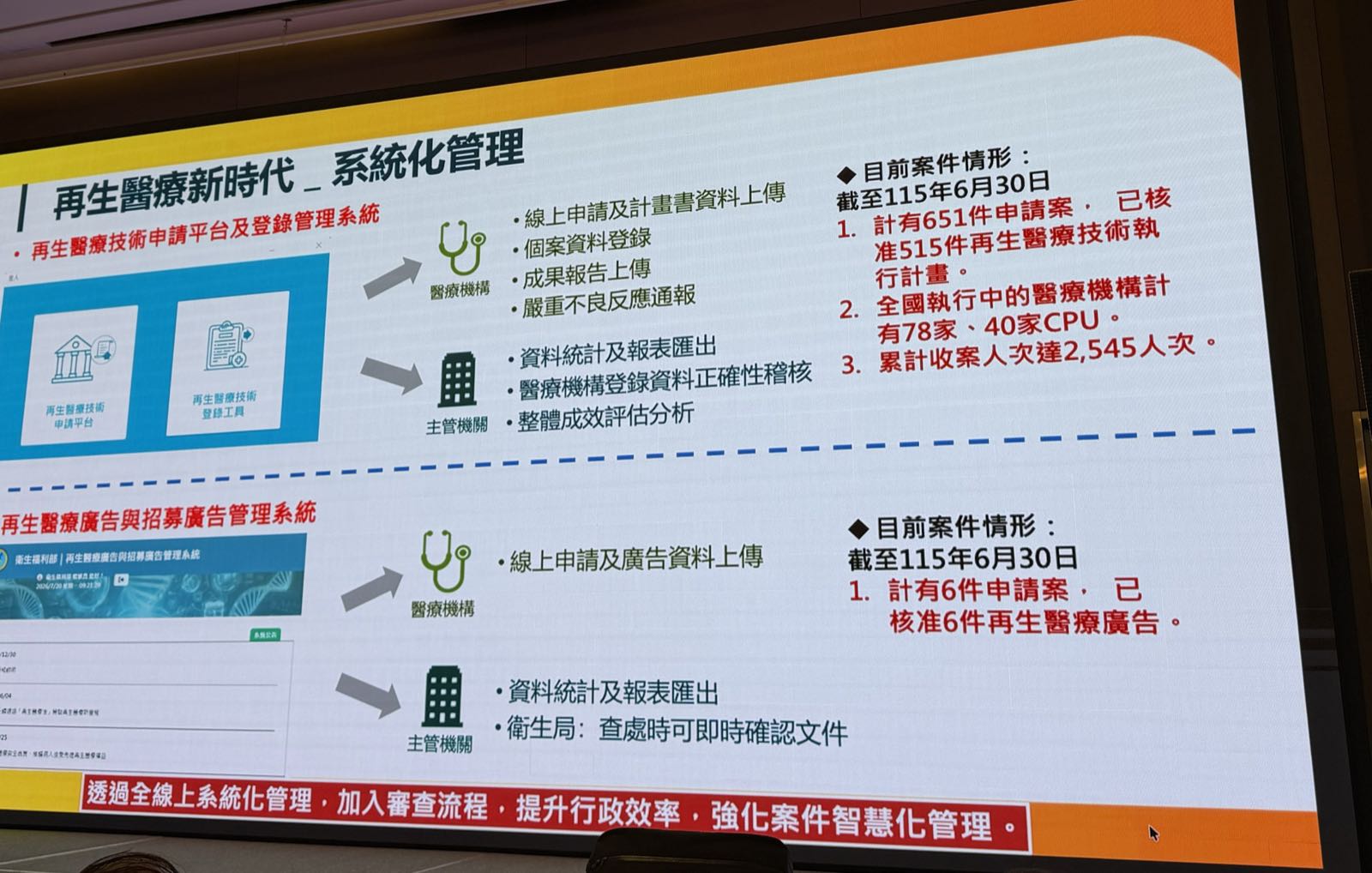 Slide 13: A New Era for Regenerative Medicine: Systematic Management
The Regenerative Medicine Procedure Application Platform and Registration Management System operates on two sides:
Medical institution side: online application and protocol upload, patient data registration, outcome report submission, serious adverse event reporting.
Competent authority side: data statistics and report export, auditing of institution registration data, overall performance evaluation and analysis.
As of June 30, 2026 (ROC year 115):
- 651 applications submitted; 515 regenerative medicine procedure plans approved
- 78 medical institutions currently operating nationwide; 40 CPUs (the abbreviation appears in the slide without expansion)
- Cumulative enrollment: 2,545 patient cases
- Regenerative medicine advertising and recruitment advertising management system: 6 applications submitted, 6 approved
The slide states that the goal is to “achieve fully online systematic management, integrate the review process, improve administrative efficiency, and strengthen intelligent case management.”
Information Disclosure
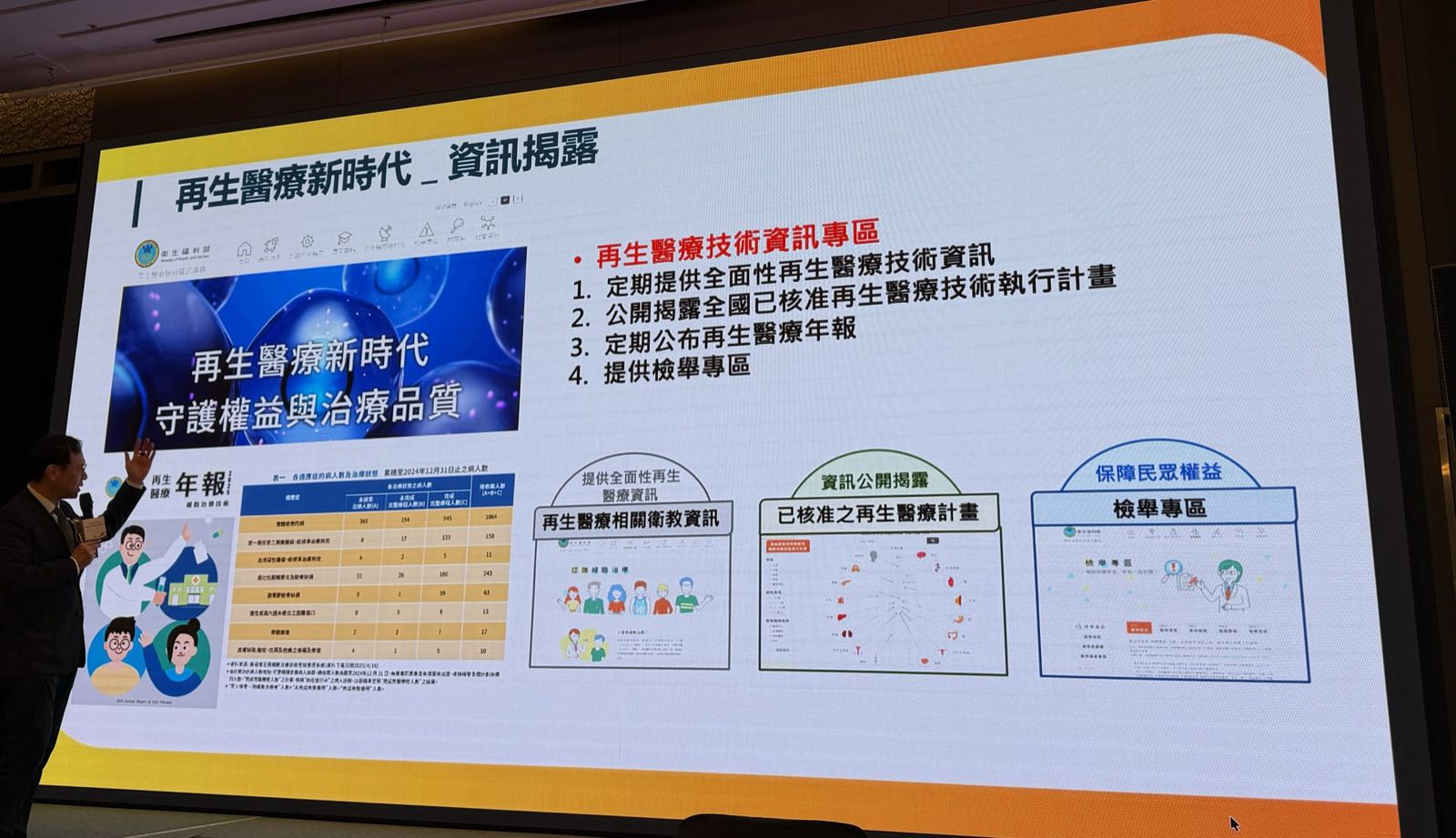 Slide 14: A New Era for Regenerative Medicine: Information Disclosure
Slide 14 establishes a dedicated regenerative medicine information portal with four components:
- Regular publication of comprehensive regenerative medicine procedure information
- Public disclosure of all approved regenerative medicine procedure plans nationwide
- Periodic publication of a regenerative medicine annual report
- A public reporting channel for complaints
Three functional purposes: providing comprehensive regenerative medicine information (public health education), public information disclosure (approved regenerative medicine plans), and protecting public interests (complaint reporting).
Minister Shih’s remarks (note: these are spoken remarks; the formal disclosure scope stated in the slide is “approved regenerative medicine plans”):
“There is also information disclosure. What we are currently running clinical trials on, what has not yet completed trials, what plans are in progress — all of this is disclosed, to protect the public.”
What Are the Five Statutory Criteria for Conditional Approval?
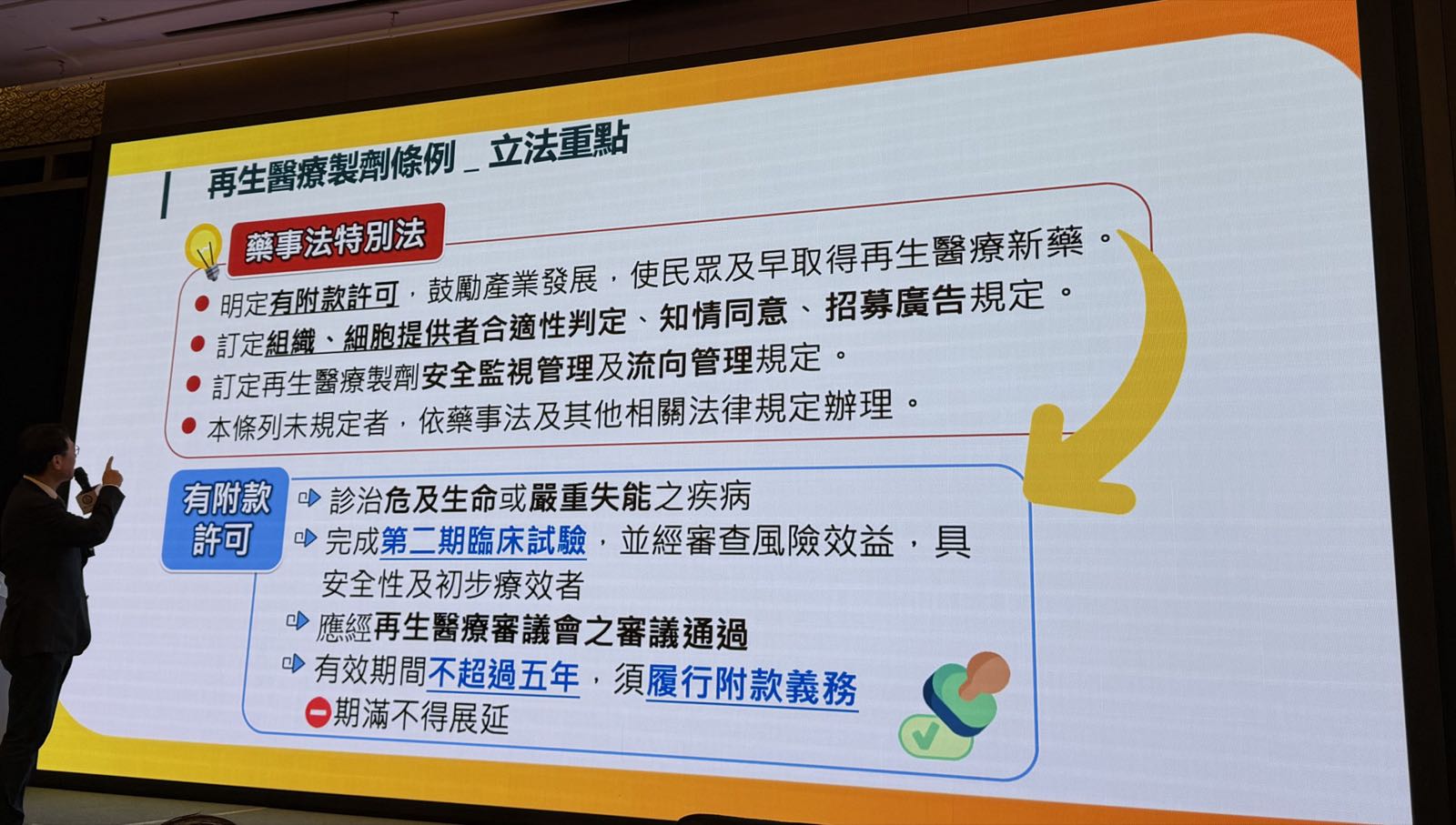 Slide 15: Regenerative Medicine Preparations Act: Legislative Highlights
The Regenerative Medicine Preparations Act is designated as a special law relative to the Pharmaceutical Affairs Act. Legislative highlights:
- Conditional approval is formally established to encourage industry development and enable patients to access new regenerative medicine therapies earlier
- Requirements for tissue and cell donor suitability assessment, informed consent, and recruitment advertising are specified
- Safety surveillance, monitoring, and distribution management requirements for regenerative medicine preparations are specified
- Where this Act does not provide otherwise, the Pharmaceutical Affairs Act and other relevant laws apply
Five statutory criteria for conditional approval (Slide 15, verbatim):
- The condition must be life-threatening or cause severe disability
- Phase II clinical trials must be completed and a risk-benefit review must confirm safety and preliminary efficacy
- Approval by the Regenerative Medicine Advisory Committee is required
- The approval period must not exceed five years, and the conditional obligations must be fulfilled
- The approval cannot be extended upon expiration
Minister Shih’s spoken version:
“On the pharmaceutical side and the regenerative medicine preparations side, we now have conditional approval — meaning that if you already have Phase I and Phase II results, you can enter the market, and then continue through real-world data.”
Editorial note: both independent recordings are consistent with each other at this point, but what was said differs from what appears on slide 15 (which specifies “completion of Phase II clinical trials, with a risk-benefit review confirming safety and preliminary efficacy”). For any legal citation of the statutory criteria, the slide and the Act itself govern.
Summary of Key Points
The following are drawn entirely from the slide deck and the verbatim transcript.
- Taiwan’s regulatory approach to regenerative medicine changed twice: procedural management before 2010, pharmaceutical management from 2010 to 2018 (following the U.S. model), and dual-track from 2018 onward.
- The Special Medical Techniques Regulations opened autologous cell therapy on September 6, 2018 and allogeneic cell therapy on February 9, 2021. The Minister’s stated rationale for opening allogeneic: commercializability, scale, and cost reduction.
- The reason for moving to two parallel laws, per the Minister: international alignment. Other countries still treat these therapies as drugs; relying only on the procedural track domestically prevents internationalization.
- The Regenerative Medicine Act covers research promotion, non-preparation management, clinical use governance, and cell source management. The Regenerative Medicine Preparations Act covers the full product lifecycle and conditional approval. The Minister described source management as the most important element.
- Advertising is subject to pre-clearance (prior review, approval before publication, content retention). An information disclosure portal has been established, covering public health education content, publicly disclosed approved plans, annual reports, and a complaint channel.
- The five criteria for conditional approval: life-threatening or severely disabling condition; completion of Phase II clinical trials with a risk-benefit review confirming safety and preliminary efficacy; approval by the Regenerative Medicine Advisory Committee; validity period not exceeding five years with conditional obligations fulfilled; no extension upon expiration.
- As of June 30, 2026 (ROC year 115): 651 applications, 515 approvals, 78 institutions, 40 CPUs, 2,545 cumulative patient enrollments; 6 advertising applications, 6 approvals.
Editor’s Notes
What follows reflects my own judgments and inferences. None of it is stated by the source materials. Read it separately from the quoted remarks and slide content above.
On the function of each track. The Minister said one track is for commercialization and the other for early access, and he framed international alignment as the reason for having two laws. I have elsewhere summarized this as “the procedural track governs domestic accessibility; the pharmaceutical track governs international tradability.” That binary doesn’t hold: conditional approval sits within the pharmaceutical track, yet the Act’s stated purpose for that mechanism is also to enable patients to “access new therapies earlier” — early access, not just commercialization. The two tracks overlap in function. They are not a clean division.
On the relationship among the three regulatory instruments. The slide groups the two regenerative medicine laws, the NHI Data Management Act, and the Human Biobank Management Act as three parallel supports, without explaining how they interact or depend on one another. My inference that “removing one would make the other two unworkable” goes beyond what the materials support.
On data infrastructure and conditional approval. The Minister discussed the need to digitalize and structurally standardize clinical data in the context of precision medicine; he discussed real-world data collection as a post-market obligation under conditional approval. Connecting those two passages into the claim that “if data isn’t structured, conditional approval is hollow in practice” is my inference — and an absolutist one. The materials only support the claim that structured data matters.
On what conditional obligations require. The Act specifies that the validity period must not exceed five years, that conditional obligations must be fulfilled, and that the approval cannot be extended upon expiration. The materials do not specify what those obligations consist of in any individual case. I have previously written that this means “completing the dataset with real-world evidence.” That reads a general theme from the lecture into a specific legal requirement. It exceeds what the source supports.
On why allogeneic cell therapy was permitted. The Minister’s stated reasons were commercializability, scale, and cost reduction. My framing of this as “an industry logic rather than a medical logic” imposes an exclusionary contrast that the materials do not make. The line that “autologous cells cannot achieve scale because each batch is for one patient” is also my addition — it was not said in the lecture.
On the necessity of pre-clearance advertising review. The Minister gave one example — a sake bottle that claimed to contain stem cells — and remarked that “stem cells have become a very common term.” My extrapolation that this represents a market where the term is systematically misused goes beyond a single anecdote. The judgment that “pre-clearance review is not merely conservative but necessary” is a normative position of my own.
On the significance of disclosing incomplete trials. “We disclose information on trials that have not yet been completed” comes from the Minister’s spoken remarks; the formal disclosure scope stated in the slide is “approved regenerative medicine plans.” The discrepancy is worth noting, but I have no basis to judge which form of disclosure is more useful to the public. The materials provide no data on where misleading claims actually occur.
Series: Global Trends and Taiwan’s Position · Next: Money, Speed, and the Asia-Pacific Rare Disease Innovation Treatment Center

💬 Comments
Loading...