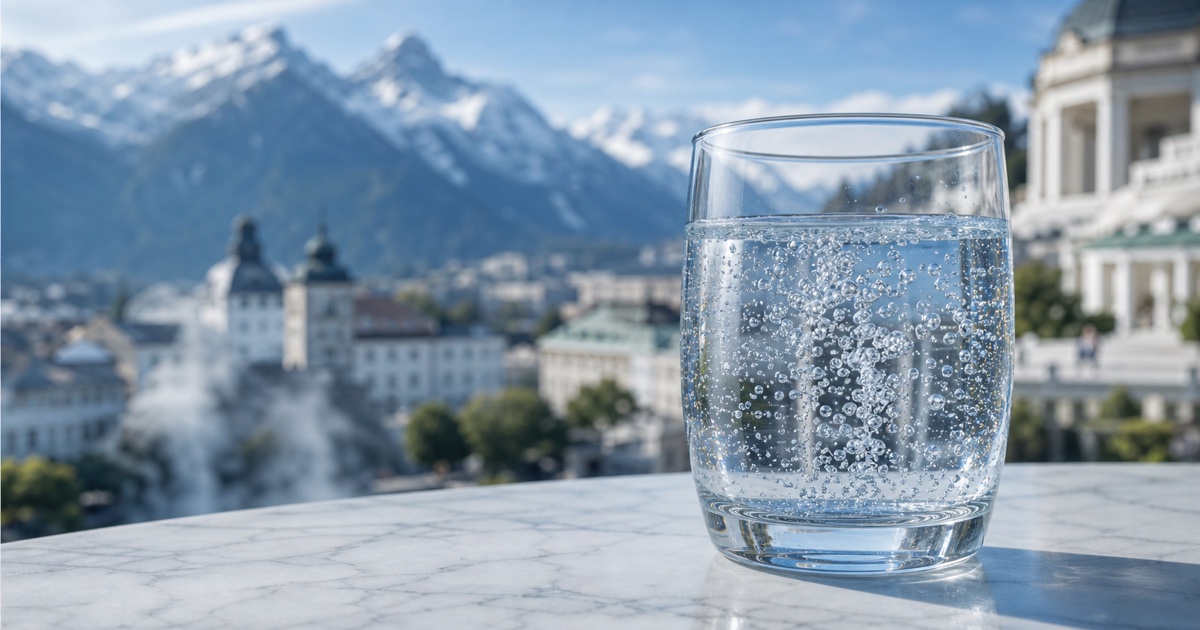
🪶 Disclosure and Statement: I assist the two brands Rosbacher and Römer Brunnen with market development in Taiwan. In Germany, Römer Brunnen falls under the Heilwasser lithium-water classification, which this article will mention. All statements in this article related to “lithium, the brain, and Alzheimer’s” are objective discussions of the 2025 Harvard study and European food culture, and do not constitute any medical advice. The Yankner team’s research has so far mainly been completed in mouse models, and human clinical trials have only just begun. Please do not purchase lithium supplements on your own; consult a professional physician for related health decisions.
TL;DR — In August 2025, the Harvard Bruce Yankner team published a study in Nature showing: lithium may be a foundational metal for brain function, and amyloid may act like a “sponge” soaking up free lithium in the brain. Meanwhile, Europe’s century-old Heilwasser (“healing water”) tradition has long been using natural mineral water containing trace lithium for daily wellness. This is something European society has practiced for a century, and modern molecular biology is only just beginning to be able to explain it.
A Scientist Who Spent 35 Years Completing His Own Theory
In the early 1990s, Harvard’s Professor Bruce Yankner was still a young neurologist. In his lab he carried out an experiment that was extremely difficult at the time technically — dripping purified amyloid onto neurons in a culture dish.
The result: the neurons began dying in large numbers.
This finding later came to be called the “amyloid hypothesis” — and it set the direction for the following 30 years of Alzheimer’s research. Nearly all new drug development against dementia in the world concentrated its firepower on the goal of “clearing amyloid plaques from the brain.” Eli Lilly, Biogen, Roche — major pharmaceutical companies collectively invested tens of billions of dollars in related drugs. In 2023–2024, the first batch of new drugs based on this theory finally received formal approval from the US FDA — Leqembi (July 2023) and Kisunla (July 2024).
Up to this point the story flows smoothly — a classic narrative of “basic science leading to medical breakthroughs.”
But in August 2025, Yankner himself published another paper in the journal Nature: amyloid may not be the direct culprit. It acts more like a “sponge,” soaking up a trace element in the brain that had been overlooked for a century — lithium.
It was the same person, 35 years apart, completing the hypothesis he had founded back then.
Why does this story matter? Because it opens up a new perspective — and that perspective happens to resonate with a century-old European tradition.
An Anatomical Paradox Unsolved for a Century
To understand why Yankner went back to re-examine his own theory, we first need to hear a paradox that long troubled the field of neuroscience.
Every time a neurologist dissected the brain of a deceased patient, they would see a deeply abnormal phenomenon: some elderly people had been mentally sharp, with excellent memory and entirely normal cognitive function in life, yet after they passed away, when their brains were opened up, they were densely covered in amyloid plaques — as severe as in patients with advanced dementia.
If amyloid were truly the sole culprit, this phenomenon would make no sense at all.
This paradox stumped the neuroscience field for 30 years. Until the Yankner team’s 2025 study found a possible answer.
The New “Sponge Hypothesis”
Their team spent ten years overcoming the technical challenge of “measuring trace metals in the brain,” and discovered a deeply counterintuitive truth:
To maintain normal memory and cognitive function, the brain depends on naturally occurring “lithium.” When amyloid begins to accumulate in the brain, these plaques tightly bind and absorb the free lithium.
The more plaque there is, the more thoroughly the brain’s available lithium is drained.
(I must first make this clear: the claim that “lithium is an essential human trace element” remains a frontier hypothesis as of 2026. The mainstream nutritional science textbooks of countries around the world have, to this day, not listed lithium among essential elements on par with zinc, iron, and copper. Yankner’s study pushes this line a major step forward, but it is still quite some distance from “textbook consensus.”)
This perfectly explains that century-old paradox:
- If a person’s brain already had high lithium reserves, then even with plaque forming and some lithium being soaked away by it, the remaining lithium would still be sufficient to maintain neural function — so cognitive function would remain intact.
- Conversely, if lithium stores were already at the margin, once plaque begins to accumulate and frantically seizes the lithium, the brain’s defenses collapse, and memory disintegrates along with them.
What we previously thought was the disease-causing culprit may be the “thief” that causes the loss of a key trace element.
The research team also conducted a key validation experiment: they deliberately depleted the lithium in mouse brains — and the result was that even without any other pathology, the mice’s memory immediately suffered a cliff-edge decline, and the pathological progression of Alzheimer’s was dramatically accelerated.
Next, they screened out a special compound called “lithium orotate,” which can evade amyloid’s seizure. When this formulation was used on Alzheimer’s mice, pathological changes were halted, and lost memory began to reverse.
This therapy is currently in the preparatory stage for launching human clinical trials in the United States.
Why Does This Have Anything to Do with European Mineral Water?
Back to our topic — mineral water.
When Yankner’s study was first released, the European water-culture circle had a very interesting reaction: “Haven’t we been drinking this for over a hundred years already?”
That’s a bit of an exaggeration, but it’s not false historically.
In the first article we introduced Germany’s legally defined Heilwasser (healing water) classification — currently around 55 water sources hold this certification, and among them lithium-bearing waters are a subcategory clearly recognized by tradition:
| German Heilwasser Lithium Waters | Lithium Content | Traditional Claim |
|---|---|---|
| Bad Mergentheimer Albertquelle | 13.0 mg/L (highest recorded worldwide) | Nervous system and metabolic balance |
| Hirschquelle | 1.3 mg/L | Same as above |
| Bad Vilbeler Römer Brunnen | 1.1 mg/L | Mineral supplementation, digestion |
| Heppinger Extra | 0.84 mg/L | Digestive system and metabolism |
| Staatlich Fachingen | 0.77 mg/L | Excess stomach acid |
Lithium content > 0.5 mg/L is the legal threshold by which Germany defines “lithium-bearing water” — this standard did not appear only in 2025; it has existed within the German pharmaceutical legal system for over fifty years.
In other words: Europeans did not have molecular-mechanism evidence that “lithium repairs memory,” but they had long ago noticed the distinctiveness of lithium-bearing water through experience, and written it into legal classifications. Italy’s Vichy Catalan (lithium 1.3 mg/L) is also the same traditional practice.
This is the core of what this article wants to say — what folk practice has been doing for a hundred years, modern molecular biology is only just beginning to be able to validate.
This is how history unfolded:
- 1925: Germany’s Bad Vilbel was recognized by the State of Hesse as a healing spring source
- 1881: Spain’s Vichy Catalan was discovered by Dr. Furest
- 1930: Römer Brunnen’s 287-meter artesian well was drilled
- 1955: Römer Brunnen received German national certification as Heilwasser
- 1990: Yankner published the amyloid hypothesis
- August 2025: Yankner published the lithium–amyloid mechanism paper (Nature)
That is to say — from the establishment of the Heilwasser legal classification to the validation of the molecular mechanism, there was a 70-year gap. Tradition arrived first; science arrived later.
This is not to say “tradition must be right.” Rather — when folk practice and modern research point in the same direction, it is worth pausing to take a look.
But — Many “Buts”
At this point, I must switch into serious mode. There are a great many things in this story that require caution.
1. The Harvard study is currently mainly in mice
The Yankner team’s key experiments were completed in mouse models. The miracle of lithium orotate reversing memory has so far only happened in lab mice. Human clinical trials have only just begun their preparations — from mice to humans, the drug mechanism could be entirely different. Throughout history, there have been far too many cases of “effective in animals but failing in humans.”
Moreover, the field of Alzheimer’s has an ironic fact — over the past 20 years, almost all mouse experiments targeting amyloid have looked beautiful, but upon entering human Phase III clinical trials, the vast majority failed. This is also why Yankner himself went back to re-examine this line. Whether lithium orotate will be effective in humans will not yield its first wave of readouts until at least around 2028–2030.
2. There is a huge gap between “lithium in drinking water” and “medicinal lithium”
| Dose Range | Use | |
|---|---|---|
| Heilwasser lithium water | 0.5–13 mg/L | Drinking intake, ~0.1–3 mg per glass |
| Beneficial threshold in observational studies | ≥ 15 µg/L (drinking water) | Epidemiological observation |
| Effective dose in the Harvard study (mice) | about 0.1–0.2 mg/day | Animal experiment |
| Clinical lithium for bipolar disorder | 600–1,200 mg/day | Drug treatment |
Medicinal doses are more than 1,000 times higher than drinking intake. In other words: the lithium in mineral water is not a drug at all; it is a daily trace level.
There is also an often-overlooked difference — chemical form. The “lithium orotate” used in the Yankner team’s mouse experiments is an organic lithium compound of a specific formulation; the research team chose it precisely because it can evade amyloid’s seizure. The lithium in natural mineral water, however, is mostly in inorganic form (lithium carbonate, lithium sulfate, etc.), and their absorption rate, efficiency in entering the brain, and interaction with proteins are entirely a different matter from lithium orotate. Treating “drinking mineral water to supplement lithium” as a cheap version of “taking lithium orotate supplements” — this analogy does not hold chemically.
3. Some epidemiological observations are supportive, but not causal
Over the past 20 years there have been scattered studies observing that “regions with higher lithium content in drinking water have lower suicide rates and dementia prevalence” — for example, county-level data from Denmark (Kessing 2017), Japan (Muronaga 2022), and Texas, USA (2018). But this is correlation, not causation — it could be that regions with good water quality also have other health factors.
4. Populations unsuited for lithium supplementation
- High blood pressure, cardiovascular disease (mind sodium intake)
- Kidney disease, taking diuretics (lithium accumulates when kidney function is impaired)
- Thyroid disease (lithium interferes with the thyroid)
- Pregnant or breastfeeding women (high doses carry neurodevelopmental risks)
5. Taiwan’s regulatory red line
Article 28 of Taiwan’s Act Governing Food Safety and Sanitation clearly stipulates that food (including mineral water) must not make therapeutic claims. So —
- Imported lithium-bearing mineral water cannot claim “prevents dementia,” “boosts the brain,” or “improves Alzheimer’s” in Taiwan
- Product labels can only state objective mineral content (such as “naturally contains lithium 1.1 mg/L”)
- Any wording approaching a therapeutic implication would be illegal
This is also why this article uses conservative phrasing such as “may,” “research shows,” and “why” throughout — this is cultural discussion and knowledge popularization, not product recommendation.
6. “Europe has drunk it for a hundred years” is not proof of safety
This story uses “tradition arrived first, science arrived later” as its narrative thread, but one thing must be made clear — a century of European drinking experience does not equal safety for everyone, in all contexts.
For one, the long-term users of these Heilwasser lithium waters were mostly a population subset from localized regions, with specific lifestyles (for example, German middle-class families who regularly went to Bad Vilbel for therapeutic stays). Their diet, exercise, overall nutritional status, and access to medical care all differ from modern urban life in Taiwan, and cannot be directly transposed.
For another, modern environmental sources of lithium exposure are entirely different from a hundred years ago — the battery industry, electronic devices, and industrial emissions all increase the environmental lithium burden. So the observation that “European elders drank it for a hundred years without issue” may not necessarily be replicable in 2026 Taiwan.
So What? How Should I Think About This?
For me — I would understand it this way:
Yankner’s study does not give me a reason to drink any particular water. It gives me a perspective for re-understanding this thing called “water.”
The health discourse of the past thirty years had as its main theme “anti-” — antioxidant, anti-inflammatory, anti-free-radical, anti-aging. We treated the body as a battlefield, treated every element of aging and disease as an enemy, and bought up all kinds of supplements that could “defeat” them.
But Yankner’s study reminds us: the brain is not a battlefield, it is an ecosystem. Neurodegenerative diseases often occur not because the brain has suddenly gained an external monster, but because it has lost the tiny cornerstone that was originally there, silently supporting its operation.
Seen from this angle, Europe’s century-old Heilwasser tradition is actually not so mysterious — it is not treatment, it is replenishment. Not a radical therapy, but a gentle daily routine. When Europeans drank these waters, they did not take them as medicine, but as a way to, each day, reclaim a bit of the trace elements that geology had accumulated over the long term — from a layer of strata, an ancient spring source, ten thousand years of sediment.
In the coming decade, research on the relationship between lithium and the brain will continue to develop. Perhaps Yankner’s hypothesis will be validated like his own amyloid hypothesis was back then; perhaps it will be revised or overturned. That is not what this article is concerned with.
What I care about is — our understanding of water can evolve from “quenching thirst” to “building a relationship with a piece of land.”
Along this path of evolution, the first article discussed German mineral water culture, the second article taught how to read labels, and the third article discussed table pairings. This one is the final turn on this path — from outward to inward, from the senses to the molecule, from drinking water to knowing your own body.
Conclusion: When Heilwasser Meets Yankner
Before working on this brand, I never imagined that “water” could connect to neuroscience.
But after spending three months poring over Bad Vilbel’s historical archives, reading SGS Institut Fresenius analysis reports, and following Yankner’s papers, I saw a very beautiful timeline:
In 1925, Bad Vilbel was recognized by the State of Hesse as a healing spring source. In 1930, Römer Brunnen’s 287-meter-deep well gushed forth its first drop of artesian mineral water. In 1955, this well was certified by the German state as Heilwasser. In 2025, a Harvard lab far across the Atlantic discovered that brain function may require lithium.
For an entire century, no one could string these two storylines together. Europe’s therapeutic tradition was tradition, and Harvard’s molecular biology was molecular biology — two worlds, two languages.
But after 2025, these two lines began to intersect.
This is not to say tradition must win, nor that science must prove tradition. It is to say that when you walk into a European therapeutic town with a century of history (Bad Vilbel, Vichy, Spa) and watch the local elders who insist on drinking mineral water — you begin to wonder: do they know something we haven’t yet figured out?
The next time you pick up a bottle of lithium-bearing mineral water and drink it down — it is not medicine, nor is it that string of fine print on the nutrition facts label. It is a not-yet-fully-deciphered message from geology and time.
Science is still chasing tradition. Tradition is still waiting for science.
And you and I happen to be born in the very year these two lines converge.
Footnotes · Sources
Harvard Yankner Study (2025)
- Original paper: Aron L, Ngian ZK, Qiu C, et al. Lithium deficiency and the onset of Alzheimer’s disease. Nature 645, 712–721 (2025). DOI: 10.1038/s41586-025-09335-x
- Harvard Medical School official press release: Could Lithium Explain, Treat Alzheimer’s Disease?
- NIH research summary: Lithium Levels Tied to Alzheimer’s Disease, Dementia
- ALZFORUM field expert commentary: Could Lithium Deficiency Be Powering Alzheimer’s?
Epidemiological Supporting Studies
- Trace lithium levels in drinking water and risk of dementia: a systematic review. PMC11364728 (2024)
- Lithium in Portuguese Bottled Natural Mineral Waters—Potential for Health Benefits? PMC7696288
European Lithium-Water Data (Continued from the First Article)
- 📄 Bad Vilbeler Römer Brunnen 1L SGS Test Report (Li 1.1 mg/L)
- 📄 Rosbacher Klassisch 0.75L SGS Test Report (Li 0.11 mg/L)
- German Heilwasser database: Heilwasser.com
- German high-lithium spring water rankings: OriginalHealth.net
- BfArM Federal Institute for Drugs: bfarm.de
Regulatory and Safety References
- US EPA drinking-water lithium technical note: UCMR5 Technical Fact Sheet: Lithium in Drinking Water (PDF)
- Taiwan Act Governing Food Safety and Sanitation: Article 28 (prohibition of therapeutic claims)
Media Coverage and Commentary
- Harvard Gazette: An Alzheimer’s Breakthrough 10 Years in the Making (2026-01)
- CNN: Lithium-Alzheimer’s Brain Study (2025-08)
Series Conclusion
This is the fourth article in the “Mineral Water Culture” series, and also the temporary close of this topic.
Over these four articles —
- 〈Why Do Germans Take Water So Seriously?〉 → entering through culture
- 〈Those Numbers on the Label — What Are They Actually Saying?〉 → entering chemistry
- 〈Why Are Water Menus at European Restaurants Longer Than Coffee Menus?〉 → arriving at the table
- 〈Why Is Lithium Starting to Appear in Medical Discussions of European Mineral Water?〉 → reaching the body
From a piece of land to a molecule, from a meal to a person’s brain.
Thank you for walking through these four articles with me. See you at the next topic.

💬 Comments
Loading...