
TL;DR — The bread at 味覺的感動 requires a dough to ferment for more than a dozen hours. Rapid fermentation is a product of the post-industrial-revolution demand for speed and mass output, and commercial yeast has existed for barely a century. I tend to chase efficiency; being part of a bakery that insists on long fermentation has reminded me to look at things from another angle. A system that can only go fast, with no option to slow down, is already out of control.
At 味覺的感動, a single dough ferments for more than a dozen hours. I have watched the process in the shop: the dough rests in a professional fermentation cabinet, set to 18°C for 18 hours, and only then goes into the oven. The first time I saw it, one question came to mind immediately: in today’s world, does this make any sense?
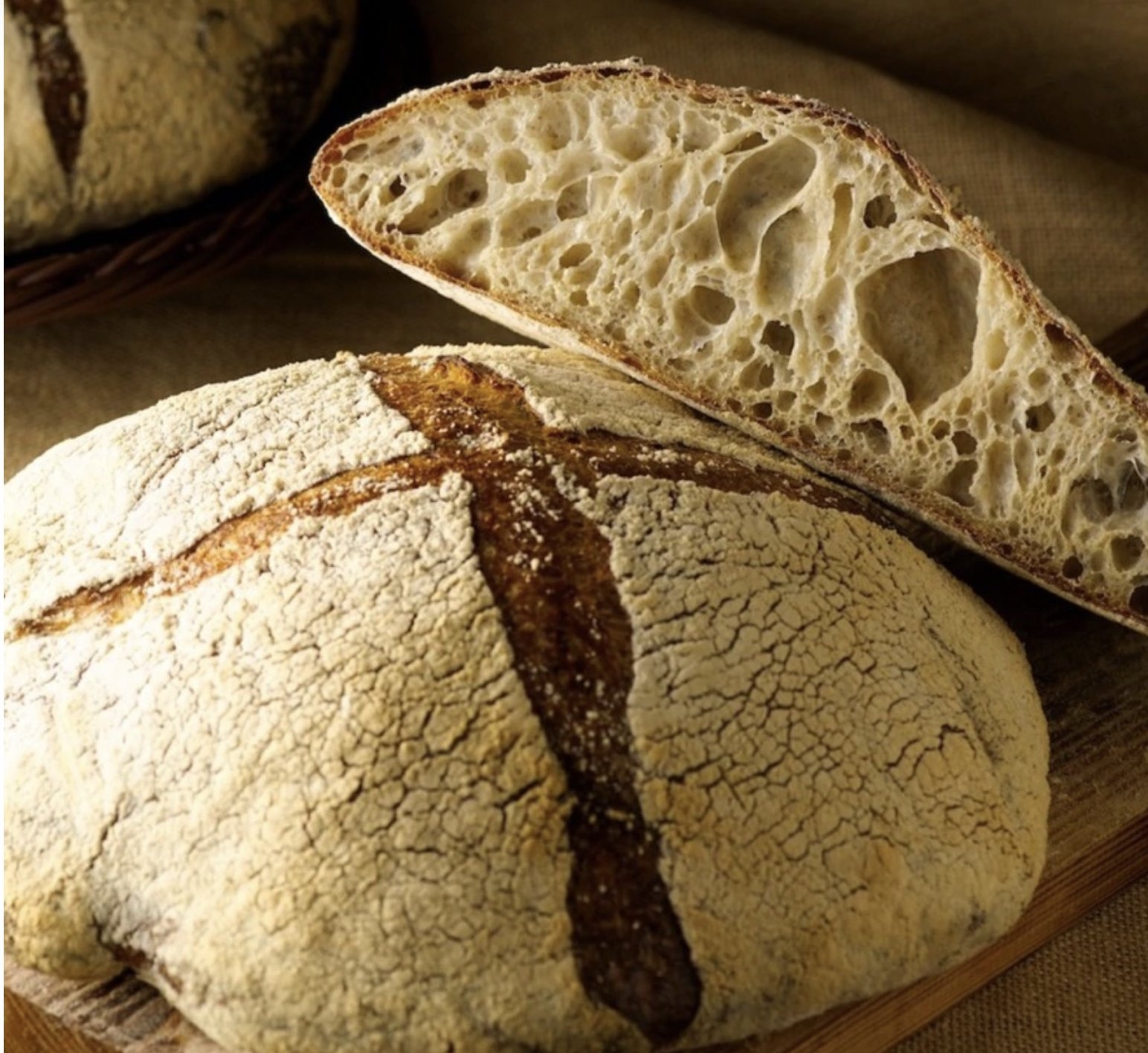
By factory logic, it is absurdly slow. In his book パンの世界 (Kodansha Sensho Métier), Masayoshi Shiga cites a telling figure: with commercial yeast and an electric oven, a dough can go from mixing to finished loaf in two and a half hours. 味覺的感動’s process takes several times that.
Slowness on this scale has a direct consequence: it caps output. When fermentation alone takes 18 hours, the entire production cycle completes only once a day: one batch, one oven load. Measured by throughput per unit time, the metric factories care about most, this looks almost like voluntary self-sabotage.
Speed Is Only a Hundred Years Old
When I read Shiga’s book, I learned that speed, as we now know it, arrived quite late.
Commercial yeast has been around for barely a century. For the six thousand years before it, people made bread without it. Shiga writes that after the Industrial Revolution, surging populations created a social need to bake bread quickly and in large quantities, and factory-cultivated single-strain yeast answered that need. For the first time, breadmaking became fast, consistent, and forgiving of error.
Part of this push for speed was driven by war. During the First World War, food shortages and the need to feed armies in the field forced yeast producers to switch from grain to molasses, the byproduct of sugar refining. Within years after the war, German and Danish engineers developed a continuous-feeding method with heavy aeration that caused yeast yields to surge. Commercial yeast became cheap and abundant along this wartime path of speed and economy. The “fast” that we take for granted today traces back to a mobilization designed to feed the maximum number of people, as quickly as possible, at the lowest possible cost.
Speed came at a price. To produce efficiently at scale, and to keep loaves properly risen during long-distance transport, additives and improvers became indispensable. There was another cost: by the mid-twentieth century, most artisans had grown entirely dependent on commercial yeast, and few retained the knowledge of how to cultivate a fermentation starter from scratch. Over a century, we traded six thousand years of accumulated craft for velocity.
What Shiga did was reclaim the time. He treats bread as a fermented food, not a product to be rushed. At 18°C over 18 hours, starches break down into glucose, lactic acid bacteria develop, and the bread arrives at a natural sweetness, no sugar added. He has carried one line from his master, Motoyoshi Fukuda, his whole career: If there’s no illness, why give medicine?
Slow Is Not Anti-Technology
Shiga’s slowness is made possible by modern technology.
He writes that precision mixing machines and temperature-controlled equipment are exactly what allow today’s bakers to achieve more extreme long fermentations than anything attempted before the commercial-yeast era, leaving a dough to sit steadily for a full day, pursuing flavors that even earlier generations never tasted. A century ago, such extended fermentation would have been overrun by unwanted microbes before it finished.
So the slowness here has nothing to do with nostalgia or rejecting technology. It is a choice to direct the same technology toward a different value: giving time back to flavor rather than eliminating it. That point cut particularly deep for me, someone who believes in efficiency and automation. Technology never had only one direction. I had simply grown accustomed to pushing it toward “faster” without asking whether that was the only way.
A System That Can Only Go Fast Is Out of Control
This slow dough made me think about more than bread.
I have worked in agricultural startups and spent years in tech. The world I know well talks constantly about going faster, cutting costs, scaling up. Speed is not wrong in itself. But a system that can only go fast, one that has accelerated to the point where slowing down is no longer an option, has already lost control.
The loss of control does not come from moving quickly. It comes from being unable to choose otherwise. Industry made “fast” into the only road, and in doing so quietly removed “slow” as a possibility. When you no longer have the capacity to stop, you have no choice but to be carried along.
Seen this way, Shiga and Lisa guarding those 18 hours is more than a baker’s exacting standard. It is an act of holding onto the option to slow down. The option has costs: one batch a day, a permanent ceiling on scale. They accepted that. And the ability to still choose slow is a form of sovereignty, one that grows rarer and more valuable in an age where everything is being pushed to accelerate.
Eighteen Hours on a Street in Taipei
This philosophy of holding time was passed from Shiga in Tokyo to his apprentice Lisa, who has kept it, day after day, on a street in Taipei. That lineage stretching from Tokyo to Taipei is the story told in the first piece in this series. By 2025, it had been eleven years. A loaf that takes 18 hours to ferment surviving in a city that prizes speed is, on its own, no small thing.
It is a small piece of evidence that “slow” remains a viable option.
How long that option can hold in Taiwan, and what it might grow into, is the subject of the next piece. I want to move from this small Taipei shop to a wider question about where Taiwan itself stands.
The account of how commercial yeast became widespread, and the description of long fermentation, draws on Masayoshi Shiga, パンの世界:基本から最前線まで (Kodansha Sensho Métier). The views presented are the author’s rendering of Shiga’s arguments, not a direct translation.

💬 Comments
Loading...